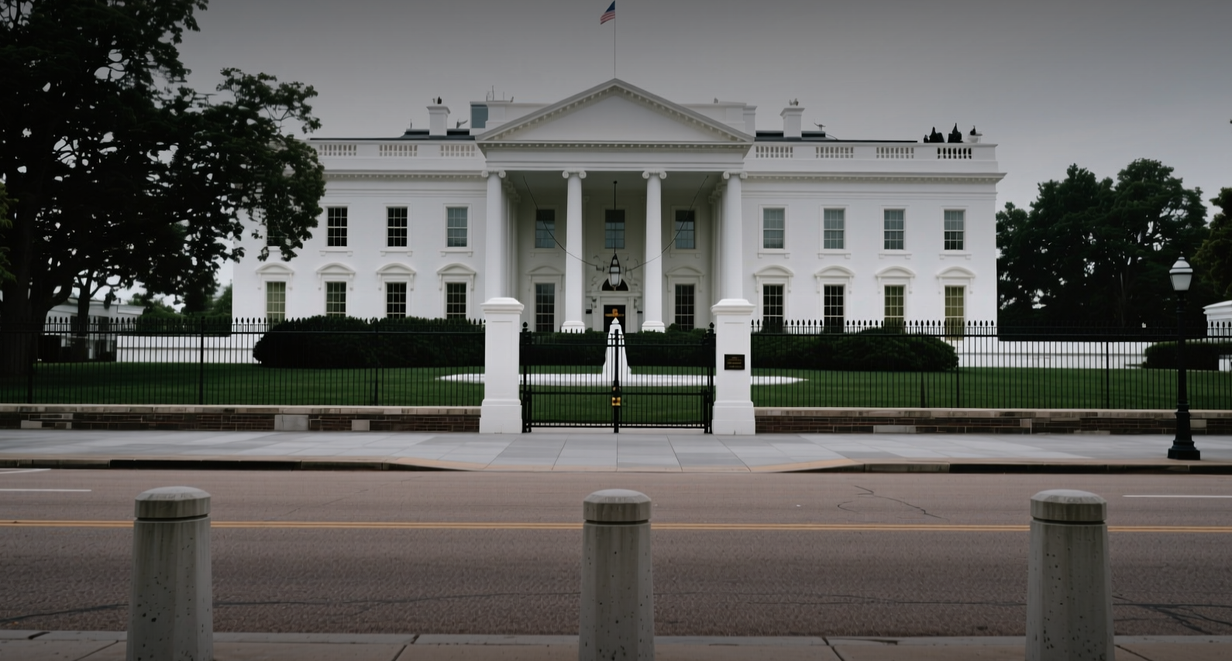
Chinese President Xi Jinping is expected to arrive at the White House on Sept. 24 for a state visit that China watchers predict will manage a bilateral stalemate rather than resolve it, even as the US average tariff on Chinese goods holds at 36.5 percent and Treasury Secretary Scott Bessent's Iran sanctions plan threatens the fragile trade truce.
"The relationship increasingly produces transactions without trust and stability without settlement," said Craig Singleton, senior director for China at the Foundation for Defense of Democracies. It is "a low-expectations summit focused largely on managing the stalemate rather than resolving it," he said.
Beijing has not officially confirmed the trip, which would land less than six weeks before US midterm elections in which persistent consumer costs have become a top issue. Trump's approval rating has sunk to new lows and Democrats appear increasingly likely to retake at least one chamber of Congress, according to recent polls. The White House is planning a formal state dinner for Xi, a courtesy extended to only one other foreign leader — Britain's King Charles III — during Trump's second term, MS NOW reported.
The stakes run through trade, energy and the ballot box. Trump has denied his tariffs raise prices on Americans, yet late last month he moved to ease high beef costs by allowing up to 300,000 metric tons of ground-beef product in tariff-free. The Congressional Research Service put the average US tariff on Chinese goods at 36.5 percent as of July, down from the peak of the 2025 tariff war but still far above pre-conflict levels. After the previous escalation round, bilateral trade contracted sharply over several months, a precedent that frames how far either side can push before the truce cracks.
Iran Sanctions Test the Truce
The Iran war, which Trump initially predicted would end within six weeks, will be close to seven months old when Xi arrives. With peace talks far off, Bessent on Aug. 24 unveiled "Operation Economic Outcast," a plan to strangle Tehran's economy through sweeping secondary sanctions on its business partners — a category that includes China, by far Iran's largest trading partner. Beijing pushed back immediately, with a Foreign Ministry spokesperson calling the plan "illicit unilateral sanctions that have no basis in international law."
Bessent insisted "no one is above the reach of U.S. sanctions," but he also signaled restraint, asking why he would "blow up the global financial system" by imposing sanctions on day one rather than setting compliance deadlines. The remark captures the bind Washington faces: China holds the greatest economic leverage over Tehran, yet it is the partner the US can least afford to alienate before the summit. "Every stronger option creates a China problem," said Taiyi Sun, an associate professor of political science at Christopher Newport University, who argues the policy is "Trump's way of getting out of the situation temporarily before the midterms."
The Strait of Hormuz, through which roughly a fifth of global oil trade passes, has seen traffic squeezed by Iranian threats, keeping a geopolitical premium under crude prices. Scott Kennedy, a scholar on China's business and economy at the Center for Strategic and International Studies, said the US "is finding itself increasingly between multiple rocks and multiple hard places" on China and Iran. "I'm not sure how they easily resolve these various contradictions amongst the different foreign policy challenges that they are facing," he said.
Deliverables Still Unfinished
The May summit in Beijing produced a pledge to build a "constructive" relationship of "strategic stability," plus a proposed Board of Trade and Board of Investment, a deal for China to buy 200 Boeing aircraft and $17 billion of US agricultural products. Singleton said several deliverables remain unfinished, "including the Boeing deal and the proposed Board of Trade." "Neither side appears to believe leader-level diplomacy will change the other's underlying strategy," he added.
Trump's top-down style, favoring leader-to-leader dealmaking over the diplomatic groundwork of prior administrations, is also capping expectations, said Matthew Kroenig, a senior fellow at the Atlantic Council's Scowcroft Center for Strategy and Security. "Trump's going to go in there and have a conversation with Xi and see what comes out of it," he said. Any announcements would be "very top line, and then it would be up to the governments to work out the details."
Bessent confirmed artificial intelligence will be on the agenda, and the G20 finance ministers' gathering in North Carolina this week exposed the daylight between the two economies: China was the only member to dissent from a joint statement, objecting to language urging countries with excessive external surpluses to stop distorting trade and taking issue with wording on the Iran war. If the summit yields little beyond a schedule for further leader meetings, the relationship is likely to drift back toward the transactional pattern of the past year — with the midterms and the Iran sanctions timeline setting the pace.
This article is for informational purposes only and does not constitute investment advice.