


The AI data center buildout is minting a second tier of winners beyond Nvidia, and five chip stocks are already accelerating revenue.
The AI data center buildout is minting a second tier of winners beyond Nvidia, and five chip stocks are already accelerating revenue.
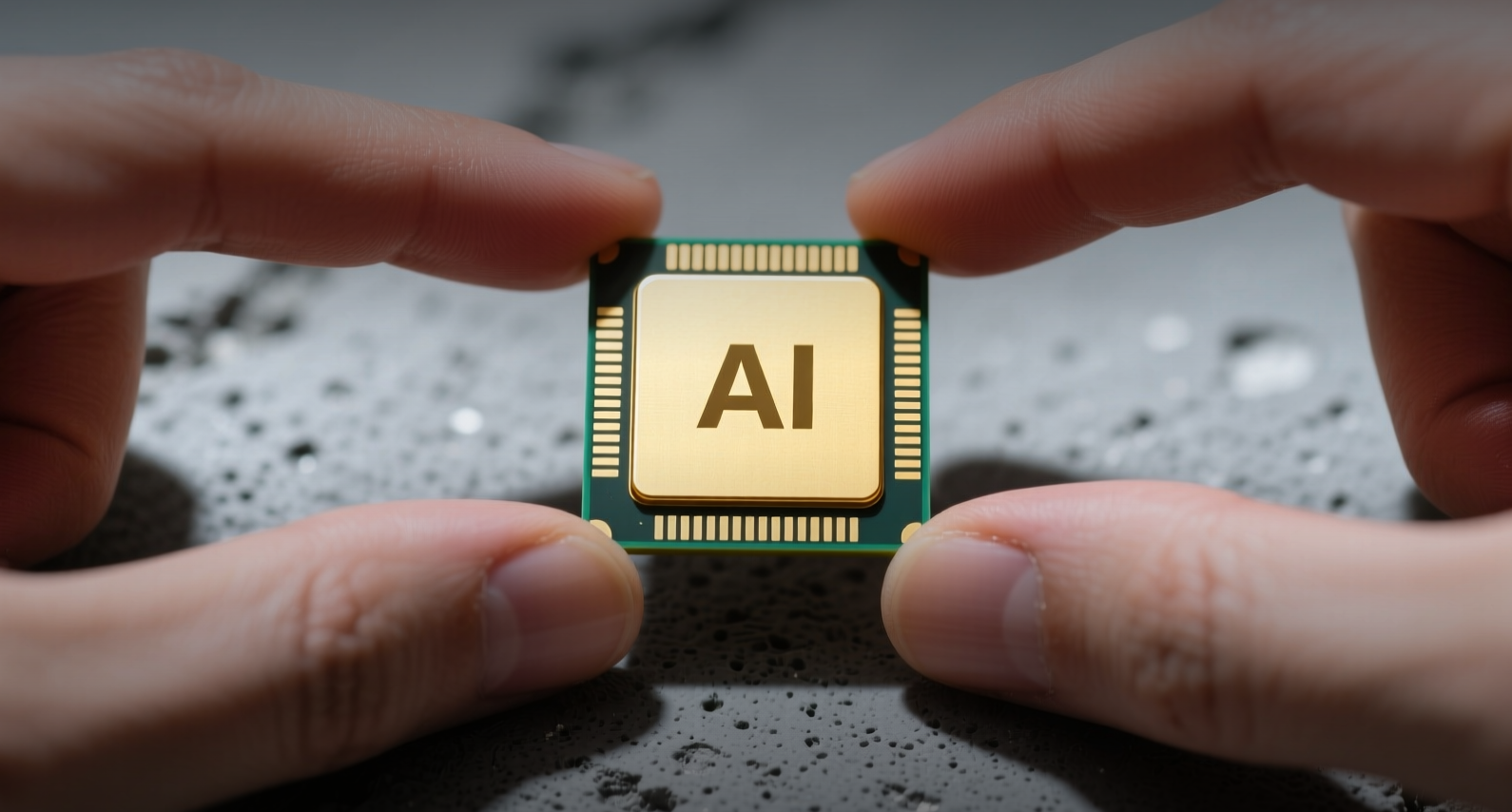
The AI data center buildout is minting a second tier of winners beyond Nvidia, as hyperscaler capital spending floods into custom silicon, optical interconnects, and PCIe connectivity. Five chip stocks — MACOM Technology Solutions, Marvell Technology, Arm Holdings, Astera Labs, and Cerebras Systems — have surged between 76% and 187% year to date.
"We are seeing exceptional AI-related bookings, and as a result, we are significantly raising Marvell's revenue outlook for both fiscal 2027 and fiscal 2028," Chief Executive Officer Matt Murphy said on the company's May 27 earnings call.
Marvell's data center segment contributed $1.83 billion in fiscal Q1, or 76% of total revenue, up 27% from a year earlier. Astera Labs posted $308.4 million in quarterly revenue, up 93.4% year over year, and has beaten consensus in every one of its 10 reported quarters. MACOM's fiscal Q2 revenue hit $289 million, up 22.5%, with management guiding the next quarter to as much as $339 million. Arm Holdings saw data center royalties more than double year over year as every major AI CPU — Nvidia's Vera, Google's Axion, Microsoft's Cobalt — now runs on its architecture.
The divergence between these stocks and the broader semiconductor index is widening. Marvell has gained 164% year to date, Astera Labs 130%, and Arm 182%, while the Philadelphia Semiconductor Index has risen roughly 25%. The question for investors is whether the second-tier AI trade still has room to run.
Custom Silicon and the Toll-Booth Model
Marvell Technology has emerged as the custom chip partner of choice for hyperscalers building their own AI accelerators. Its portfolio spans 800G and 1.6T optical interconnects, 51.2T Ethernet switches, and custom XPU designs. Revenue reached $2.42 billion in fiscal Q1, up 27.6% year over year, and management guided fiscal Q2 to $2.7 billion. The stock carries 31 Buy ratings and seven Strong Buy ratings, with a consensus price target of $252.
Arm Holdings operates a different model — collecting a license fee upfront and a royalty on every chip shipped. Nvidia's Vera, Google's Axion, and Microsoft's Cobalt are all Arm-based. Fiscal Q4 revenue reached $1.49 billion, up 20.1%, with licensing revenue of $819 million, up 29%. Chief Executive Officer Rene Haas said demand for Arm's AGI CPU "has exceeded expectations." The stock trades at 137 times forward earnings, with 27 Buy or Strong Buy ratings.
Revenue Jumps 93% and a $20B OpenAI Deal
Astera Labs makes the retimers, smart cable modules, and fabric switches that keep PCIe 6 and CXL links alive inside AI servers. In May, the company launched the Scorpio X-Series 320-lane Smart Fabric Switch targeting a $20 billion merchant scale-up market by 2030. Revenue jumped 93.4% year over year to $308.4 million, with operating income up 448%.
Cerebras Systems went public in the second quarter of 2026, raising $6.4 billion, and locked a multiyear OpenAI deal for 750 megawatts of inference compute valued at more than $20 billion. First-quarter revenue printed at $193.4 million, up 94% year over year. Shares have pulled back 31% since the May IPO peak, trading below the analyst consensus target of $291.
MACOM, the smallest of the five by market cap, builds the RF, microwave, analog and optical semiconductors that appear in hyperscaler switch cages and pluggable optics. As 800G migrates to 1.6T and copper interconnects hit their reach limits inside AI racks, MACOM's content per rack goes up. The stock trades at 45 times forward earnings, well below the pure-play AI silicon cohort.
Investor Implications
The five stocks trade at a wide range of valuations, but the sell-side remains broadly bullish: zero sell ratings across all five names. The risk is that hyperscaler capital spending, which drove the buildout, could slow if token demand growth decelerates — a scenario the market has not yet priced in. For now, the second-tier AI trade is accelerating, and the next earnings cycle will test whether the revenue momentum can sustain the multiples.
This article is for informational purposes only and does not constitute investment advice.
