

Amazon's first-quarter earnings reveal a critical tension for investors: the explosive, AI-driven growth of its cloud business is directly tied to massive capital spending that pressures near-term financials.
Amazon's first-quarter earnings reveal a critical tension for investors: the explosive, AI-driven growth of its cloud business is directly tied to massive capital spending that pressures near-term financials.
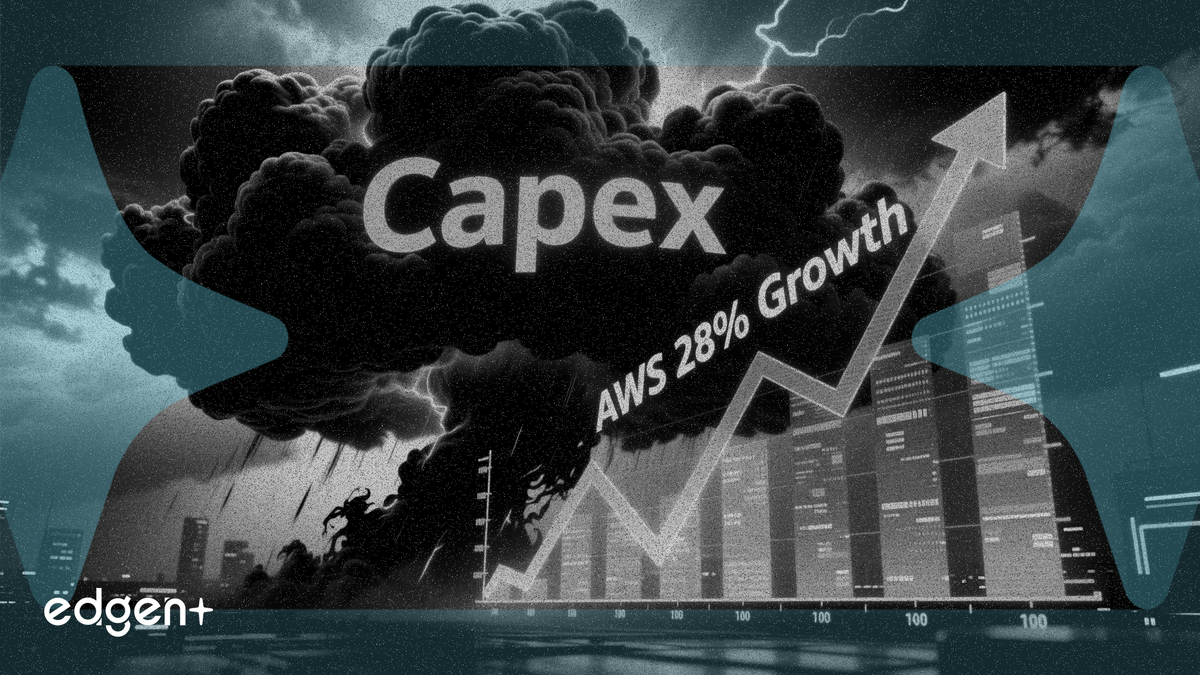
Amazon.com Inc.'s first-quarter 2026 results highlighted a 28 percent surge in its Amazon Web Services (AWS) division, as a global rush into artificial intelligence development fueled demand for cloud computing. The performance, however, was shadowed by investor concerns over soaring capital expenditures and weakened cash flow, creating uncertainty around the stock's near-term trajectory.
"Our investments in infrastructure are substantial because the opportunity ahead in AI is even greater," company executives have emphasized, signaling a long-term strategy focused on capturing a dominant share of the nascent market. "We are building the capacity to support the next generation of innovation for our customers."
The 28 percent year-over-year growth in AWS revenue underscores the division's role as the company's primary profit engine. This growth is largely attributed to increased enterprise spending on AI model training and deployment, a computationally intensive process that relies heavily on AWS's infrastructure. Yet, this demand necessitates a massive and costly buildout of data centers, which was reflected in the company's capital expenditure figures and a reported dip in free cash flow.
For investors, the results present a classic trade-off between long-term market leadership and short-term profitability. The aggressive spending is a bet that securing a foundational role in the AI economy will yield returns that far outweigh the current costs, but it also introduces significant risk if the expected demand fails to materialize at the scale projected.
The primary driver behind the robust performance of AWS is the global corporate pivot toward artificial intelligence. Companies across all sectors are racing to integrate AI into their operations, from developing proprietary large language models to deploying AI-powered applications. This has created unprecedented demand for the raw computing power, storage, and specialized chips that cloud providers like AWS offer. The 28 percent growth figure directly reflects AWS’s success in capturing this wave of spending, positioning it as a key enabler of the AI boom.
The immense computational requirements of AI are forcing a historic buildout of the world's digital infrastructure, a reality reflected in Amazon's balance sheet. The "soaring capex" noted in its Q1 report is a direct consequence of the need to build and equip more data centers. These facilities are not only packed with expensive servers and networking gear but also consume vast amounts of electricity.
Recent disclosures from utility providers offer a glimpse into this scale. NiSource Inc., for example, recently detailed new energy infrastructure agreements to supply hundreds of megawatts of power to data centers for Amazon and Alphabet in the Midwest. These long-term energy contracts highlight the foundational, utility-scale investments required to power AI, explaining the significant cash outflow and weighing on Amazon's short-term financial metrics.
The market's uncertain reaction stems from the challenge of valuing Amazon's high-cost, long-term strategy. While AWS growth is a clear positive, the weak cash flow figures raise questions about the immediate return on these colossal investments. This dynamic is compounded by Amazon's concurrent expansion into other capital-intensive sectors, such as its move to build out a third-party supply chain and logistics service to compete with firms like C.H. Robinson.
This broad, aggressive investment strategy suggests a company prioritizing market capture over near-term margin expansion. For shareholders, the bull case rests on the belief that Amazon's AI and logistics infrastructure will create an unassailable competitive moat. The bear case, however, points to the risk of over-investment and the potential for compressed returns as competition in both cloud and logistics intensifies. The stock's future performance will likely depend on which of these narratives proves dominant.
This article is for informational purposes only and does not constitute investment advice.

