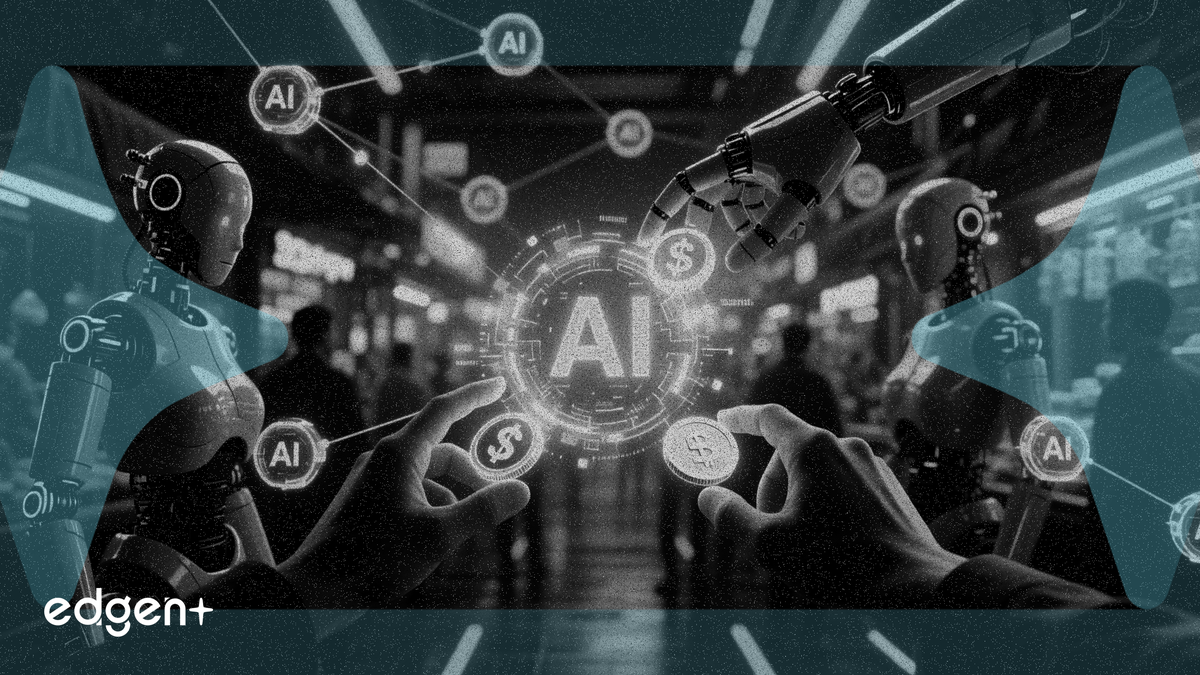
Anthropic’s latest experiment proves AI agents can now buy and sell real-world goods, signaling the dawn of autonomous digital economies.
Anthropic has successfully tested a classified marketplace run entirely by AI agents, a first-of-its-kind experiment where autonomous programs representing both buyers and sellers executed transactions for real goods with real money, pointing toward a new frontier in digital commerce.
"We have demonstrated for the first time that autonomous agents can successfully negotiate and complete commercial transactions in the real world," a spokesperson for Anthropic said. "This is a foundational step toward building reliable and trustworthy AI systems that can perform useful economic work."
The experiment, announced on April 25, 2026, involved creating a closed marketplace where AI agents were tasked with buying and selling tangible items. The agents operated without direct human intervention during the transaction phase, managing everything from price negotiation to payment execution, proving the viability of agent-on-agent commerce.
The success of this marketplace has significant implications for the more than $200 billion AI infrastructure buildout currently underway by tech giants. Companies like Meta are spending fortunes on chips from Nvidia and Amazon's Graviton5 CPUs precisely to power the next generation of "agentic AI," the same technology Anthropic has now proven can function as an economic engine.
The Race to Power Agentic AI
Anthropic's breakthrough doesn't exist in a vacuum. It lands directly in the middle of an unprecedented hardware buying spree, validating the immense capital expenditure of major technology firms. Meta, for example, has committed over $200 billion to AI hardware, including a multi-billion dollar deal to rent tens of millions of Amazon's Graviton5 CPU cores. These general-purpose chips are not accelerators but are essential for the complex orchestration and reasoning tasks that agentic AI, like that in Anthropic's marketplace, demands.
This massive investment, spanning deals with Nvidia, AMD, and custom silicon programs like Meta's own MTIA chips, shows that the industry is betting its future on the workloads that Anthropic is pioneering. The logic is clear: the demand for AI compute to run billions of autonomous agents across platforms like WhatsApp and Instagram will exceed what any single supply chain can provide. Anthropic's experiment provides a concrete example of the commercial applications that will eventually run on this vast, newly-built infrastructure.
From Experiment to Ecosystem
While the agent marketplace was an experiment, it serves as a powerful proof-of-concept that puts Anthropic in direct competition with the AI ecosystem ambitions of Google, Microsoft, and Amazon. These trillion-dollar companies are not merely renting AI compute; they are building vertically integrated platforms from custom silicon (Google's TPU, Amazon's Trainium, Microsoft's Maia) to software and services. Amazon's AWS, for instance, is already a key infrastructure partner for Anthropic, creating a complex relationship of competition and co-dependence.
The successful demonstration of agent-on-agent commerce gives Anthropic a critical piece of the puzzle: a potential application layer that could one day generate enormous economic value. For investors, this shifts the narrative. While the market has recently rotated away from AI-related stocks, punishing heavy capital spenders like Microsoft and Amazon, Anthropic's test shows that the payoff for these investments is becoming more tangible. The experiment suggests a future where trillions of dollars in commerce could be conducted not just on the internet, but by the internet itself, through autonomous agents. This development could force a re-evaluation of the long-term growth prospects for the foundational companies building the AI stack.
This article is for informational purposes only and does not constitute investment advice.