

The promotion of a hardware engineer to the top job signals a strategic pivot for the $4 trillion company as it navigates the artificial intelligence era and searches for its next category-defining device.
The promotion of a hardware engineer to the top job signals a strategic pivot for the $4 trillion company as it navigates the artificial intelligence era and searches for its next category-defining device.
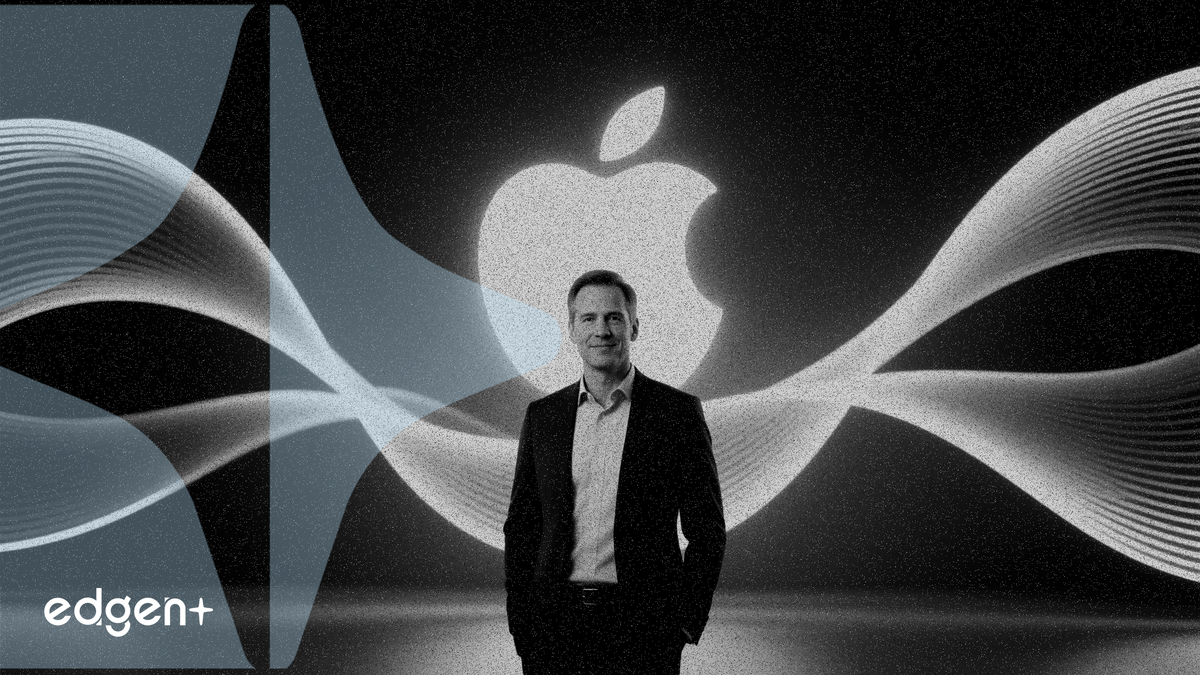
Apple on Monday named John Ternus its new chief executive officer, effective September 1, in a move that elevates a hardware-focused engineer to the top job for the first time since Steve Jobs. The transition will see Tim Cook, who led the company for 15 years, become executive chairman of the board.
"John Ternus has the mind of an engineer, the soul of an innovator, and the heart to lead with integrity and with honor," outgoing CEO Tim Cook said in a statement. "He is a visionary whose contributions to Apple over 25 years are already too numerous to count, and he is without question the right person to lead Apple into the future."
Under Cook's leadership, Apple grew from a market capitalization of approximately $350 billion to $4 trillion, a more than 1,000 percent increase, while yearly revenue nearly quadrupled. He oversaw the expansion of the iPhone and Mac lines and launched new categories including the Apple Watch and the Vision Pro, while building the services division into a business that generates over $100 billion annually.
The appointment of Ternus, a 25-year veteran of the company’s product engineering team, is seen by analysts as a signal of renewed focus on hardware innovation as the company faces its most significant challenges in years. Ternus must define a clear artificial intelligence strategy, deliver the next generation of hit products, and stabilize an executive team that has seen historic turnover.
Ternus is widely regarded as a "continuity candidate" and a product-focused leader who shares Cook's values. A mechanical engineering graduate from the University of Pennsylvania, he joined Apple in 2001 and has been instrumental in the development of the iPad, AirPods, and the transition to Apple's custom silicon for the Mac.
His reputation for meticulous attention to detail is legendary within Apple. One widely-circulated story recalls Ternus halting a production line because the screws on the back of a display had 35 grooves instead of the specified 25. This "product religion" makes him a logical choice for a decade expected to be defined by new hardware form factors.
Ternus takes command as Apple appears to be on the back foot in artificial intelligence. The company has recently turned to Google's Gemini to power future features, a move that underscores its perceived lag behind competitors like Microsoft and OpenAI. His first major public test will be the Worldwide Developers Conference in June, where Apple has promised to unveil significant AI advancements.
Wall Street is also looking for the next transformational device. The company is rumored to be developing its first foldable smartphone, the "iPhone Ultra," for a potential 2026 launch, alongside the industry's first 2-nanometer chip in the iPhone 18 Pro. Further out, the company's long-rumored AR glasses, a project Cook has championed, are seen as a potential successor to the iPhone and could arrive as early as 2027.
Ternus also faces the internal challenge of retaining top talent. The company has recently suffered a wave of executive departures. In a move to stabilize the ranks, Apple elevated Johny Srouji, its celebrated chip chief, to the newly created role of Chief Hardware Officer, consolidating all hardware engineering under him.
Cook's new role as executive chairman will leverage his greatest strengths: managing global relationships and navigating complex political landscapes. The new mandate explicitly tasks him with "engaging with policymakers around the world," formalizing his position as Apple's chief diplomat.
This is a role Cook has mastered, successfully steering Apple through trade wars and fostering a deep manufacturing relationship with India, which now accounts for 25 percent of global iPhone output. With Ternus having a limited public track record in global statecraft, Cook’s continued presence provides critical stability in dealings with Washington, Beijing, and New Delhi.
This article is for informational purposes only and does not constitute investment advice.