

Apple's 6.1% stock drop and the KOSPI's 8% crash tell the same story: AI-driven memory inflation has reached a tipping point.
Apple's 6.1% stock drop and the KOSPI's 8% crash tell the same story: AI-driven memory inflation has reached a tipping point.
Apple's 6.1% stock drop and the KOSPI's 8% crash tell the same story: AI-driven memory inflation has reached a tipping point.
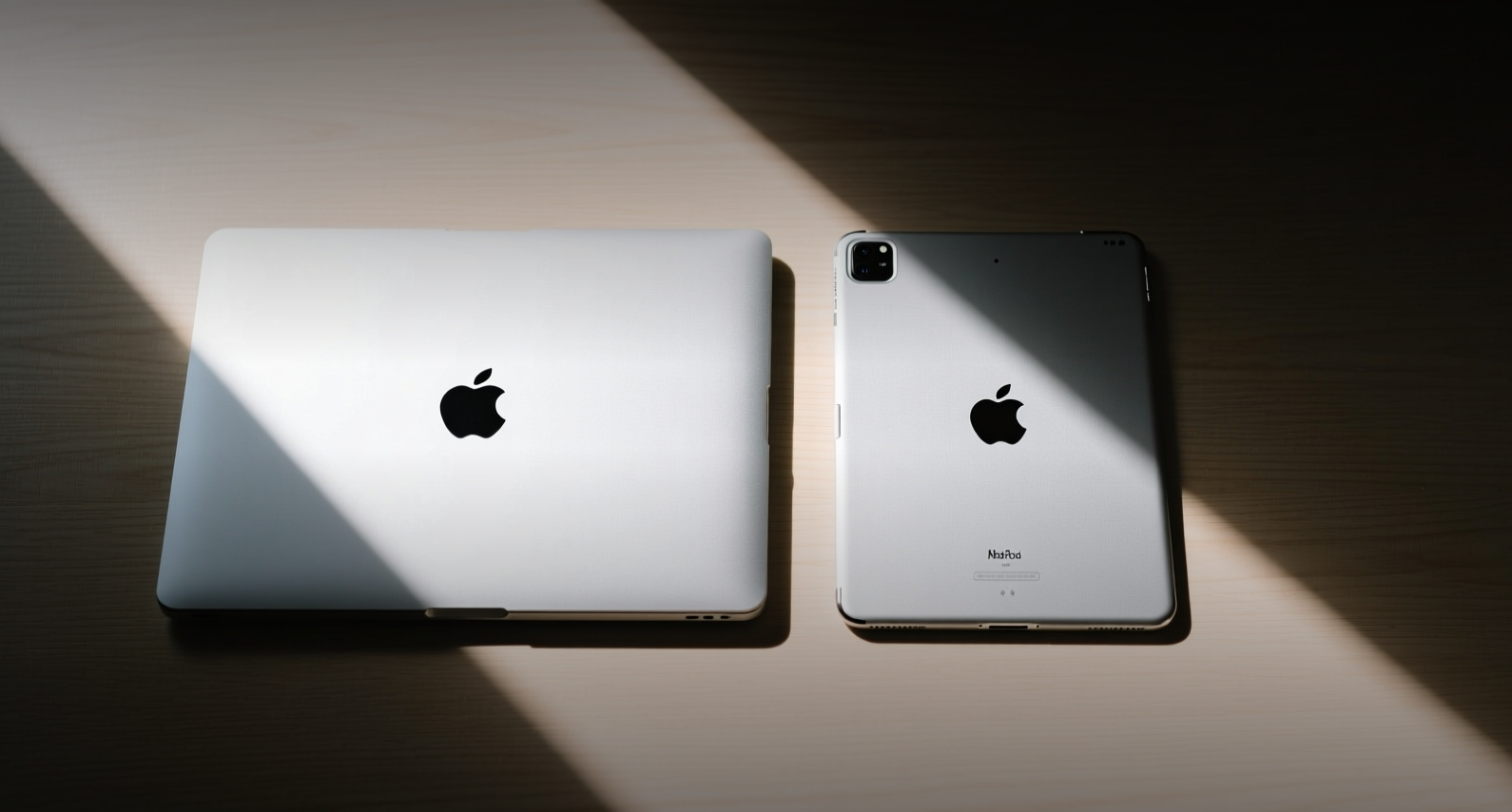
Apple raised prices on nearly every Mac and iPad model by $100 to $500, citing the fastest memory and storage cost surge in the company's history — a direct consequence of AI data center demand consuming the global chip supply.
"The rapid expansion of AI data centers has created an extraordinary surge in demand for memory and storage," Apple said in a statement. "We have never seen a component price increase this much, this quickly."
The MacBook Neo jumped to $699 from $599, the 14-inch MacBook Pro to $1,999 from $1,699, and the iPad Pro to $1,199 from $999. DRAM prices surged 98% in the first quarter of 2026 and are expected to rise another 58% to 63% in the second quarter, according to TrendForce. Memory and storage costs have quadrupled over the past three quarters, Counterpoint Research estimates.
Apple shares fell 6.1% to $275.15, their biggest single-day drop since April 2025. South Korea's KOSPI index crashed more than 8% the following day, triggering a 20-minute trading halt, as investors repriced the risk that AI-driven chip inflation is destroying consumer electronics demand faster than it is creating supplier profits.
The Memory Supply Chain Has No Spare Capacity
The root cause is structural. Nvidia's H100 and Blackwell GPUs consume five to eight times the high-bandwidth memory of a standard server, and every major cloud provider — Google, Meta, Amazon, Microsoft — is racing to build out AI infrastructure simultaneously. Memory manufacturers have diverted production capacity to HBM (high-bandwidth memory, the specialized DRAM stacked directly onto AI accelerators), leaving consumer-grade DRAM and NAND flash in short supply.
Micron Technology this week locked $22 billion in long-term supply agreements with customers seeking guaranteed access to memory chips, the company said. SK Hynix, which recently surpassed Samsung as South Korea's most valuable company by market capitalization, announced a $29.4 billion ADR listing on Nasdaq scheduled for July 10 — the second-largest stock offering in history after SpaceX's $85.7 billion IPO. Samsung disclosed plans for roughly $646 billion in semiconductor investment over the next decade, according to Korean media reports.
Yet these supply-side responses take two to three years to reach production. The capacity being announced today will not come online until 2028 or 2029, leaving the consumer electronics market to compete for whatever allocation remains after AI orders are filled.
Demand Destruction Is Already Underway
The risk that has spooked markets is not whether supply will eventually arrive — it is whether demand will survive until then. IDC forecasts the global smartphone market will contract nearly 14% in 2026, and the PC market will decline 11.3%, both driven by memory cost pass-through to consumers.
"When the world's largest buyer of consumer electronics can no longer absorb component costs, the entire pricing chain breaks," Nabila Popal, senior research director at IDC, said. "iPhone price increases are now a matter of when, not if."
JPMorgan analysts estimate that DRAM and NAND memory, which currently account for roughly 10% to 15% of the bill of materials for an iPhone, could represent more than 45% by 2027. A Morgan Stanley research note described the environment as "chipflation," noting that memory prices have increased sixfold over the past year.
Apple's hardware gross margins expanded to 38.7% in the March quarter from 35.9% a year earlier, and the company reported $29.6 billion in quarterly profit. But Chief Executive Officer Tim Cook warned last week that the company had exhausted its inventory buffer. "This is a hundred-year flood," Cook told the Wall Street Journal. "I've never seen anything like it in any area in over 40 years."
The negative feedback loop is straightforward: memory price increases push up device prices, which reduce consumer demand, which eventually reduces memory orders. Memory manufacturers today enjoy record pricing power, but the same dynamics that created this cycle — AI's insatiable appetite for HBM, the diversion of fab capacity away from consumer-grade chips, and the two-to-three-year lag in new supply — also contain the seeds of its reversal. When consumer demand breaks, the correction in memory prices could be as violent as the surge.
For investors, the question is which side of the cycle to position for. Micron, SK Hynix, and Samsung are generating record profits today, but Apple's price hike may be remembered as the moment the narrative shifted from "how much can memory prices rise" to "how fast will they fall."
This article is for informational purposes only and does not constitute investment advice.
