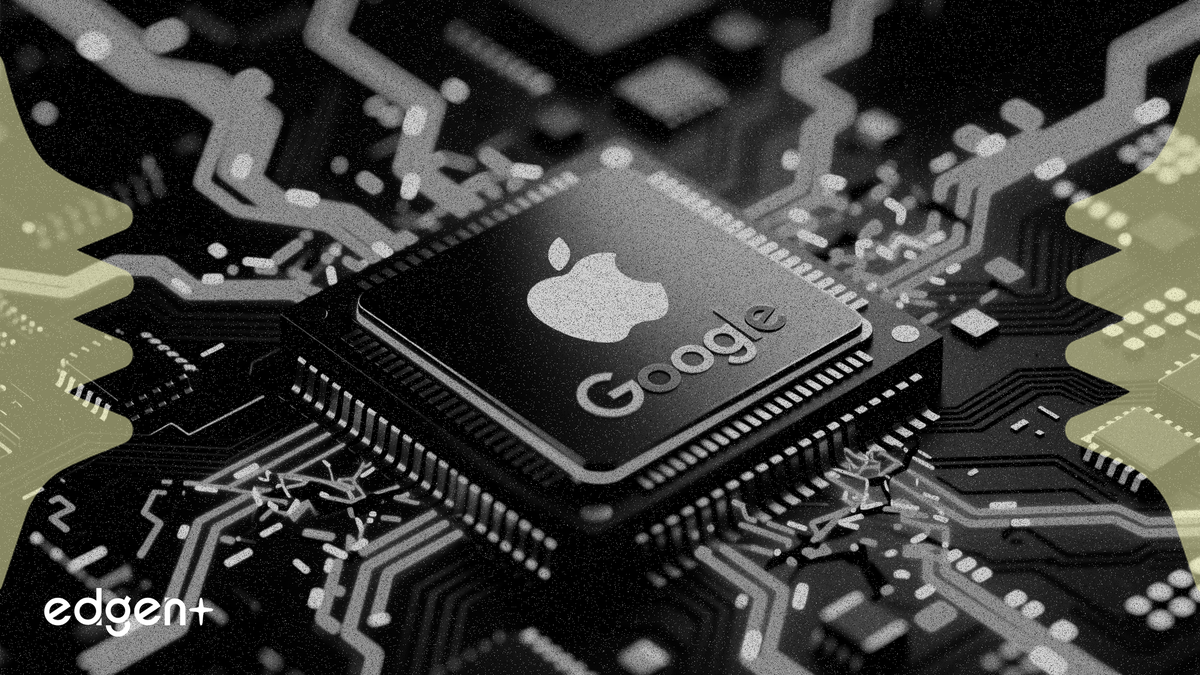
Apple Inc. is moving to corner the market for next-generation semiconductors, booking more than half of Taiwan Semiconductor Manufacturing Co.’s initial 2nm production capacity for 2026 while simultaneously negotiating a landmark manufacturing deal with rival Intel Corp. The strategy threatens to leave Alphabet Inc.’s Google and its hardware partners a generation behind in the AI chip war, competing for older, less efficient silicon.
"Intel is the only place that can scale up capacity as a viable second source," chip analyst Ben Bajarin of Creative Strategies said in an interview, highlighting the strategic importance of diversifying the supply chain for leading-edge chips.
The contrast between the two tech giants’ positions is stark. Apple has reserved the majority of TSMC’s N2 node for its next-generation A20 and M5 processors, according to a report from 24/7 Wall St. At the same time, preliminary agreements are in place for Intel to produce a portion of Apple's chips, according to the Wall Street Journal, a move that would give Apple unprecedented leverage over the supply chain. Google, meanwhile, is left to fight for residual 3nm wafers, while memory prices for the HBM3e and HBM4 components essential for AI have climbed 80-90 percent since late 2025.
For investors, the divergence is critical. Apple is using its $123 billion cash hoard and record $30.98 billion in quarterly services revenue to secure a decisive cost and performance advantage for its next decade of products. Alphabet, in contrast, is facing a surge in capital spending, with a $180 billion target for 2026 that is already pressuring free cash flow, which fell 46.6 percent in the first quarter to $10.12 billion.
Apple's Two-Front War on Chip Supply
Apple’s strategy is twofold. By pre-booking TSMC’s most advanced 2nm process, it ensures its flagship iPhones and Macs will have a performance and efficiency edge through at least 2027. This move alone puts competitors like Qualcomm and Samsung, who supply chips for the Android ecosystem, on the back foot.
The second front is the potential partnership with Intel. After years of struggling, Intel's foundry business is gaining credibility. The company's 18A process is positioned as a direct competitor to TSMC's 2nm node. An Apple deal, even for a small portion of its chip volume, would be a major validation of Intel's turnaround and provide Apple with a crucial alternative to TSMC, mitigating geopolitical and supply concentration risks. Intel shares jumped nearly 14 percent on the news of the talks.
Google's CapEx Bonfire
While Apple locks down supply, Google is spending heavily to keep pace. The company’s capital expenditures rose 107 percent year-over-year to $35.67 billion in the first quarter. While this investment fueled a 63 percent growth in its Cloud division and nearly doubled the cloud backlog to $460 billion, the cost is immense.
The projected $180 billion in 2026 capital expenditures represents a massive bet that Google can build an AI infrastructure to rival vertically integrated players like Apple. However, this spending comes at the expense of capital efficiency and free cash flow, a trade-off that may concern investors if margins in the cloud business begin to compress under the weight of these investments.
The Intel Wildcard
The potential alliance between Apple and Intel could reshape the semiconductor landscape. Intel, under CEO Lip-Bu Tan, has invested heavily in its 14A and 18A nodes and is already attracting high-profile customers. Nvidia invested $5 billion in September, and Elon Musk plans to use Intel's future 14A node for his xAI and Tesla manufacturing needs.
For Apple, adding Intel as a manufacturing partner would be a strategic masterstroke, ending its sole reliance on TSMC and the geopolitical risks associated with Taiwan. For Intel, winning Apple's business would be the ultimate validation of its comeback, proving it can meet the exacting demands of the world's most valuable technology company.
This article is for informational purposes only and does not constitute investment advice.