

ASML's next-generation High-NA lithography machines are set to ship within months, signaling a new front in the semiconductor war for AI dominance and threatening to reshape the $4 trillion chip industry.
ASML's next-generation High-NA lithography machines are set to ship within months, signaling a new front in the semiconductor war for AI dominance and threatening to reshape the $4 trillion chip industry.
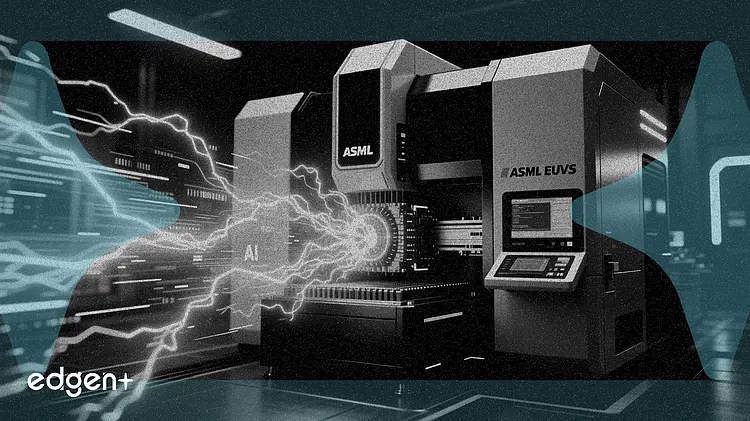
ASML Holding NV (ASML) expects the first semiconductors built with its next-generation High-Numerical Aperture (High-NA) extreme ultraviolet (EUV) lithography machines to ship within months, a move that will enable chipmakers to produce smaller, more powerful processors for the booming artificial intelligence market. The timeline, faster than many analysts expected, puts pressure on rivals and accelerates the race to build next-generation AI infrastructure.
"I expect that in the next couple of months, you will see the first results from the new High-NA machines," ASML CEO Peter Wennink said on May 20, 2026. The statement sent ASML's U.S. stock up 2.7% in pre-market trading, reflecting the technology's critical importance to the future of computing.
The new High-NA EUV systems allow for the printing of transistors just 8 nanometers apart, a significant improvement over the 13.5nm of previous EUV machines. This enables the production of chips on advanced 2nm process nodes and beyond, a crucial step for companies like Intel, which is the first publicly announced customer for the new machines. Intel is reportedly urging its partners to accelerate the adoption of processors built on its competing 18A process technology, which became available late last year.
The urgency from chipmakers stems from an explosion in demand for computing power driven by artificial intelligence. Running AI software requires massive data centers powered by thousands of specialized chips. Nvidia CEO Jensen Huang predicts that data center operators could spend up to $4 trillion on AI infrastructure annually by 2030. Major tech giants including Amazon, Microsoft, Alphabet, and Meta Platforms are forecast to spend a combined $710 billion on AI infrastructure during 2026 alone, creating an unprecedented opportunity for the semiconductor industry.
This demand has fueled incredible returns for investors. The iShares Semiconductor ETF (SOXX), which holds top chip stocks, has delivered a 330% return since early 2023. The fund's top five holdings—Micron Technology, Advanced Micro Devices, Broadcom, Nvidia, and Intel—represent nearly 40% of its portfolio and have been the primary drivers of its growth.
While Nvidia currently dominates the AI training market with its Blackwell series GPUs, ASML's High-NA technology will arm all chipmakers with the tools to build more competitive processors. This opens the door for rivals to challenge Nvidia's position.
For investors, ASML's announcement reinforces its monopoly on advanced lithography but also signals intensifying competition among chip designers. While Nvidia trades at a high multiple, the potential for rivals like AMD and Intel to capture more of the expanding AI market could present new opportunities. The performance of the broader iShares Semiconductor ETF, which has a compound annual return of 14% since 2001, suggests that betting on the entire sector remains a viable strategy as the AI build-out continues.
This article is for informational purposes only and does not constitute investment advice.
