

Key Takeaways:
- Geoffrey K. Auyeung sentenced to five years for laundering $97.1 million in fraud proceeds
- Funds moved through Bitcoin, Ethereum, USDT and USDC across eight crypto exchanges
- Auyeung forfeits $9.4 million in assets plus an Audi SQ8
Key Takeaways:
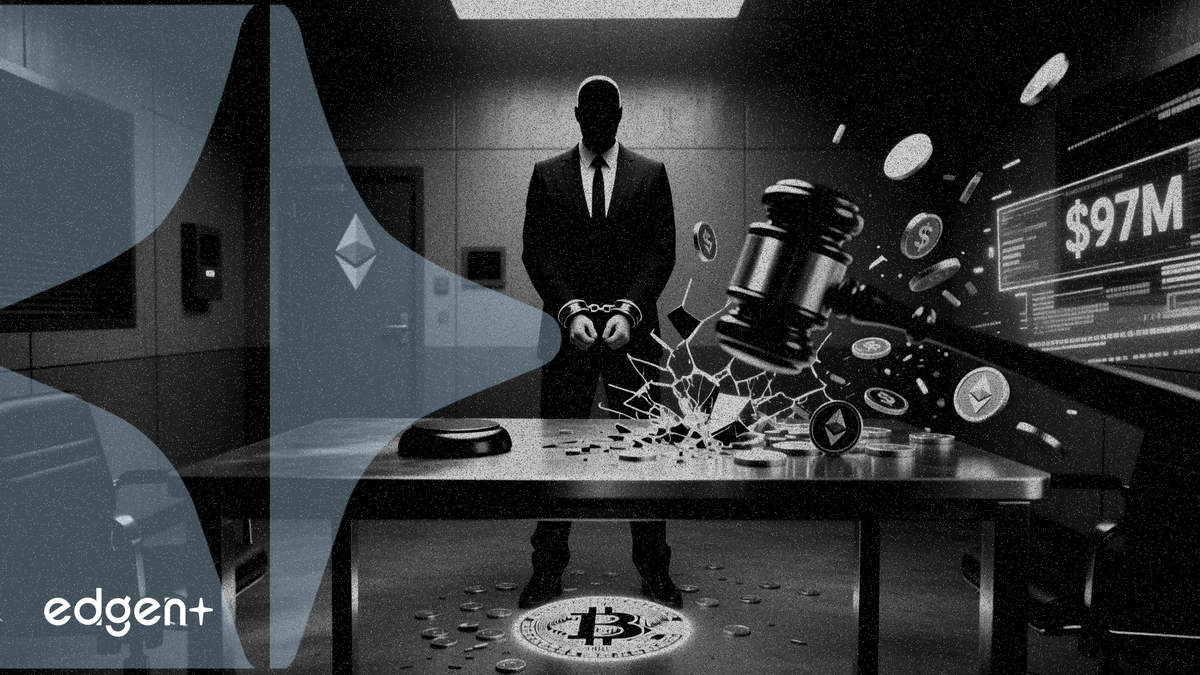
A Newcastle, Washington, man received a five-year prison sentence for laundering nearly $100 million in fraud proceeds through a network of shell companies, bank accounts and cryptocurrency exchanges, in a case that shows how centralized platforms can become enforcement chokepoints.
Geoffrey K. Auyeung, 47, was sentenced June 9 in Seattle federal court after pleading guilty in February to conspiracy to commit money laundering. Between June 2022 and July 2024, his accounts received $97.1 million in wire transfers and deposits — all proceeds from a fake oil and gas investment scheme that promised victims returns from tank storage in Rotterdam and Houston.
"Mr. Auyeung facilitated a fraud, developed by others, that stole investor money while lulling them with promises of a legitimate escrow account," First Assistant U.S. Attorney Neil Floyd said in a statement. Floyd added that Auyeung spent 16 months after his indictment and arrest secretly communicating with co-conspirators and routing illicit fees through his wife's bank accounts.
Auyeung operated through at least nine shell companies and maintained 81 bank accounts across 24 financial institutions. He also opened 19 accounts across eight cryptocurrency exchanges, including Gemini, Bitstamp and Coinbase, where he converted fiat into Bitcoin, Ethereum, Tether (USDT) and USD Coin (USDC). Most of the crypto was later transferred to Binance accounts controlled by individuals in Nigeria and Russia, according to court records.
The sentence carries a financial reckoning to match the scheme's scale. Auyeung must pay $24.7 million in restitution and forfeit $2.3 million seized from bank accounts, $7.1 million in digital assets from crypto wallets, and an Audi SQ8. He earned at least $4 million in commission payments from co-conspirators, prosecutors said, and demanded higher fees as he became more aware of the fraud.
Why centralized exchanges became the weak link
Auyeung's reliance on platforms with know-your-customer requirements gave investigators critical entry points. Binance, which received the bulk of the transferred crypto, has been under heightened regulatory scrutiny globally and agreed to a $4.3 billion settlement with U.S. authorities in 2023 over separate compliance failures. The involvement of stablecoins USDT and USDC is particularly notable — issuers Tether and Circle can freeze assets at the smart contract level when presented with law enforcement requests.
U.S. District Judge John C. Coughenour praised prosecutors' recovery efforts during sentencing. One victim traveled from the United Kingdom to attend the hearing, telling Auyeung, "You caused a lot of pain." Homeland Security Investigations and IRS Criminal Investigation handled the case.
The five-year sentence amounts to roughly one year of prison time for every $20 million laundered. The case reinforces the enforcement risks for crypto platforms that process illicit flows, particularly as regulators globally tighten anti-money laundering requirements for digital asset service providers.
This article is for informational purposes only and does not constitute investment advice.
