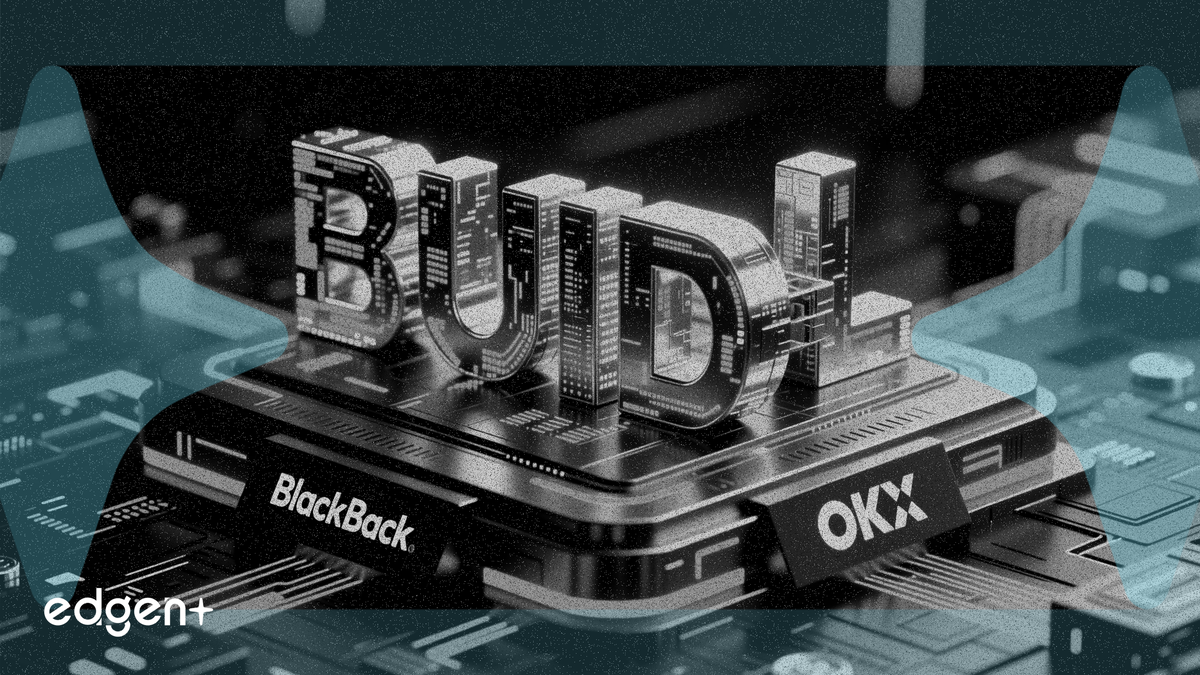
Standard Chartered, BlackRock, and the crypto exchange OKX on Tuesday launched a framework allowing institutional clients to use BlackRock’s $2.5 billion tokenized U.S. Treasury fund as collateral for derivatives trading.
"This product was designed to minimize risk rather than add the layers of risk,” said Rifad Mahasneh, CEO of OKX Middle East. “It becomes more efficient collateral and productive collateral.”
The partnership allows eligible institutional and VIP clients on OKX to post tokens from the BlackRock USD Institutional Digital Liquidity Fund (BUIDL) as margin. The structure gives clients two options: keep BUIDL tokens off-exchange with Standard Chartered while OKX mirrors the collateral for trading, or hold the tokens directly on OKX. Standard Chartered acts as the off-exchange custodian, holding client collateral separate from OKX's own assets, a structure designed to align with traditional finance standards and reduce counterparty risk.
The key innovation is the ability to earn a yield on assets that would otherwise sit idle as static margin. The BUIDL fund, tokenized by Securitize, invests in cash, U.S. Treasury bills, and repurchase agreements, with yield distributed to token holders on-chain. This transforms collateral from a simple capital requirement into a productive financial asset.
The Rise of Real-World Assets
The collaboration is a significant step in the tokenization of real-world assets (RWAs), one of Wall Street’s clearest paths for crypto adoption. The RWA market has grown to approximately $30 billion, an increase of roughly 400 percent since the beginning of 2025, according to data from RWA.xyz. BlackRock CEO Larry Fink has been a vocal proponent of this trend, stating in his annual letter to investors that every financial asset will eventually be tokenized.
This initiative is not the first of its kind for the partners. Standard Chartered and OKX previously launched a similar collateral program in April 2025 with Franklin Templeton’s tokenized money market fund.
Mitigating Risk in a Post-FTX World
The structure directly addresses the counterparty risks that have plagued the crypto industry, most notably in the collapse of FTX. By using a global systemically important bank (G-SIB) partner like Standard Chartered for custody, clients can better insulate their assets from exchange-specific risks. OKX itself has a history with the FTX fallout, having announced in March 2023 that it would turn over about $157 million in frozen assets tied to FTX and Alameda Research to the debtors' estate.
While the new framework enhances capital efficiency and security, regulators remain watchful. In April, the International Monetary Fund warned that moving trading infrastructure onto blockchain-based systems could potentially accelerate financial crises beyond the response capabilities of regulators. The new OKX framework is initially available to clients in the Middle East, with plans to expand based on jurisdictional approval and demand.
This article is for informational purposes only and does not constitute investment advice.