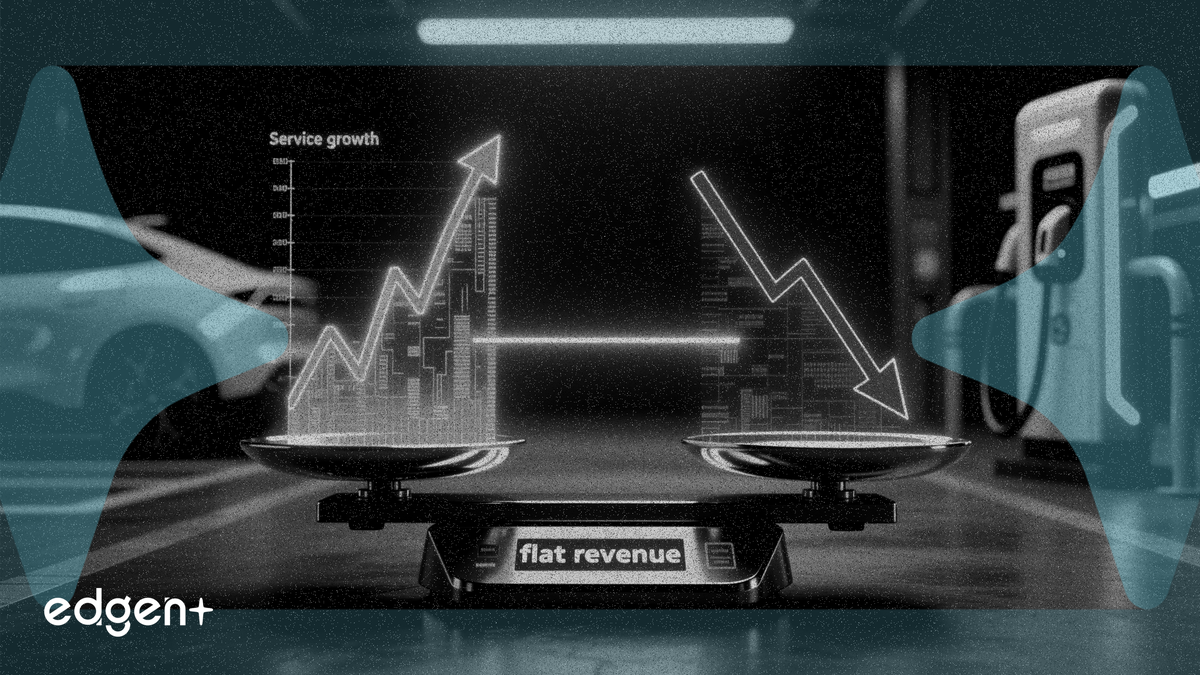
Blink Charging Co. (NASDAQ: BLNK) informó de unos ingresos en el primer trimestre de 20,8 millones $, casi estables con un aumento del 0,3 % respecto al año anterior, ya que el aumento de los ingresos por servicios compensó la caída en las ventas de productos. La empresa de carga de vehículos eléctricos está desplazando estratégicamente su enfoque hacia un modelo más orientado a los servicios.
"El 1T refuerza que Blink está ejecutando nuestro plan", afirmó Mike Battaglia, presidente y director ejecutivo de Blink Charging. "Estamos centrados en lograr la rentabilidad a medida que construimos una infraestructura duradera, mejoramos la utilización con el tiempo y continuamos el cambio hacia ingresos más repetibles, recurrentes y de mayor calidad".
Los ingresos por servicios de la compañía, que incluyen las tarifas de carga y las tarifas de red, aumentaron un 25 % interanual hasta los 13,3 millones $. Esto representa ahora el 64,2 % de los ingresos totales, frente al 51,6 % del primer trimestre de 2025. Por el contrario, los ingresos por productos procedentes de la venta de equipos de carga de vehículos eléctricos disminuyeron un 26,1 % hasta los 6,2 millones $.
La pérdida neta de Blink en el trimestre se redujo significativamente a 11,6 millones $, o (0,08) $ por acción, una mejora con respecto a una pérdida neta de 21,0 millones $, o (0,21) $ por acción, en el mismo período del año pasado. La pérdida de EBITDA ajustado de la compañía también mejoró aproximadamente un 65 % hasta los (5,1) millones $. Para todo el año 2026, Blink mantuvo su previsión de ingresos entre 105 y 115 millones $ con un margen bruto GAAP de alrededor del 35 %.
El giro hacia un modelo centrado en los servicios es una estrategia deliberada para crear un valor a largo plazo más predecible. "En los últimos tres trimestres, hemos ajustado nuestro modelo operativo optimizando nuestros gastos operativos y nuestro perfil de consumo de efectivo", dijo Michael Bercovich, director financiero. Los gastos operativos de la compañía disminuyeron un 35,3 % hasta los 18,4 millones $ en comparación con el año anterior.
Los resultados destacan la transición de Blink de las ventas de hardware puntuales hacia la construcción de su red de cargadores rápidos de CC operados por el propietario. Esta estrategia tiene como objetivo mejorar la utilización de los cargadores y generar flujos de ingresos más consistentes. Los inversores estarán atentos a los resultados del 2T de la compañía para ver si el crecimiento de los ingresos por servicios puede seguir superando la disminución de las ventas de productos y acercar a la empresa a sus objetivos de rentabilidad.
Este artículo tiene únicamente fines informativos y no constituye asesoramiento de inversión.