

BUUU Group is acquiring a majority stake in data center builder Brightray Science and raising over $60 million to make industrialized AI infrastructure delivery its core business.
BUUU Group is acquiring a majority stake in data center builder Brightray Science and raising over $60 million to make industrialized AI infrastructure delivery its core business.
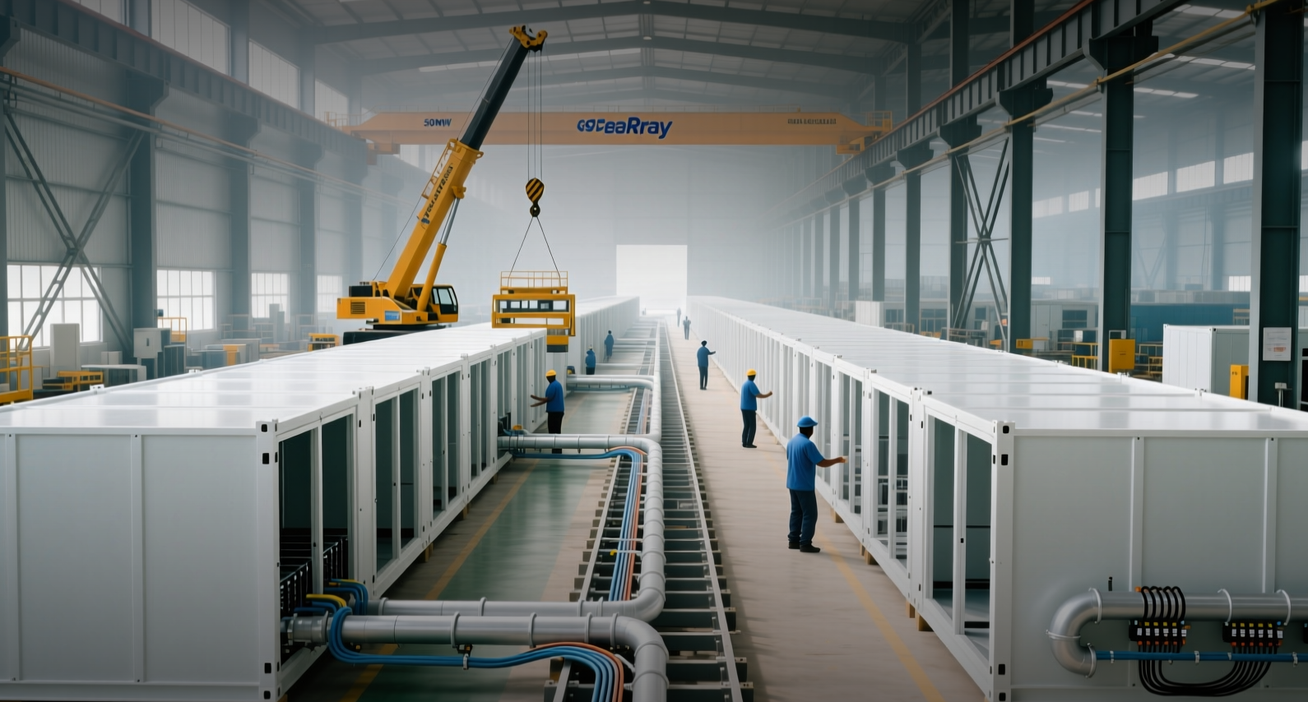
Nasdaq-listed BUUU Group is trading its MICE roots for AI infrastructure, agreeing to acquire 60 percent of prefabricated data center builder Brightray Science while raising more than $60 million to fund the pivot.
"We made the data center one of the fastest parts of AI instead of the slowest," Bin Wang, founder of Brightray and incoming Executive Director and Co-CEO at BUUU, said. "With BUUU we gain the capital base and international standing to take this model global."
The deal, signed Sept. 3, combines newly issued BUUU Class A shares valued at $20.00 each with a performance-linked convertible promissory note capped at 10 million shares and subject to a 19.99 percent ownership limit. Sellers retain 40 percent of Brightray, and BUUU holds a three-year call option on the remainder. Concurrent private placements, together with potential warrant exercises at $10.00 per share, are expected to generate gross proceeds exceeding $60 million for capacity expansion and working capital. The transaction remains subject to customary closing conditions and regulatory approvals.
The acquisition transforms BUUU from a Hong Kong-based events and stage production company into an owner of what management calls "the rate-limiting step of the AI economy." Brightray operates 70MW at the 120MW Sedenak Tech Park campus in Johor, Malaysia, and management targets roughly 1GW of deliveries over the next three fiscal years, with a pipeline expected to reach approximately 2GW — about $9 billion in potential contract value — across Malaysia, Indonesia, Saudi Arabia, the UAE and the United States.
The bet rests on a structural argument about where value accrues in the AI build-out. Data center demand is set to nearly triple by 2030 to some 219GW, and NVIDIA CEO Jensen Huang expects $3-4 trillion of AI infrastructure spending this decade. Yet conventional build cycles stretch 18-36 months, skilled labor is scarce, and a month's delay on a 60MW facility costs about $14.2 million. Brightray compresses delivery to six to nine months by prefabricating and testing over 90 percent of a facility in its ISO-certified 126,000-square-meter factory, which has 300MW of annual manufacturing capacity. Management estimates the faster timeline is worth roughly $200 million of extra revenue-generating life on a single 50MW AI hall, citing McKinsey, JLL and SemiAnalysis data.
The platform spans three delivery models — full prefabrication in 15-50MW blocks, interior prefabrication, and containerized units — supporting racks from 13.5kW air-cooled to 132-144kW liquid-cooled configurations. Brightray's first 20MW at Sedenak was built in eight months. The company is designing for next-generation silicon: air-cooled facilities accept NVIDIA B300 racks today, field-delivered liquid-cooled modules interface with GB300 NVL systems, and 300-600kW Rubin-generation architectures are under joint design alongside 235kW systems such as AMD Helios.
BUUU is relocating its headquarters from Hong Kong to Singapore, placing it beside the region's customers, talent and capital markets. The company's market capitalization stands at $485.2 million with average daily trading volume of about 65,000 shares, making the $60 million-plus raise a substantial expansion relative to its current size.
Execution risk is embedded in the deal. The pipeline comprises signed projects, projects under final review and letters of intent — not all final contracts — and delivery targets are management plans rather than orders or guidance. Neither BUUU nor Brightray has an agreement with NVIDIA, AMD or any other accelerator vendor regarding qualification, and the private placements remain subject to closing conditions.
For a company whose shares trade at a market cap below $500 million, the pivot is a bet that industrialized delivery — not chip supply — becomes the binding constraint on AI infrastructure growth. If Brightray's pipeline converts, BUUU would control a meaningful share of Southeast Asia's fastest-growing data center market; Johor is already Asia Pacific's largest, according to Cushman & Wakefield. If conversion stalls, the company carries the dilution of a $60 million raise and a stock-based acquisition into a business it has not previously operated.
This article is for informational purposes only and does not constitute investment advice.
