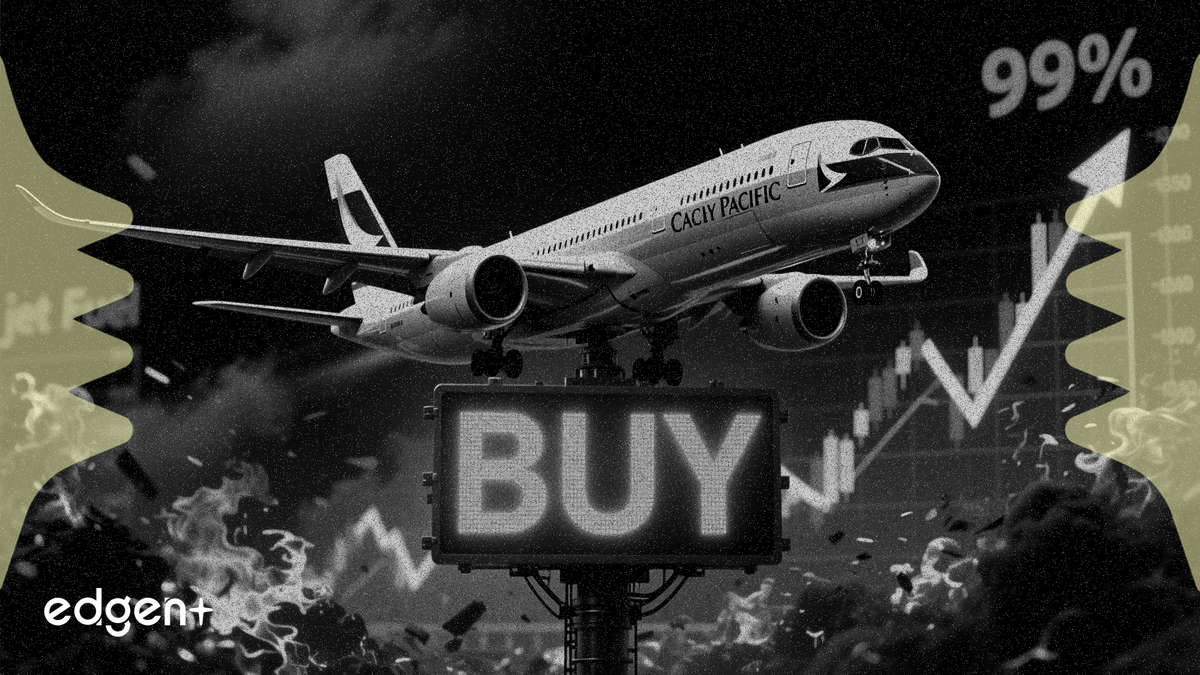
UBS maintained its Buy rating and HKD 14.9 price target on Cathay Pacific (00293.HK) even as a sharp spike in fuel costs forces the carrier to cut capacity, according to a new research report.
The bank noted that while Cathay is grappling with a 99% increase in jet fuel prices since late February, its dominant full-service carrier segment gives it stronger pricing power relative to regional peers.
The report highlights the severe cost pressure from jet fuel, which rocketed from $99.4 per barrel at the end of February to $197.8 in early April. To mitigate the impact, Cathay Pacific plans to reduce flight capacity by 2% from mid-May through June, while its low-cost carrier HK Express will implement a 6% reduction. These measures follow a period of strong demand in March, which saw revenue passenger kilometres (RPK) climb 22% year-over-year and passenger load factor (PLF) hit a record 92.2%.
The decision to trim flights, while necessary for cost control, will cap revenue potential from the robust travel demand and presents near-term headwinds for earnings, the report suggests.
Cathay’s situation reflects a broader crisis hitting the global aviation industry. Airlines worldwide have entered a "self-preservation mode," according to aviation analytics firm Cirium. In the U.S., Delta Air Lines faces an additional $2.5 billion in fuel costs this quarter, while in Europe, Lufthansa is retiring older aircraft to manage expenses. Asia-Pacific carriers are also under pressure, with Qantas cutting domestic capacity by 5%.
For Cathay Pacific, UBS believes the airline is relatively well-positioned because its full-service operations, which are expected to account for 62% of group revenue in 2025, can better absorb costs through higher fares. However, the announced capacity reductions will only partially offset the extreme fuel price surge.
The flight reductions signal that cost pressures are overriding the benefits of strong passenger demand for now. Investors will be closely watching the airline's second-quarter results to gauge the full financial impact of these capacity cuts and persistently high fuel costs.
This article is for informational purposes only and does not constitute investment advice.