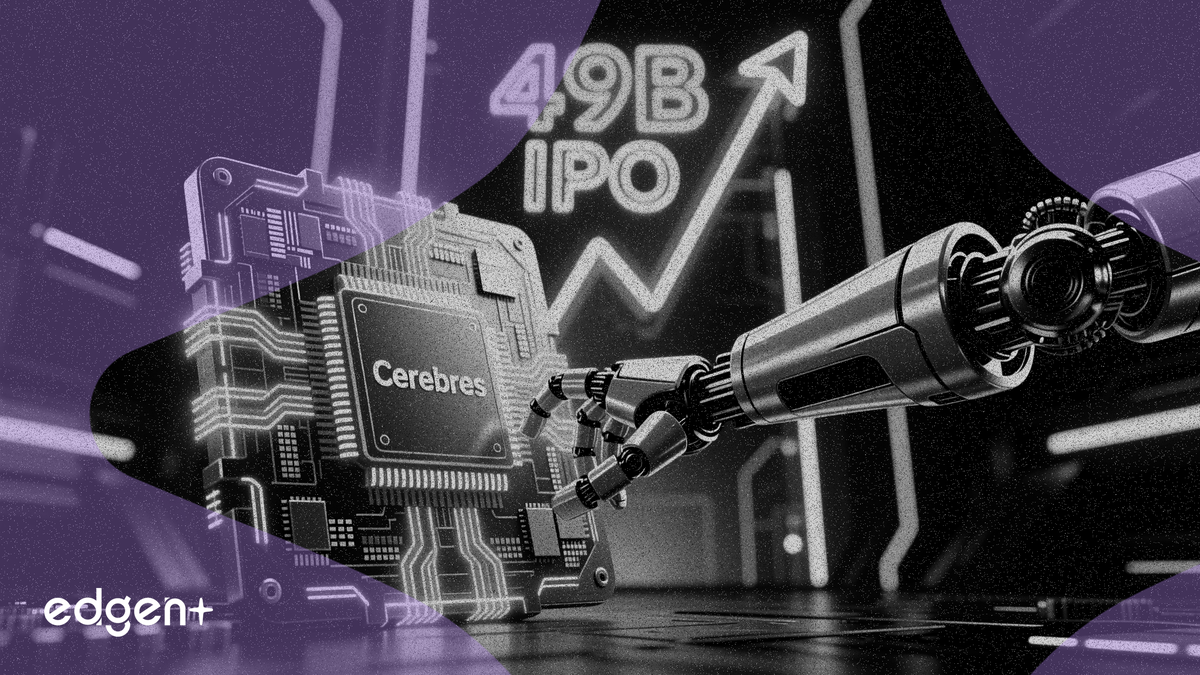
Cerebras Systems Inc., une entreprise d'informatique spécialisée dans l'intelligence artificielle, a rejeté une offre d'acquisition préliminaire d'Arm Holdings Plc et de son actionnaire majoritaire SoftBank Group Corp. dans les semaines précédant son introduction en bourse, selon des sources proches du dossier. L'entreprise vise désormais une valorisation de près de 49 milliards de dollars pour son IPO après avoir relevé son objectif de prix par action, signe d'une forte demande des investisseurs pour le matériel IA spécialisé.
« Il est remarquable que l'entreprise ait été valorisée à 8 milliards de dollars en octobre… bien que les contrats importants avec OpenAI et Amazon Web Services aident certainement la cause », déclare Brian Colello, analyste actions senior chez Morningstar.
Le concepteur de puces d'IA semble en passe de lever 4,8 milliards de dollars après avoir augmenté sa fourchette de prix cible à 150-160 dollars par action, contre 115-125 dollars précédemment. À cette nouvelle fourchette, l'entreprise, fondée en 2015, vaudrait près de 50 milliards de dollars, contre une valorisation d'environ 34 milliards de dollars citée dans des rapports antérieurs. Cerebras devrait fixer le prix de son IPO tard mercredi, le début des négociations étant prévu pour jeudi.
Le rejet du rachat et l'augmentation de la valorisation de l'IPO témoignent de la confiance de Cerebras dans sa position au centre de deux tendances majeures : la mise en place de capacités d'IA souveraines par les nations et le cycle massif d'approvisionnement en matériel pour l'inférence IA. Néanmoins, l'entreprise est confrontée à une concurrence intense de la part du leader du marché Nvidia et à des risques liés à sa forte concentration de revenus provenant de quelques gros clients, dont un contrat de 20 milliards de dollars avec OpenAI.
Spécialisation dans l'Inférence
Cerebras conçoit des puces spécialisées pour l'inférence IA, le processus d'exécution des modèles d'IA en direct avec lesquels les utilisateurs interagissent. Ses produits utilisent une architecture unique « tolérante aux pannes » qui permet à l'entreprise de construire des puces massives à l'échelle de la galette (wafer-scale) capables de contourner les défauts, offrant ainsi des performances élevées. Les puces utilisent également une structure de mémoire différente, la SRAM, qui permet des requêtes plus rapides.
« Le marché du matériel IA a basculé de la domination du cycle d'entraînement vers la mise à l'échelle du cycle d'inférence, où la vitesse de génération de jetons et le coût par requête déterminent le positionnement concurrentiel », a déclaré Dimitri Zabelin, analyste de recherche en investissement senior chez PitchBook. Des contrats avec de grands laboratoires d'IA comme OpenAI et Amazon suggèrent que Cerebras a trouvé un créneau dans les charges de travail qui nécessitent des temps de réponse extrêmement rapides.
Un Marché Hautement Concurrentiel
Bien que la demande des investisseurs pour l'IPO semble forte, Cerebras rivalise avec les plus grands noms de la technologie. « L'unité commerciale Groq de Nvidia est probablement le concurrent le plus féroce de Cerebras, car les deux s'attaquent à l'inférence IA en utilisant une mémoire SRAM plus petite mais plus rapide au lieu de la mémoire traditionnelle à large bande passante », explique Colello.
Le champ concurrentiel comprend également des fabricants de puces d'accélération IA comme AMD, des puces personnalisées conçues par des hyperscalers comme Google, AWS et Microsoft, ainsi que des sociétés de conception de puces telles que Broadcom et Marvell. Les investisseurs surveillent également la structure des contrats de Cerebras, tels que son arrangement avec OpenAI, qui implique un engagement à acheter des milliards de dollars de puces en échange d'une participation dans la société. Un échec d'OpenAI à atteindre ses propres objectifs de croissance pourrait constituer un risque pour les revenus futurs de Cerebras.
Cet article est fourni à titre informatif uniquement et ne constitue pas un conseil en investissement.