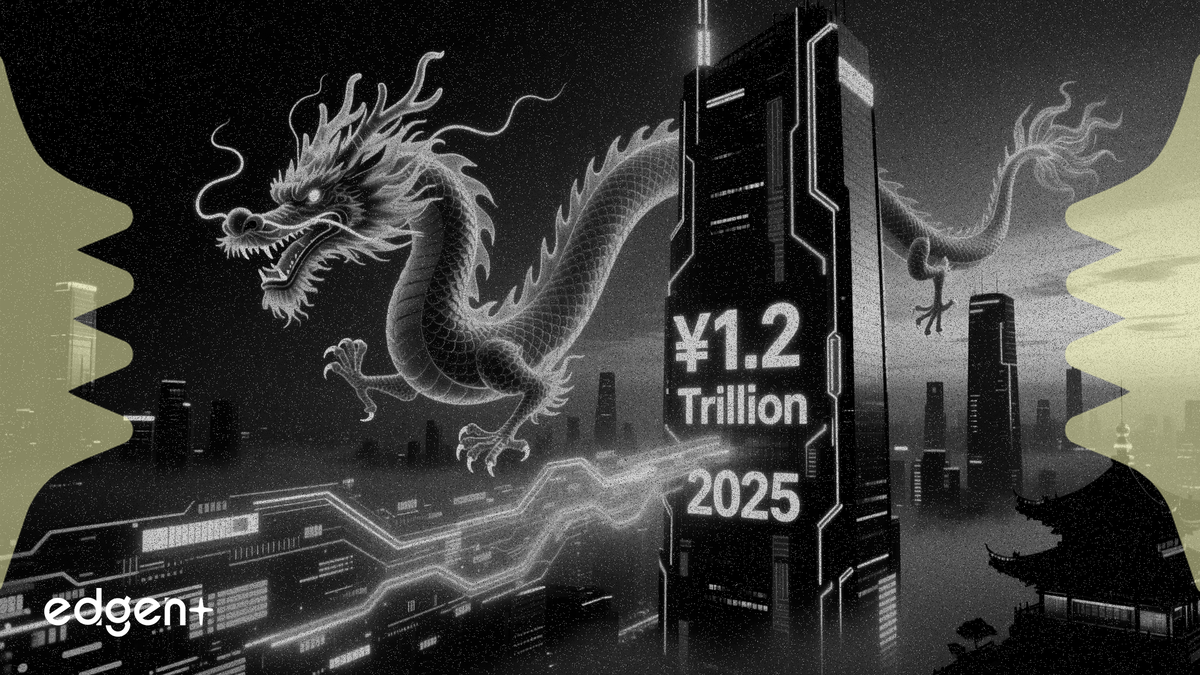
China's state-led push into artificial intelligence and the digital economy is set to hit new milestones, with Beijing targeting a 1.2 trillion yuan AI core industry by 2025.
A new government report lays out an ambitious blueprint for technological advancement, projecting that the core industries of the digital economy will constitute over 10.5 percent of the nation's gross domestic product by next year. The "Digital China Development Report (2025)," released at the 9th Digital China Construction Summit, frames the strategy as a critical driver of high-quality development and technological self-sufficiency.
"Current digital China construction shows enhanced investment and financing service capabilities, security assurance, digital governance effectiveness, and international cooperation," Yu Ying, deputy director of the National Data Bureau, said at the summit.
The plan is underpinned by a significant ramp-up in infrastructure and research. Fixed-asset investment in high-tech services grew 3.5 percent year-over-year, with the information services sub-sector climbing 28.4 percent, the report showed. China now accounts for 60 percent of global artificial intelligence patents, and the nationwide "East Data, West Computing" initiative to build an integrated data center network is fully underway.
This national strategy aims to weave digital and AI capabilities through every facet of the economy, from industrial manufacturing to public services. The report signals sustained state backing for domestic technology champions and infrastructure providers, creating a clear policy tailwind for companies aligned with Beijing's goals for years to come.
Investment Accelerates
The report's targets are backed by substantial state-guided capital. The launch of the National Venture Capital Guiding Fund in 2025 is designed to channel funds into strategic sectors. The 28.4% jump in information services investment highlights the rapid capital formation in areas like data centers, cloud computing, and AI model development, which form the bedrock of the digital economy.
This contrasts with the largely private-sector-led AI buildout in the West, driven by companies like NVIDIA. While Beijing's approach involves significant state direction, it also relies on a new generation of globally competitive companies to execute the vision.
From Policy to Practice
The strategy's impact is already visible in public services. The national smart education platform has amassed over 178 million users across more than 200 countries, while the number of internet medical users in China has reached 411 million, or 36.5 percent of the country's internet population.
Companies like United Imaging Healthcare (SSE:688271) exemplify the corporate alignment with this national push. The Shanghai-based firm, which now employs over 8,700 people and has filed for more than 10,000 patents, is a key player in deploying advanced medical imaging and digital health solutions globally, reinforcing China's goal of fostering domestic leaders in high-tech fields.
This article is for informational purposes only and does not constitute investment advice.