
China's RMB260 billion state-bank recapitalization lifts CET1 ratios by 89 basis points and supports dividend yields above government bonds, Goldman Sachs said.
China's RMB260 billion state-bank recapitalization lifts CET1 ratios by 89 basis points and supports dividend yields above government bonds, Goldman Sachs said.
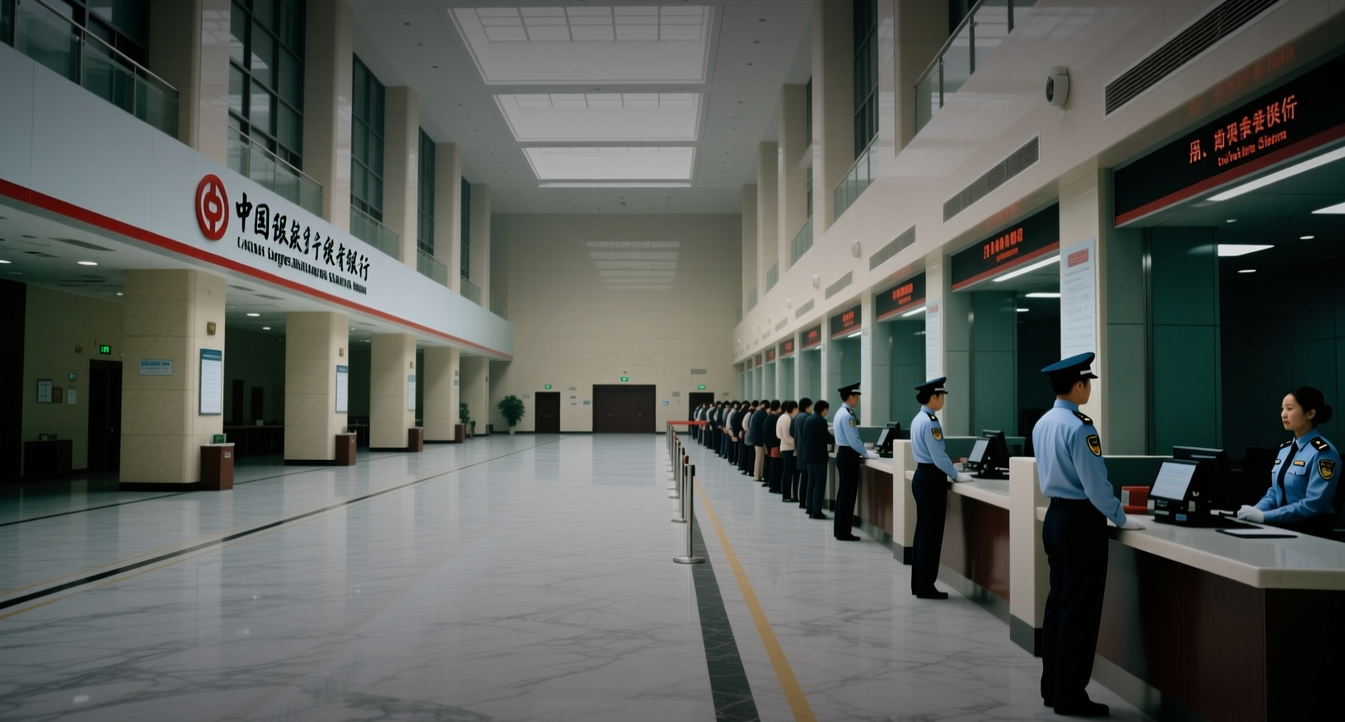
China's second round of state-bank recapitalization, totaling RMB260 billion, is designed to strengthen balance-sheet buffers and sustain dividend yields near 5 percent rather than accelerate loan growth, Goldman Sachs said.
"The new round of capital injections further strengthens capital adequacy levels of Chinese banks, providing greater flexibility for future loan growth and shareholder returns," Goldman Sachs said in a report.
ICBC plans to raise up to RMB100 billion through an A-share private placement, with the Ministry of Finance subscribing RMB70 billion and China National Tobacco Corporation and its subsidiaries RMB30 billion. Agricultural Bank of China targets up to RMB160 billion, with the ministry contributing RMB130 billion. The ministry's combined RMB200 billion subscription accounts for 76.9 percent of the total. The placements follow the first round completed in 2025, when Bank of China, China Construction Bank, Bank of Communications and Postal Savings Bank raised a combined RMB520 billion backed by RMB500 billion of special sovereign bonds.
The recapitalization marks the final stage of capital replenishment for China's six largest state banks and reinforces a constructive view on the sector, Goldman said. Dividend yields of 4 to 5 percent at major banks still exceed the approximately 1.68 percent yield on 10-year government bonds, implying positive long-term significance for shareholders even after accounting for placement pricing dilution.
Goldman estimates ICBC's 2026 earnings-per-share dilution at about 3.5 percent and book value per share dilution at about 1.6 percent, based on the average A-share price over the 20 trading days before the announcement. The broker forecasts 5 percent compound annual EPS growth and 7 percent book value growth for ICBC from 2026 to 2028, suggesting the dilution impact could largely be recouped within two years. Raising the dividend payout ratio from 30 percent to 31 percent implies about a 3 percent increase in dividend per share, which Goldman assumes ICBC can maintain after the capital injection completes.
The capital injections are aimed primarily at strengthening balance-sheet resilience and loss-absorption capacity rather than accelerating loan growth, Goldman said, noting that loan growth at the four banks that completed injections in 2025 did not materially accelerate afterward. The 2026 Government Work Report allocated RMB300 billion in special sovereign bonds for bank capital replenishment, with issuance scheduled for May and June. The September 2024 directive from the National Financial Regulatory Administration set the framework, instructing the six largest commercial banks to reinforce core Tier 1 capital on a phased basis under the principle of "coordinated advancement, phased implementation, and bank-specific strategies."
A-share prices were stable in the session before the announcement. Agricultural Bank of China closed at CNY6.96, up about 1 percent, while ICBC closed at CNY8.13, up about 0.4 percent. Both banks' capital increases must complete internal and external approval procedures before implementation, though market participants expect smooth passage given the subscribers are primarily the Ministry of Finance and state-owned enterprises.
Among major Chinese banks, Goldman prefers China Construction Bank and Bank of China, both rated Buy with H-share target prices of HKD10.1 and HKD5.96 respectively. ICBC carries a Neutral rating with an H-share target price of HKD6.92, while Postal Savings Bank is rated Buy at HKD5.76 and Bank of Communications is rated Sell at HKD6.39. Among regional banks, the broker prefers Bank of Ningbo.
The broader capital-boosting push extends beyond banks. Bloomberg reported that China's largest banks and insurers are seeking at least RMB357 billion ($53.2 billion) in fresh capital, with the Ministry of Finance footing more than 80 percent of the bill. The ministry is also fully subscribing to People's Insurance Company of China's RMB15 billion placement and contributing RMB35 billion to China Life Insurance, RMB30 billion to Export-Import Bank of China, RMB10 billion to China Export & Credit Insurance Corp and RMB7 billion to China Taiping Insurance Group.
With the second round now covering all six major state banks, the focus shifts to whether the capital injections translate into higher shareholder returns. Goldman said the dividend yield advantage over government bonds — roughly 3 to 4 percent after factoring in placement pricing impact — implies the sector retains appeal for income-focused investors even as credit demand stays weak. The last comparable deployment of special sovereign bonds for bank recapitalization was in 1998, when Beijing injected capital into the four largest state banks ahead of their eventual listings, a program that preceded a decade of balance-sheet repair.
This article is for informational purposes only and does not constitute investment advice.
