

The U.S. government is betting $50 million that domestic indium phosphide photonics manufacturing can keep pace with AI's demand for data center connectivity.
The U.S. government is betting $50 million that domestic indium phosphide photonics manufacturing can keep pace with AI's demand for data center connectivity.
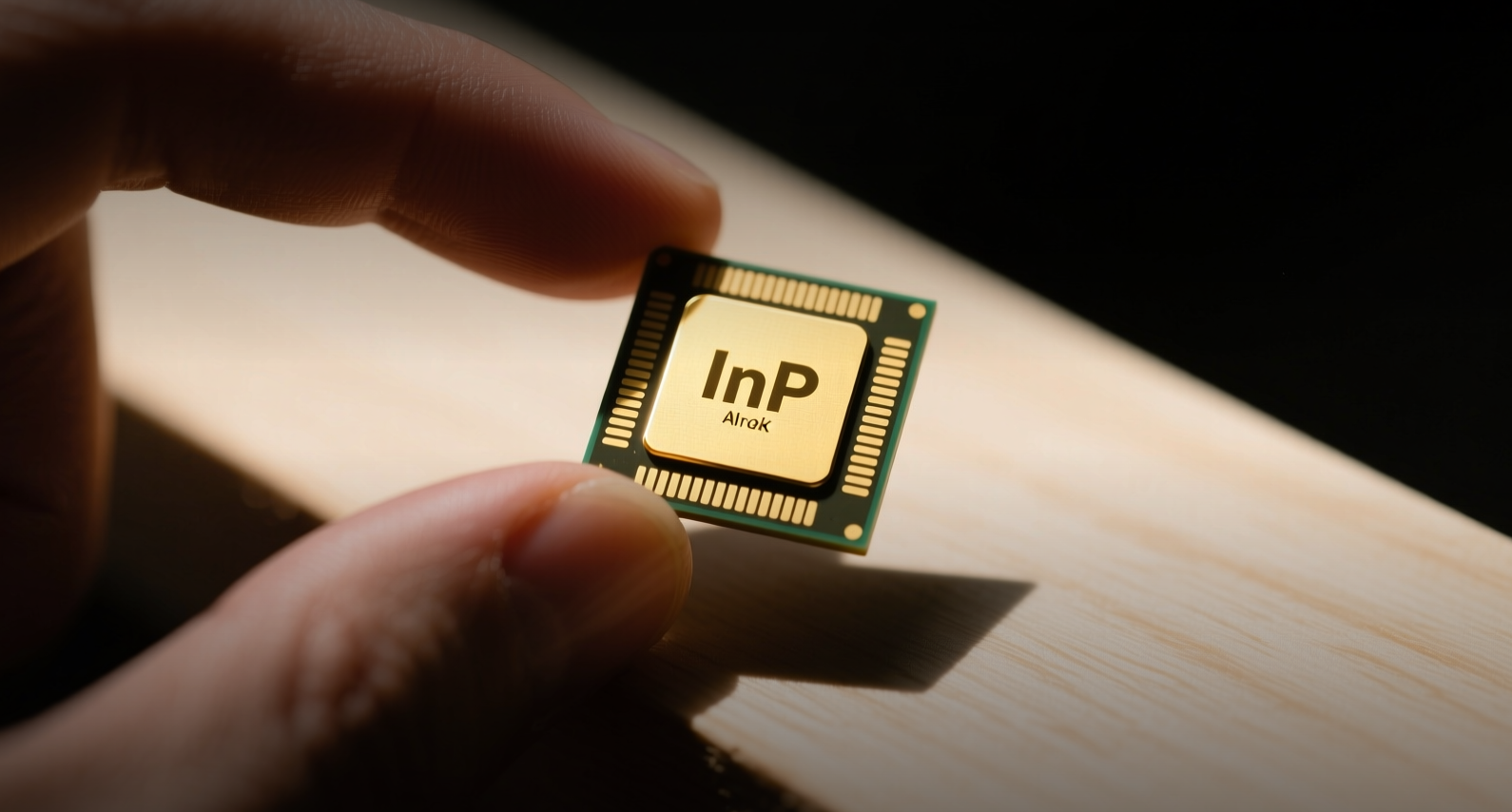
Coherent Corp. received a $50 million CHIPS Act commitment to expand its indium phosphide semiconductor plant in Sherman, Texas, quadrupling wafer capacity to meet AI-driven demand for optical networking components.
"Semiconductor photonic devices are essential building blocks of AI infrastructure, enabling the high-speed connectivity required to move unprecedented amounts of data between processors, memory, and systems," Jim Anderson, chief executive officer of Coherent, said.
The expansion will double the facility's manufacturing space and add advanced wafer fabrication equipment and cleanroom capacity. At completion, the Sherman site is expected to create more than 1,000 jobs, including more than 550 direct roles in advanced manufacturing, engineering, and technical positions. The CHIPS award builds on roughly $20 million in prior support from the Texas Semiconductor Innovation Fund and the Sherman Economic Development Corporation.
The investment strengthens Coherent's position as the world's first high-volume producer of 6-inch InP wafers, a specialized material critical for optical interconnects that move data between GPUs in AI data centers. With NVIDIA as a partner of more than two decades, the expansion positions Coherent to capture a growing share of the optical networking market as AI clusters scale from thousands to millions of interconnected processors.
The Sherman facility is home to the world's first and largest volume-production 6-inch InP manufacturing platform. Indium phosphide — a III-V compound semiconductor with superior electron mobility and direct bandgap properties — enables the high-speed photonic devices that convert electrical signals to optical ones and back, forming the physical layer underpinning every AI data center's internal network.
Coherent and NVIDIA have collaborated for more than two decades, with the partnership deepening as AI workloads have scaled. "AI factories are the infrastructure of the new industrial revolution. Connecting millions of GPUs into one thinking machine requires optical technology built for scale, speed, and energy efficiency," Jensen Huang, founder and CEO of NVIDIA, said. The companies are jointly pursuing a $2 billion AI infrastructure upgrade, according to the Associated Press.
The CHIPS Act funding comes as the U.S. seeks to reduce reliance on Asian semiconductor manufacturing for strategically important technologies. Bill Frauenhofer, executive director for semiconductor investment and innovation at the Department of Commerce, said the incentives would "expand production capability, strengthen the U.S. semiconductor supply chain, and accelerate the next generation of critical optical technologies."
The expansion also comes as hyperscale cloud providers — Amazon Web Services, Microsoft Azure, and Google Cloud — race to build out AI data center capacity, driving demand for high-bandwidth optical interconnects. Coherent's InP-based photonic devices are used in the transceivers and optical engines that link GPU clusters, a market that research firm LightCounting estimates will exceed $20 billion annually by 2028.
For investors, the expansion shows that Coherent is betting on the optical networking layer of AI infrastructure — a segment historically overshadowed by GPU makers like Nvidia and memory suppliers like SK Hynix. Coherent shares trade as a direct play on the photonics supply chain, competing with Lumentum in the high-speed optical component market. The CHIPS backing provides non-dilutive capital that reduces the cost of the expansion, potentially improving returns on invested capital as the Sherman facility ramps production.
This article is for informational purposes only and does not constitute investment advice.
