
A new space race is heating up, not for the moon, but for computing power in low-Earth orbit.
A new space race is heating up, not for the moon, but for computing power in low-Earth orbit.
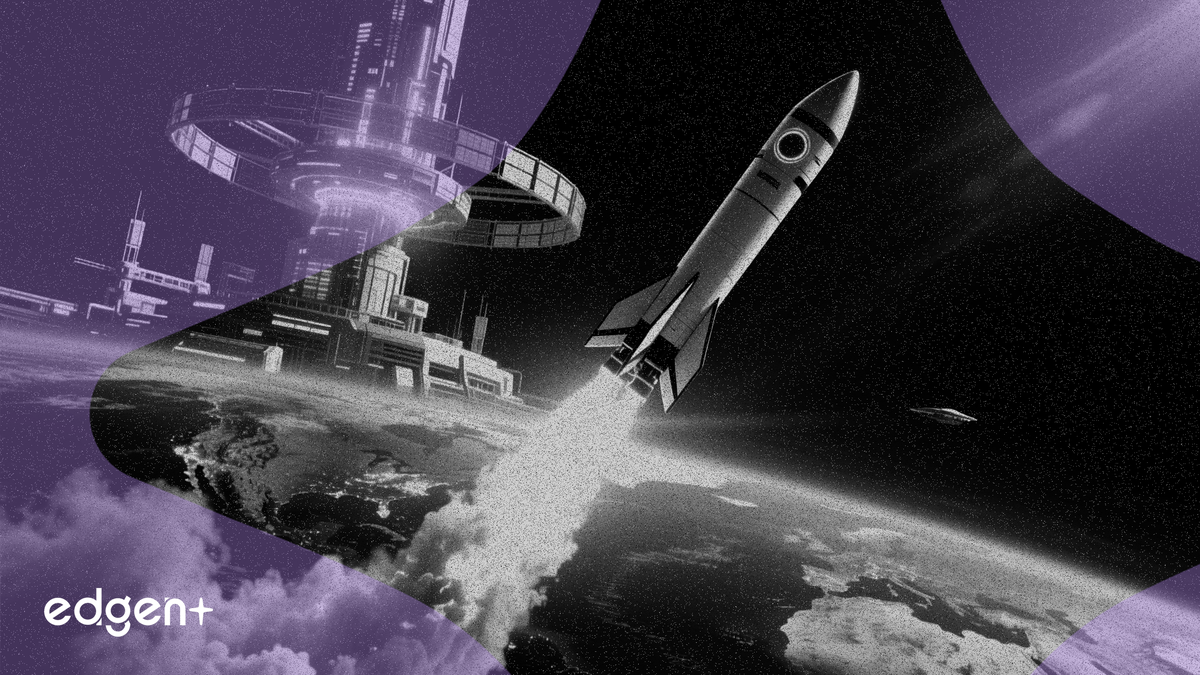
Cowboy Space, a startup founded by Robinhood co-founder Baiju Bhatt, has raised $275 million to build orbital data centers, tackling the dual constraints of power and launch costs that challenge the future of artificial intelligence. The Series B round, led by Index Ventures, brings Cowboy’s total funding to approximately $365 million and pushes its valuation to $2 billion, making it one of the space industry’s fastest unicorns.
“Cowboy is building at exactly the right moment, as demand for AI compute and energy begins to outstrip what terrestrial infrastructure can support,” Index Ventures partner Jan Hammer said. The firm’s investment points to a growing belief that moving massive AI operations to space is becoming an economic and logistical necessity.
The new funding underscores the intense investor appetite for off-planet compute, a field crowded with giants like SpaceX and Blue Origin. Cowboy’s valuation follows a similar trajectory to rival Starcloud, which was valued at $1.1 billion earlier this year. The capital will fuel Cowboy’s plan to launch its first proprietary rocket carrying a one-megawatt data center by the end of 2028.
At stake is a new market for "space-as-a-service" AI infrastructure, driven by insatiable demand from companies like Anthropic, which has expressed interest in using orbital compute. To be competitive, however, companies must solve the launch cost problem. Researchers at Google estimate launch costs must fall to $200 per kilogram; a mission on SpaceX’s Falcon 9 can cost around $3,400 per kilogram today. Cowboy’s solution is to take control of its own destiny by building its own rockets.
Unlike rivals who plan to use third-party rockets like SpaceX’s Starship, Cowboy Space is designing its launch vehicle and data center as a single, integrated system. The rocket’s upper stage, which is typically discarded, will become the data center itself, a design choice the company says reduces redundant mass and optimizes the amount of power and compute delivered to orbit.
“At Cowboy, we’re designing the launch vehicle, upper stage, and orbital compute platform as a single integrated system,” Bhatt said. “That level of integration requires full vertical control.”
Early next year, the company aims to deploy its first “Galactic Brain” node, which will use NVIDIA’s Space-1 Vera Rubin modules designed for AI in low-Earth orbit. The ultimate goal is a constellation of thousands of these orbiting data centers, each powered by vast solar arrays in constant sunlight.
While the physics of orbital power and compute are sound, the business case faces immense challenges. As one space engineer noted in an online cost-analysis tool, “the physics doesn’t immediately kill it, but the economics are savage.” A primary hurdle is heat. In the vacuum of space, there is no air to carry heat away from power-hungry AI chips.
Engineers must design sophisticated and massive radiators to dissipate heat, adding significant mass and cost to each satellite. Another challenge is data transmission. The orbital data centers will need to function as a cluster, requiring high-bandwidth, low-latency communication between thousands of satellites using power-intensive space lasers.
This high-risk, high-reward venture could reshape the data center market. Success for Cowboy Space, and its competitors like SpaceX and Blue Origin, would create a new asset class for investors and provide a critical infrastructure layer for the next decade of AI development. For now, the focus is on demonstrating that the economics, however savage, can be tamed.
This article is for informational purposes only and does not constitute investment advice.
