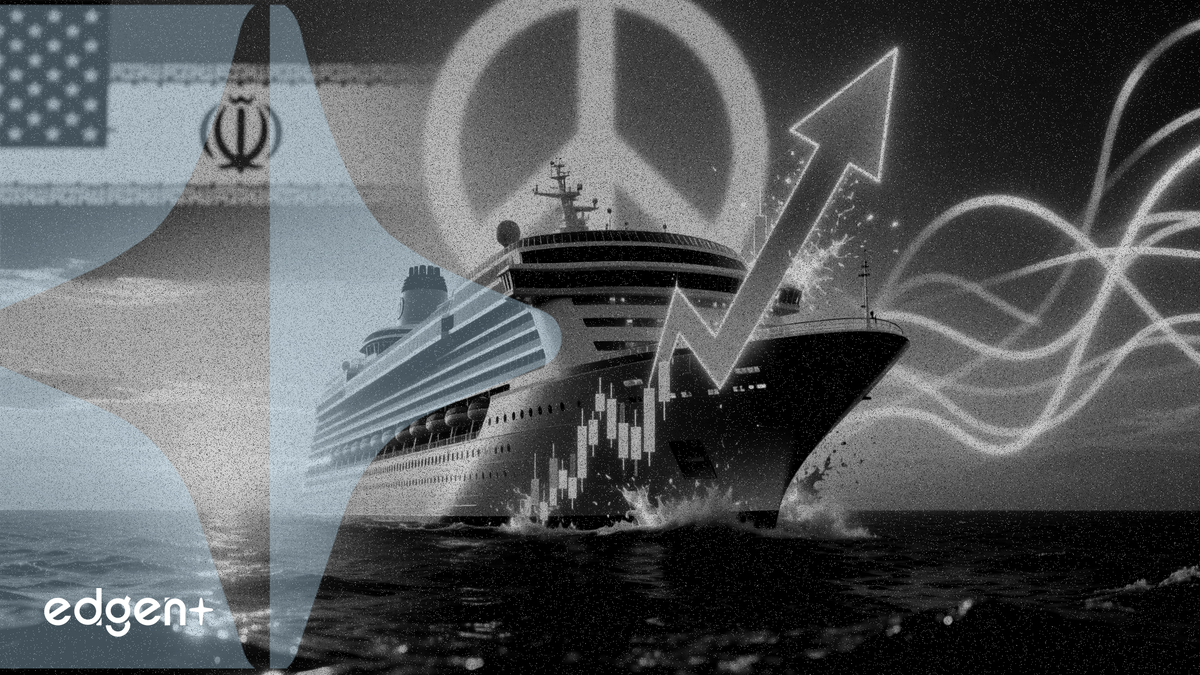
Shares of major cruise lines soared Wednesday after reports of a potential peace deal between the U.S. and Iran sparked hopes for lower fuel costs, with Royal Caribbean surging as much as 8.75 percent.
The rally comes despite a string of negative headlines for the sector, including a recent downgrade of Norwegian Cruise Line Holdings (NYSE: NCLH). Northcoast Research cut the stock to Neutral, citing a "slower-than-expected balance sheet transformation and an industry backdrop made worse by the war in Iran," according to a May 6 report.
The prospect of geopolitical de-escalation sent shares of the three largest operators sharply higher. Royal Caribbean (NYSE: RCL) closed up 7.5%, Carnival Corp. (NYSE: CCL) gained 6.3%, and the recently beleaguered Norwegian Cruise Line Holdings added 4.1%. The move provided a sharp relief for a sector that has been under pressure from high oil prices, with West Texas Intermediate crude recently trading at $99.89 a barrel, in the 96th percentile of its one-year range.
For investors, the rally highlights the cruise industry's sensitivity to macroeconomic factors, particularly fuel prices, which are a primary operating expense. A sustained drop in oil could significantly boost profit margins for operators, which have limited ability to pass on fuel surcharges to customers. The market's enthusiastic response suggests traders are weighing the potential for cost relief more heavily than company-specific issues, such as Norwegian's 5.3x net leverage.
Oil Relief Overrides Headwinds
The market's focus on a potential drop in oil prices was strong enough to overshadow a disturbing headline about a suspected hantavirus outbreak that has killed three people aboard the MV Hondius, an expedition-style cruise ship. While the ship's owner is a private company, the news revived memories of travel disruptions during the pandemic but failed to dent the rally.
The gains also bucked a recent trend of analyst pessimism, particularly toward Norwegian. The company's stock was downgraded by Northcoast Research on May 6, following price target cuts from Goldman Sachs, Morgan Stanley, and Barclays. Analysts have been concerned by Norwegian's high debt load of roughly $15.2 billion and a recent cut in its full-year 2026 adjusted EPS guidance to a range of $1.45 to $1.79, which management blamed on Middle East disruptions and elevated fuel costs.
A Divergent Fleet
While the entire sector rose on the peace talks news, performance among the major operators has been uneven. Carnival, which does not hedge fuel costs, saw its stock gain despite the industry-wide pressure. Royal Caribbean has noted that Mediterranean bookings recovered after a temporary dip.
The bull case for the cruise lines, particularly a beaten-down name like NCLH, is that a resolution in the Middle East could provide significant macro relief, allowing its turnaround story to take hold. However, the bear case remains that high leverage and operational challenges persist. Until a peace deal is confirmed and oil prices show a sustained decline, the sector is likely to remain volatile.
This article is for informational purposes only and does not constitute investment advice.