A Historic Reversal
Chinese memory giant Changxin Memory Technologies is forecasting up to 75 billion yuan in first-half profit, a historic reversal from years of losses, signaling a major shift in the global semiconductor market.
A Historic Reversal
Chinese memory giant Changxin Memory Technologies is forecasting up to 75 billion yuan in first-half profit, a historic reversal from years of losses, signaling a major shift in the global semiconductor market.

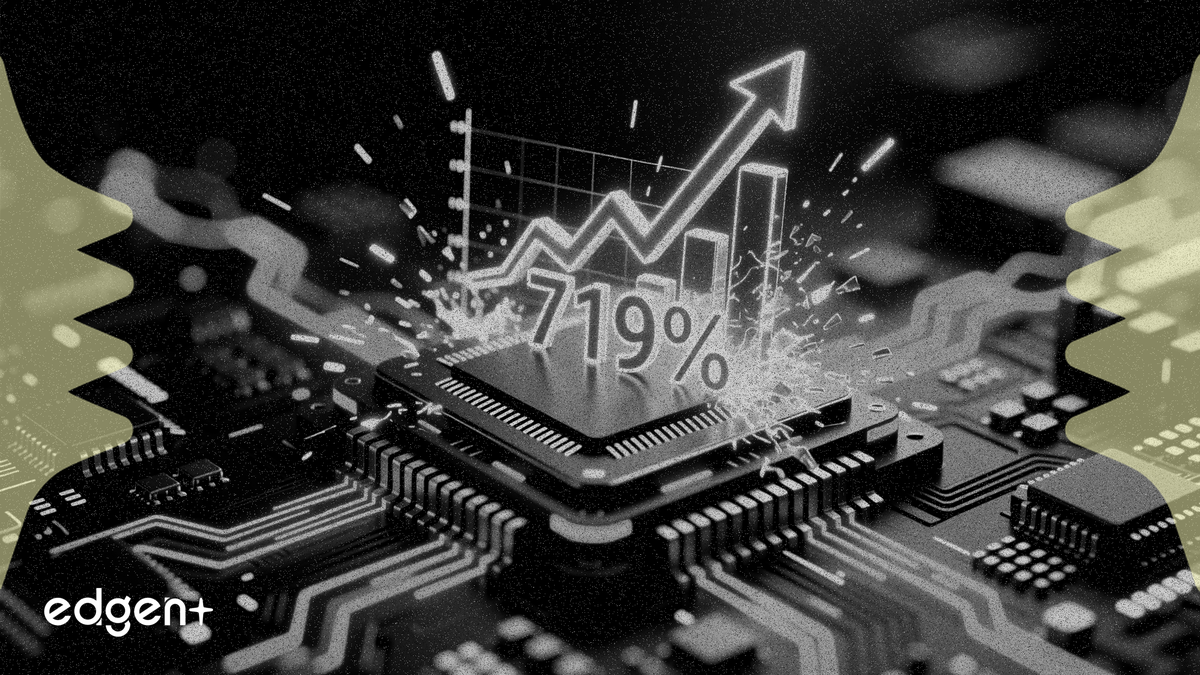
Changxin Memory Technologies posted a 719% year-on-year revenue surge to 50.8 billion yuan ($7.5 billion) in the first quarter of 2026, according to an updated IPO prospectus filed May 17, as the company capitalizes on a global AI-driven boom in memory chip prices.
"The two memory chipmakers have delivered what can be described as 'epic' earnings results," Chen Jing, a vice president of the Technology and Strategy Research Institute, told the Global Times. "It marks a crucial transition for China's memory chip industry from a period of strategic investment to a stage of industrial returns."
The filing reveals a net profit of 33.01 billion yuan for the quarter, a sharp turnaround from a 2.8 billion yuan loss in the same period last year. CXMT forecast first-half revenue between 110 billion and 120 billion yuan, with net profit expected to reach between 66 billion and 75 billion yuan. The performance follows nearly a decade of cumulative losses exceeding 36.6 billion yuan.
The explosive growth, mirrored by rival Yangtze Memory's own IPO plans, puts China's domestic chipmakers on a path to challenge the long-standing dominance of Samsung Electronics, SK Hynix, and Micron Technology. This trio has historically controlled over 90% of the dynamic random access memory (DRAM) market, a sector valued at over $450 billion in 2025.
The public filings from China’s two largest memory producers signal a new phase of domestic competition in the global semiconductor market. While CXMT advances its listing on Shanghai's STAR Market, rival Yangtze Memory Technologies Holding Co. (YMTC) has also completed its IPO tutoring registration, according to a disclosure from the China Securities Regulatory Commission.
YMTC’s revenue exceeded 20 billion yuan in the first quarter, more than doubling from a year earlier, with its NAND flash chip output now accounting for more than 10 percent of the global market, according to a Jiemian News report. The concurrent IPO pushes are seen by analysts as a move to secure capital for further expansion and technological upgrades.
"As more Chinese storage firms move toward public listings, they are expected to gain greater capital market recognition, accelerate domestic substitution and strengthen China's push into the higher end of the global memory chip industry," Ma Jihua, a veteran industry analyst, told the Global Times.
While Chinese producers are enjoying explosive growth, a top Samsung executive has warned that the AI-driven "super cycle" in memory chips could lose momentum by 2028. Kyung Kye-hyun, an adviser who led Samsung's semiconductor business until May 2024, identified the rapid expansion of Chinese manufacturing capacity as a major challenge.
"Chinese companies are planning to increase capacity by 300,000 wafers over the next three years, and I'm concerned this could allow them to capture around 12 to 13 percent market share," Kyung said at a recent forum.
He also noted that memory demand could slow as the technology giants currently driving the AI boom may scale back investment if returns weaken. "Big tech companies are investing aggressively right now, but capital expenditures are beginning to exceed cash flow," Kyung said.
While CXMT and YMTC are riding the current AI wave, their focus remains largely on LPDDR memory for consumer electronics, a segment the global giants have partially vacated to focus on high-bandwidth memory (HBM) for AI accelerators. The next test for China's chipmakers will be competing in the HBM segment, where SK Hynix and Samsung currently lead. Investors will be watching to see if the high valuations sought in their IPOs can be justified by a successful push into this higher-margin market, or if a cyclical downturn driven by their own capacity expansion will cap future returns.
This article is for informational purposes only and does not constitute investment advice.