


Key Takeaways:
- Actuators account for 40-50% of humanoid robot BOM costs, Daiwa says
- Rotary actuators dominate, while linear gains traction in industrial designs
- Top picks: TUOPU GROUP, MINTH GROUP, and SANHUA
Key Takeaways:
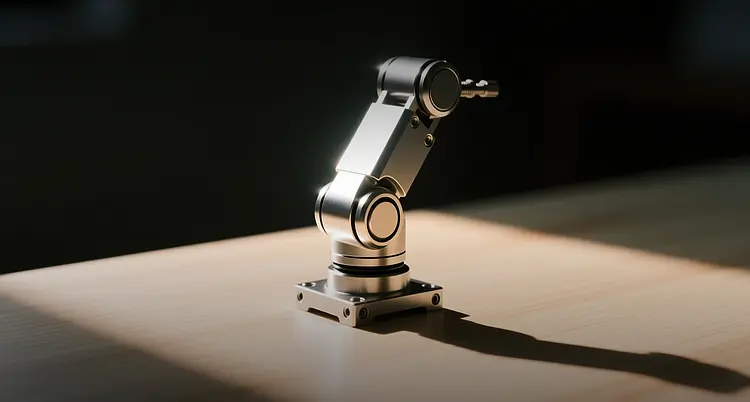
Daiwa identified body joint and dexterous hand actuators as the most investable hardware segment in the humanoid robot supply chain.
"Humanoid robot actuator design is entering an early stage of standardization, although architectural choices have yet to be fully unified," the broker said in a report.
Actuators account for an estimated 40-50% of bill-of-materials costs for humanoid robots, Daiwa said. Rotary actuators remain the mainstream solution because of a mature supply chain, compact structure and lower costs. Linear actuators are gaining traction in high-load joints where torque density, impact resistance and static holding efficiency are more critical. The broker expects lightweight service robots to adopt predominantly rotary architectures, while industrial humanoid robots increasingly use hybrid rotary-plus-linear solutions.
Dexterous hands remain one of the most important hardware bottlenecks for mass production, Daiwa said. Fully actuated hands offer high flexibility but are costly and structurally complex, while underactuated hands strike a better balance among cost, reliability and manufacturability. The broker expects tendon-driven and linkage-driven hand designs to coexist over the long term, with the optimal degrees of freedom depending on target tasks.
Investment in China's humanoid robot supply chain has accelerated in recent years, Daiwa said. The broker recommends focusing on suppliers that have secured mass production nominations, achieved yield improvements and demonstrated scalable cost reduction capabilities.
Daiwa named TUOPU GROUP (601689.SH), MINTH GROUP (00425.HK) and SANHUA (02050.HK) as its top picks in the space. The three companies span the supply chain from automotive components to thermal management systems, reflecting the cross-sector nature of humanoid robot manufacturing. TUOPU GROUP, a Shanghai-listed auto parts maker, brings manufacturing scale to actuator production. MINTH GROUP, a Hong Kong-listed automotive trim and structural parts supplier, offers exposure to lightweight materials. SANHUA, also listed in Hong Kong, specializes in thermal management components that are critical for robot thermal regulation.
The humanoid robot market has drawn increasing attention from global investors, with companies such as Tesla, Nvidia and Xiaomi investing in the technology. China's supply chain is well-positioned to capture a significant share of component manufacturing given its existing strength in automotive parts, electronics and precision engineering.
The report reinforces the humanoid robot thematic as a long-term hardware investment narrative in Asian equity markets. Investors will watch for production nomination announcements and margin data from these suppliers as the industry moves toward commercial-scale deployment. The next stage of stock selection will depend on which suppliers can demonstrate yield improvements and cost reduction at scale, Daiwa said.
This article is for informational purposes only and does not constitute investment advice.
