


Union labor groups are threatening to withhold political support from candidates who oppose data-center construction, opening a new front in the fight over AI infrastructure ahead of the 2026 midterm elections.
Union labor groups are threatening to withhold political support from candidates who oppose data-center construction, opening a new front in the fight over AI infrastructure ahead of the 2026 midterm elections.
Union labor groups are threatening to withhold political support from candidates who oppose data-center construction, opening a new front in the fight over AI infrastructure ahead of the 2026 midterm elections.
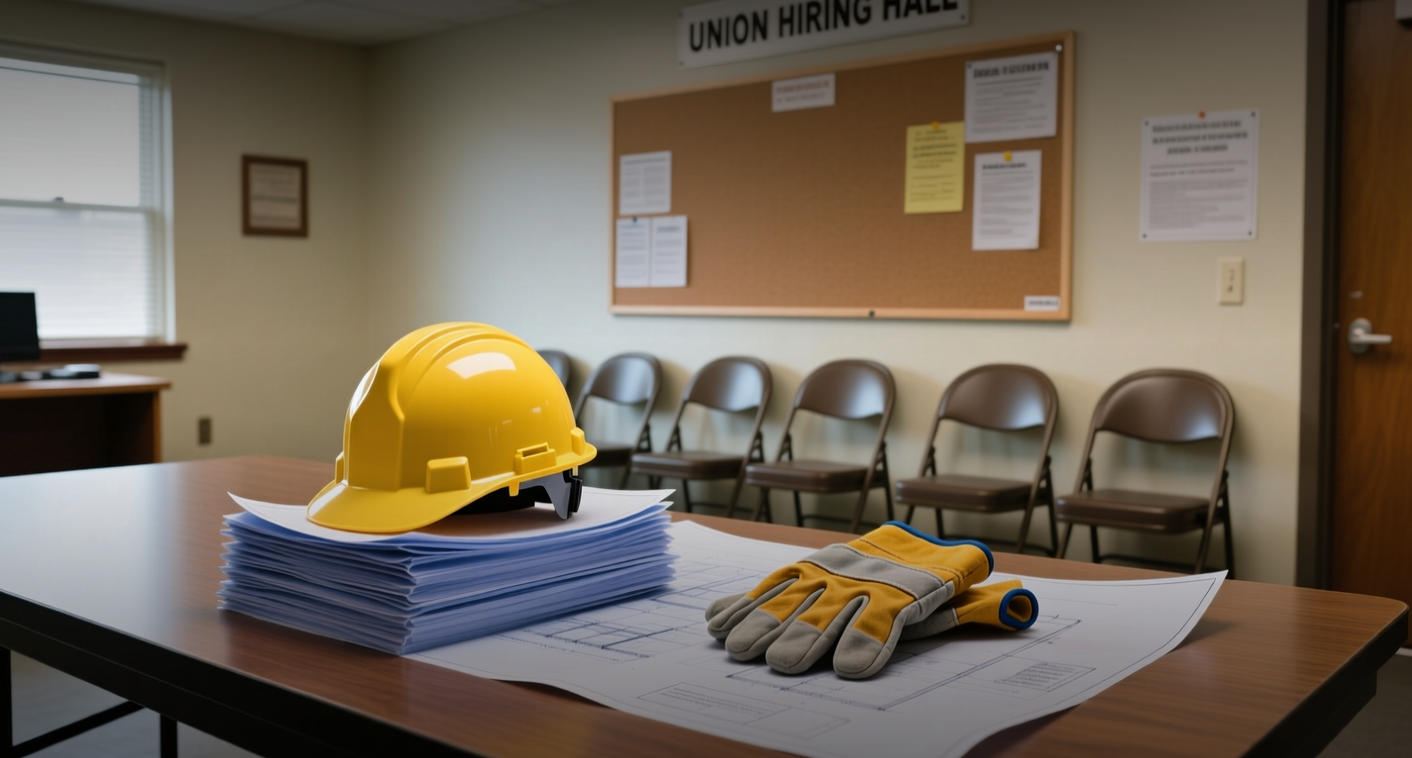
Union labor groups representing electricians and steamfitters are threatening to withhold political support from candidates who oppose data-center construction, as the AI infrastructure build-out collides with a nationwide backlash over electricity, water and tax breaks.
"We are dependent on these jobs," Sidney Bonilla, treasurer and business manager of Steamfitters UA Local 602, said. The union, whose members install mechanical piping systems across Virginia, Maryland and Washington, D.C., circulated a memo drawing a "clear line" against politicians who oppose the facilities, calling it "an existential moment for Local 602."
IBEW Local 26 electricians worked 28 million hours last year, double the 14 million a decade earlier, said Don Slaiman, the union's political coordinator. In Kansas, an HVAC and railroad workers union broke decades of precedent to endorse Republican state Sen. Ty Masterson for governor, partly because the Democratic candidate opposed construction. The AFL-CIO's affiliated unions in June passed a resolution calling for guardrails on AI and data centers while acknowledging the facilities employ tens of thousands of union members.
The political friction threatens to slow approvals for projects that OpenAI, Anthropic and other AI companies need to support more powerful models. President Trump has continued to back the build-out, saying data centers mean "jobs, income and lower taxes," but governors in New York, Pennsylvania and Texas have tightened oversight or halted approvals as midterm elections approach.
The union mobilization marks a counterweight to a resistance movement that has grown so broad it now cuts across party lines. Conservative farmers in rural Nebraska have joined the state Sierra Club chapter in opposing development, while a July Fox News poll found most registered voters oppose building a data center in their area, including 60 percent of Republicans and 53 percent of MAGA voters.
In Cass County, Nebraska, officials approved a 12-month moratorium on data-center development, potentially freezing energy company Tenaska's plans to option more than 1,300 acres along Highway 75. Land that typically sells for $10,000 an acre has drawn developer offers of four times that or more, tempting farmers even as soybean exports decline in Trump's tariff fight with China.
New Mexico's Project Jupiter, a $165 billion Oracle complex near the Mexican border, has triggered an emergency petition to the state Supreme Court over water rights. The state's largest reservoir stands at 1.3 percent capacity, and the court halted authorization to use water from a new well until the legal fight concludes. Oracle has pledged $50 million for water and wastewater systems and claims the project would generate $4.7 billion in taxes and create more than 7,000 construction jobs.
Union leaders argue the construction boom represents a once-in-a-generation opportunity for skilled workers. "This is a once-in-a-generation opportunity to really get in the upper-middle class," Slaiman said. Electricians are showing up at public hearings and planning-commission meetings to speak in favor of projects, sometimes staying past midnight.
Mike Gage, president of the Nebraska State AFL-CIO, said data centers can create construction jobs and longer-term positions, noting a facility built decades ago in Council Bluffs, Iowa, still employs about 60 people. Heather McKenzie, who works in labor relations in Lincoln, said more data centers could slow the exodus of skilled young people leaving the state.
The build-out has also pushed Meta Platforms and other tech companies to invest in training skilled workers. OpenAI, Alphabet's Google and Microsoft have partnerships with unions and have highlighted worker shortages as a key bottleneck for the U.S. in the AI race. Corning, the 175-year-old glass manufacturer, is partnering with Nvidia to build three optical-manufacturing facilities in North Carolina and Texas, a project expected to create more than 3,000 jobs and expand U.S. optical-fiber capacity tenfold.
The political terrain remains treacherous for both parties. In Wisconsin, Democratic gubernatorial candidate David Crowley has won support from some building trade unions while being attacked by Republican Rep. Tom Tiffany for being in the pocket of labor groups and tech companies. Wyoming Secretary of State Chuck Gray, a Republican running for an open House seat, has pledged to halt construction, saying "if Silicon Valley wants to build their liberal empire, they can do it somewhere else."
Todd Vachon, director of the Labor Education Action Research Network at Rutgers University, said the AFL-CIO faces a difficult balancing act between unions that benefit from construction and white-collar unions wary of AI's impact on jobs. Politicians who need labor support may be forced to back highly unpopular data centers. "How's that going to come on Election Day?" Vachon said.
For investors, the outcome carries direct implications for the pace of AI infrastructure spending. Microsoft, Meta, Google and Amazon have committed tens of billions of dollars in annual capital expenditures to data-center construction, and any slowdown in approvals could push back project timelines and raise costs. Trump's continued support provides a federal tailwind, but state-level moratoriums and permitting freezes in New York, Texas and Pennsylvania could force hyperscalers to concentrate new builds in friendlier jurisdictions.
This article is for informational purposes only and does not constitute investment advice.
