
DeepSeek secured 50 billion yuan in its first external funding round, cementing its position as China's most valuable AI startup.
DeepSeek secured 50 billion yuan in its first external funding round, cementing its position as China's most valuable AI startup.
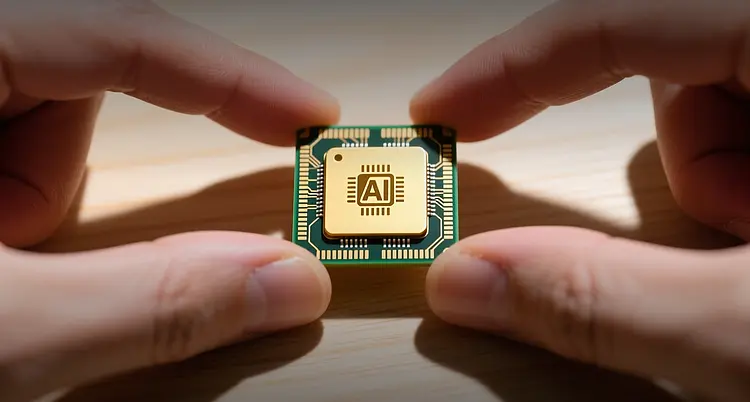
DeepSeek secured 50 billion yuan in its first external funding round, cementing its position as China's most valuable AI startup.
DeepSeek's 50 billion yuan Series A — led by founder Liang Wenfeng with 20 billion yuan of his own money — gives China's most talked-about AI lab the financial firepower to pursue artificial general intelligence without the commercial pressure that weighs on rivals.
"DeepSeek wants to do anything relevant to enhance the intelligence of AI models, and it has no interest in anything else," Liang told investors during an online meeting last month, according to a person familiar with the discussion.
Tencent contributed about 10 billion yuan, while CATL's system — including the battery giant and its Puquan Capital arm — invested roughly 5 billion yuan. NetEase, JD.com, Monolith, and IDG Capital each put in about 3 billion yuan, with Zhengxinyu Investment and Shixiang Technology adding 1.5 billion yuan apiece. The round values DeepSeek at about 400 billion yuan ($59.2 billion), surpassing Moonshot AI's $30 billion valuation and MiniMax AI's $17.7 billion market capitalization, though trailing Zhipu AI's $95 billion market value.
The deal's non-poaching clause — investors agreed not to hire DeepSeek employees or encourage them to start competing ventures — reflects Liang's determination to retain talent in a market where AI engineers command eight-figure compensation packages. The funding also arrives as DeepSeek deepens its integration with China's domestic chip ecosystem: Huawei's Ascend supernode products now fully support DeepSeek-V4, a milestone for reducing reliance on Nvidia hardware.
Image Recognition Launch Tests the Product Roadmap
On the same day the funding news broke, DeepSeek launched a web-based image recognition mode, with the app version in beta testing. The feature struggled in early tests — it failed to identify Liang Wenfeng, instead misidentifying the founder as Moonshot AI's Yang Zhilin or a "younger version" of Tencent CEO Ma Huateng. The model eventually conceded: "I really am not sure. It's not recommended to guess a name, because guessing wrong is worse than saying 'I don't know.'"
The image recognition launch marks DeepSeek's latest push to expand beyond text-based reasoning, though the feature remains in an early stage. The company has built its reputation on technical breakthroughs rather than product breadth — its V4 model, released in April, triggered industry-wide recalibration of cost benchmarks by matching frontier performance at a fraction of the training expense.
DeepSeek's insistence on staying private and non-commercial had kept venture capital at bay until now. "The company's senior management is clearly not interested in commercialization, only in technical research," one investor said last year, before the R1 model became a global phenomenon. "Investment institutions need companies to commercialize, generate revenue and profit, and require founders to cede a certain degree of equity and freedom."
The funding round changes that dynamic, at least financially. Liang's decision to personally lead the round — contributing 40 percent of the total — ensures he retains control over strategic direction. But the presence of Tencent, JD.com, and NetEase as investors creates natural pathways for product integration, even as DeepSeek publicly maintains its research-first posture.
Zhipu AI, another Chinese AI leader, surged 26.15 percent to 2,094 Hong Kong dollars on Thursday, pushing its market capitalization past 900 billion Hong Kong dollars — a sign that investor enthusiasm for China's AI sector remains intense. DeepSeek's refusal to pursue an IPO or near-term commercialization means public market investors have no direct way to bet on its trajectory, a constraint that may keep pressure on listed peers like Zhipu AI and Baidu to deliver on AI revenue growth.
This article is for informational purposes only and does not constitute investment advice.
