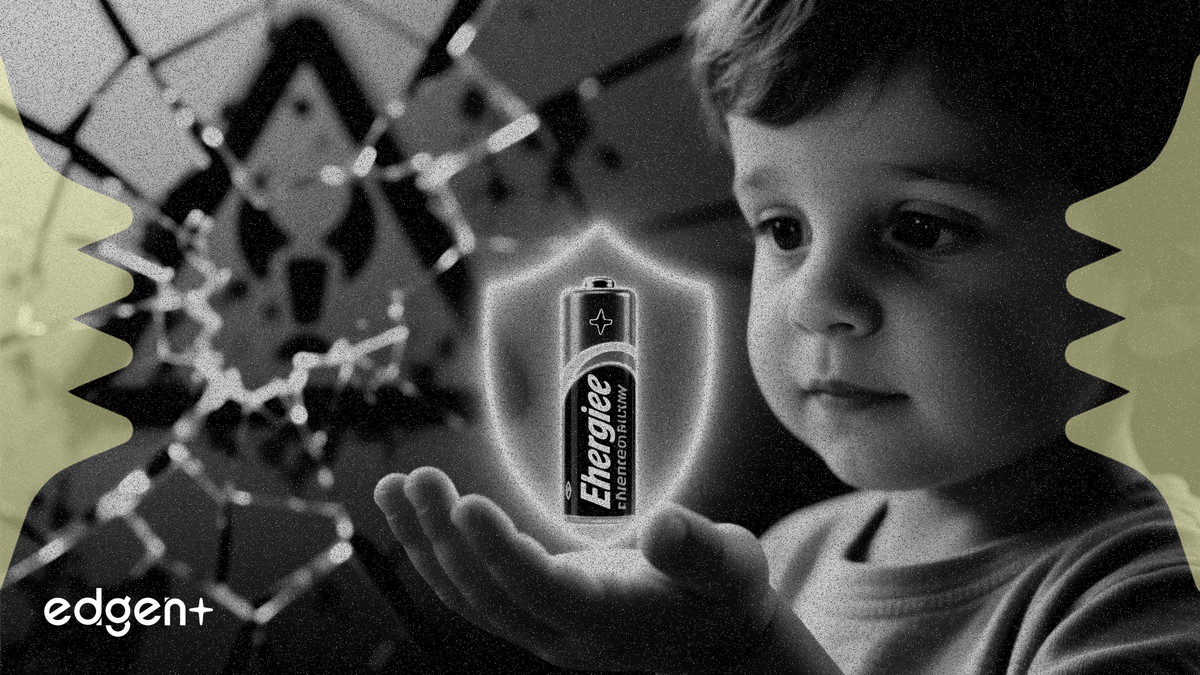
Energizer Holdings, Inc. (NYSE: ENR) today launched a new line of coin lithium batteries designed to eliminate the risk of life-threatening ingestion burns, addressing a danger that leads to over 3,500 emergency room visits in the U.S. each year.
"What is most paramount really is preventing accidental ingestions," said Dr. Jade Cobern, a pediatrician board-certified in pediatrics and preventive medicine, calling the new battery "a step in the right direction" but cautioning that keeping batteries away from children remains the only complete solution.
The new Ultimate Child Shield™ batteries, available in common sizes 2032, 2025, and 2016, use a proprietary titanium alloy instead of stainless steel. This material change prevents the battery from generating an electrical current when it comes in contact with saliva, which is the cause of severe tissue burns. The batteries also feature a bitter taste and a non-toxic blue dye to deter and detect ingestion.
This innovation provides Energizer a significant competitive edge in the consumer battery market against competitors like Duracell and Panasonic. By creating a product that solves a critical safety issue highlighted by thousands of annual injuries, the company could capture market share and set a new, higher safety standard for devices like Apple's AirTags that rely on these batteries.
When a standard coin battery gets lodged in the esophagus, saliva can trigger an electrical current that causes a chemical reaction, leading to severe alkaline burns in as little as two hours. According to the National Capital Poison Center, this results in over 3,500 ingestion incidents in the U.S. annually and thousands more globally.
Energizer's new battery, which replaces its previous 3in1 Child Shield line, aims to mitigate this specific danger. The company states the titanium alloy construction is inert in this scenario, a claim it says is backed by independent testing. The product launch is supported by advocates like Trista Hamsmith, whose 18-month-old daughter died after swallowing a button battery. "We're always gonna have batteries," Hamsmith said. "But what we can do is continue to look forward in making these products as safe as possible."
Prevention Remains Key
While doctors acknowledge the new technology is promising, they stress it does not make the batteries safe for consumption. They can still pose a choking hazard or cause obstruction. Experts urge parents to keep all batteries locked away and out of reach of children.
If an ingestion is suspected, it should be treated as a medical emergency. The National Battery Ingestion Hotline is available at 1-800-498-8666. For children over one year old who can swallow, administering honey can help coat the esophagus while seeking immediate medical care.
This article is for informational purposes only and does not constitute investment advice.