
La poussée chinoise en robotique humanoïde entre en production de masse alors que l'usine d'EngineAI à Shenzhen vise une capacité annuelle de 10 000 unités.
La poussée chinoise en robotique humanoïde entre en production de masse alors que l'usine d'EngineAI à Shenzhen vise une capacité annuelle de 10 000 unités.
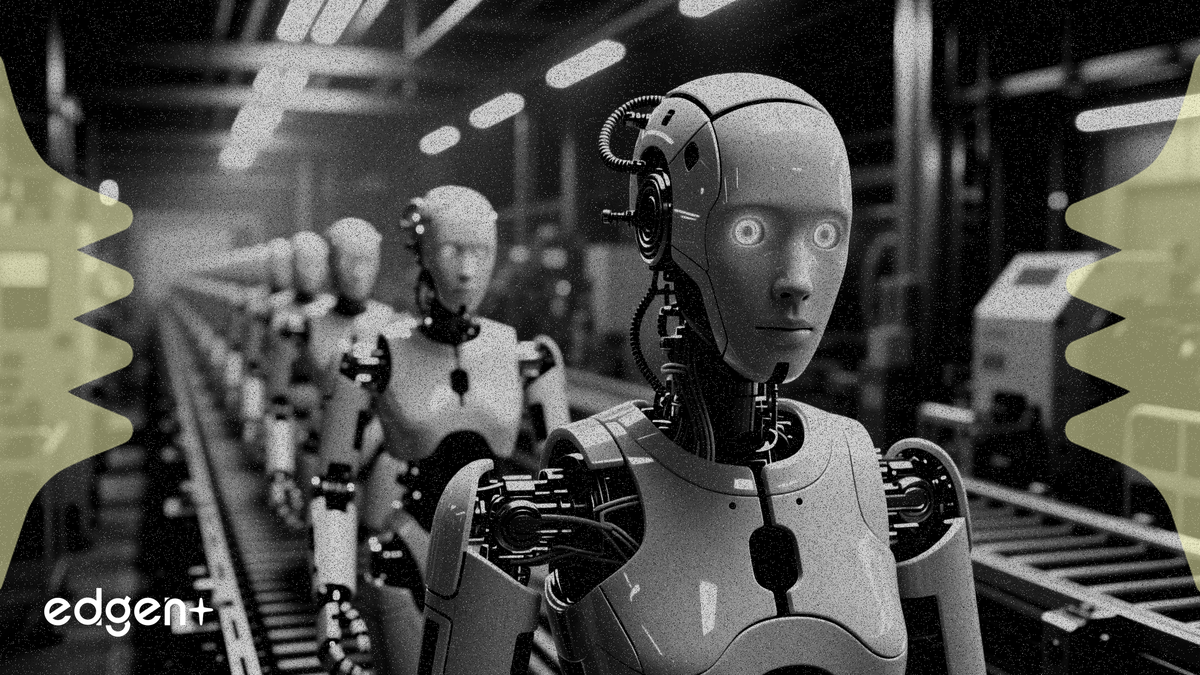
EngineAI Robotics a entamé la livraison en masse de ses robots humanoïdes T800 depuis une nouvelle usine de 12 000 m² à Shenzhen, capable de produire une unité toutes les 15 minutes, marquant une étape décisive dans la volonté de la Chine de commercialiser la robotique humanoïde.
« Cette installation représente notre transition de la recherche et développement vers la livraison commerciale à grande échelle », a déclaré l'entreprise dans un communiqué jeudi.
Chaque robot T800 passe par 79 contrôles qualité et 46 tests de simulation avant d'être expédié. L'usine, située dans le quartier de Honghualing à Shenzhen, gère l'inspection des entrants, les tests de composants, l'assemblage et la logistique dans un flux de travail unique intégré. La société a levé 200 millions de dollars lors d'un tour de Série B en avril, portant sa valorisation à plus de 10 milliards de yuans, soit environ 1,4 milliard de dollars.
La montée en cadence d'EngineAI intervient alors que les entreprises chinoises de robotique dominent le Humanoids Summit Tokyo cette semaine, avec des sociétés comme Booster Robotics et LimX Dynamics présentant des humanoïdes qui sous-cotent leurs rivaux japonais et américains sur les prix. Une deuxième ligne de production à Zhengzhou, dans la province du Henan, est prévue pour ajouter une capacité de 10 000 unités.
La chaîne d'approvisionnement chinoise en robotique affiche son avantage
EngineAI, fondée en octobre 2023 et basée à Shenzhen, rejoint une vague croissante de fabricants chinois de robots humanoïdes qui passent des prototypes aux chaînes de production. Sa gamme de produits couvre le T800, un humanoïde lourd, le PM01, également humanoïde, le robot compagnon SA02 et le robot quadrupède JS01 — couvrant l'inspection industrielle, la logistique et les usages de compagnie pour les consommateurs.
La rapidité de construction de l'usine d'EngineAI reflète l'infrastructure de fabrication existante de la Chine pour les composants électroniques et automobiles, sur laquelle les entreprises de robotique peuvent s'appuyer pour les moteurs, capteurs, actionneurs et systèmes de batterie. En comparaison, des rivaux japonais comme Honda ont présenté au sommet de Tokyo une main robotique motorisée à quatre doigts capable d'enfiler une aiguille — une dextérité impressionnante, mais encore à des années d'un déploiement commercial à grande échelle.
L'écart de coût est frappant. Le Mini Pi Plus, un humanoïde également chinois de High Torque, démarre à 5 500 dollars. L'Atlas de Boston Dynamics, que Hyundai Motor Group pousse désormais vers la production de masse, n'a pas de prix publié mais vise 30 000 unités par an d'ici 2028 dans son usine intelligente de Géorgie. EngineAI n'a pas divulgué le prix du T800.
Ce que cela signifie pour les investisseurs
Le marché de la robotique humanoïde passe des démonstrations techniques au déploiement industriel, et la chaîne d'approvisionnement intégrée verticalement de la Chine confère à ses fabricants un avantage structurel en termes de coûts. Des entreprises comme Unitree, qui fournit des composants robotiques à des firmes japonaises dont GMO, sont déjà intégrées dans les chaînes d'approvisionnement mondiales.
Pour les investisseurs, la question clé est de savoir si les fabricants chinois d'humanoïdes peuvent égaler la fiabilité et la sophistication logicielle de leurs concurrents occidentaux et japonais tout en conservant leur avantage de prix. La valorisation d'EngineAI à 1,4 milliard de dollars après un seul tour de financement suggère que le capital-risque parie sur le volume plutôt que sur les marges à court terme. La poussée parallèle de Hyundai avec Atlas, soutenue par une décennie de R&D de Boston Dynamics, représente l'alternative non chinoise la plus crédible.
Cet article est fourni à titre d'information uniquement et ne constitue pas un conseil en investissement.
