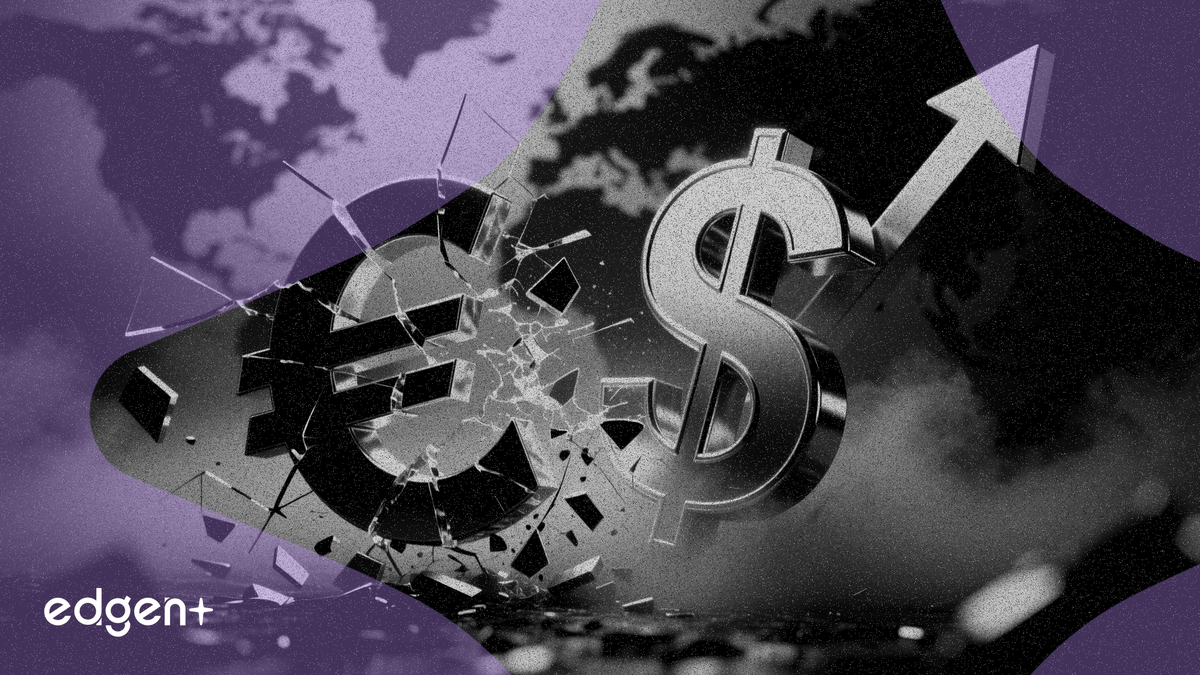
Geopolitical risk repricing sends the Dollar Index to a six-week high as traders weigh the odds of a renewed US-Iran nuclear accord.

The Euro slipped below 1.1620 Friday as persistent doubts over a US-Iran nuclear agreement fueled a broad rally in the US Dollar, sending the Dollar Index (DXY) to its highest level in six weeks.
"I don't want to be overly optimistic," US Secretary of State Marco Rubio told reporters, tempering expectations after a week of volatile headlines. "So, let's see what happens over the next few days."
The Dollar Index held firm near 99.20 after a brief spike above 99.50 Thursday. The euro’s weakness was compounded by a struggling British pound, which fell after UK retail sales missed expectations with a 1.3 percent monthly decline. In contrast, US economic data showed resilience, with the S&P Global Composite PMI holding steady at 51.7.
The market's sensitivity highlights the dual risks at play: a definitive collapse in talks could see oil prices spike and trigger a deeper risk-off move, while a surprise deal would likely unwind the dollar's recent gains. The last time a similar geopolitical flare-up occurred in the region, gold prices jumped over 5 percent in a single week, a move that has not yet materialized this time.
A senior Iranian official clarified Friday that no agreement had yet been reached with the United States, according to a Reuters report. While the official noted that gaps between the two sides had narrowed, Iran’s uranium enrichment program and control over the Strait of Hormuz were highlighted as key remaining obstacles. This more cautious tone counters earlier optimism from Thursday's session that suggested a deal was in its final stages.
Broader markets are reflecting a cautious, wait-and-see approach. US stock index futures traded modestly higher, suggesting a degree of resilience among equities. Gold remained under pressure around $4,530, failing to attract a significant safe-haven bid despite the geopolitical uncertainty. In currency markets, the Japanese yen was stable, with USD/JPY trading just above the 159.00 mark. This suggests traders are waiting for a more definitive catalyst from the negotiations before committing to major positions. The swearing-in of Kevin Warsh as the new Federal Reserve chair also adds a layer of domestic policy uncertainty, as his historically hawkish reputation could reinforce a "higher-for-longer" interest rate outlook, lending further support to the dollar.
This article is for informational purposes only and does not constitute investment advice.