
Eurozone inflation accelerated for a second straight month in May, driven by surging energy costs as the Iran war disrupted supply routes through the Strait of Hormuz.
Eurozone inflation accelerated for a second straight month in May, driven by surging energy costs as the Iran war disrupted supply routes through the Strait of Hormuz.
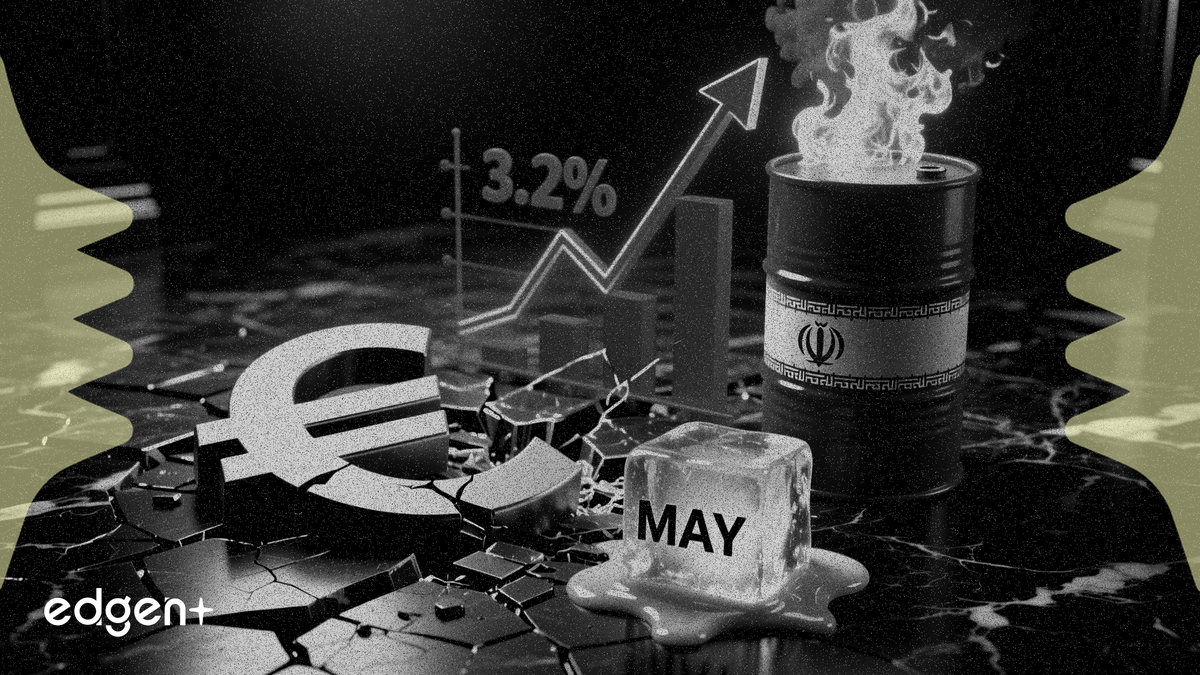
Eurozone inflation accelerated to 3.2% in May from 3.0% in April, matching consensus estimates, as the Iran war pushed energy costs up 10.9% and services inflation jumped unexpectedly to 3.5%, strengthening the case for a European Central Bank rate hike on June 11.
"The further increase in headline and particularly services inflation in May reinforces the case for the ECB to raise interest rates next week and suggests that upside risks to underlying inflation may be higher than we had anticipated," said Andrew Kenningham, chief Europe economist at Capital Economics.
Core inflation — which strips out volatile energy and food prices — accelerated to 2.5% from 2.2%, exceeding the 2.4% consensus, driven by the services pickup and a slight increase in industrial goods inflation to 0.9%. Food, alcohol and tobacco eased to 2.0% from 2.4%, offering a rare moderating signal. The energy segment's 10.9% annual gain reflected the effective closure of the Strait of Hormuz following the US attack on Iran three months ago, with supply chain stress and feedstock availability remaining acute concerns.
The data supports the case for a quarter-point rate increase when the ECB meets on June 11 — a move financial markets have fully priced in, with one or two additional hikes expected by autumn. Yet the inflation is largely imported via energy rather than domestically generated, limiting the ECB's ability to address it through demand suppression without exacerbating an already weakening growth outlook. "While inflation risks have increased, a rate increase in June would be an insurance one, but not due to entrenched inflationary pressures," said Olli Rehn, the Finnish central bank chief and a dovish voice on the Governing Council.
Even if the Iran conflict were to de-escalate soon, damage to energy infrastructure and corporate supply chains has already been sustained, making normalization slow and keeping prices elevated well into the second half of the year, economists said. Negotiations for a peace deal have done little to calm sentiment, and the Strait of Hormuz remains effectively closed to commercial shipping.
The transmission of higher energy costs into the broader economy is the ECB's primary concern. Services inflation at 3.5% — up from 3.0% in April and above the 3.2% consensus — suggests that businesses are beginning to pass through higher input costs, a dynamic that could entrench inflation above the ECB's 2% target. The last time services inflation exceeded 3.5% was in early 2024, when the ECB was still in its tightening cycle, and it took six months of elevated rates to bring it back below 3%.
Europe's industrial sector, already weakened by the loss of cheap Russian gas after the Ukraine invasion and higher US tariffs, is particularly exposed. PMI surveys and the ECB's own lending data point to growing pressure on the real economy, and further downgrades to already subdued growth forecasts appear likely as the war drags on. Households hold ample savings but are quick to turn cautious when the newsflow darkens, suggesting high energy prices may generate fewer second-round effects than during the 2022 inflation surge.
"Interest hike is becoming inevitable for the ECB," said Vincent Stamer, an economist at Commerzbank. "Another rate hike in the third quarter is also likely to follow." Markets currently price 25 basis points of tightening on June 11, with a roughly 60% probability of a second move by October.
This article is for informational purposes only and does not constitute investment advice.
