
Four record heat waves across Europe this summer have killed at least 35,000 people and may shave €180 billion, or about 1 percent, off EU GDP.
Four record heat waves across Europe this summer have killed at least 35,000 people and may shave €180 billion, or about 1 percent, off EU GDP.
Four consecutive record heat waves have pushed Europe toward both a humanitarian crisis and an economic stall, with Oxford Economics estimating the summer will cut third-quarter eurozone growth by 0.2 percentage points and add 1 to 2 points to food inflation.
"This could be enough to tip the economy into stagnation," said Tomas Dvorak, an economist at Oxford Economics.
Dutch sustainable bank Triodos projects the heat and drought will cost the EU about 1 percent of full-year GDP, or roughly €180 billion ($208 billion). As of Aug. 25, at least 35,000 excess deaths had been recorded, with Germany, France and Spain accounting for more than 25,000 combined.
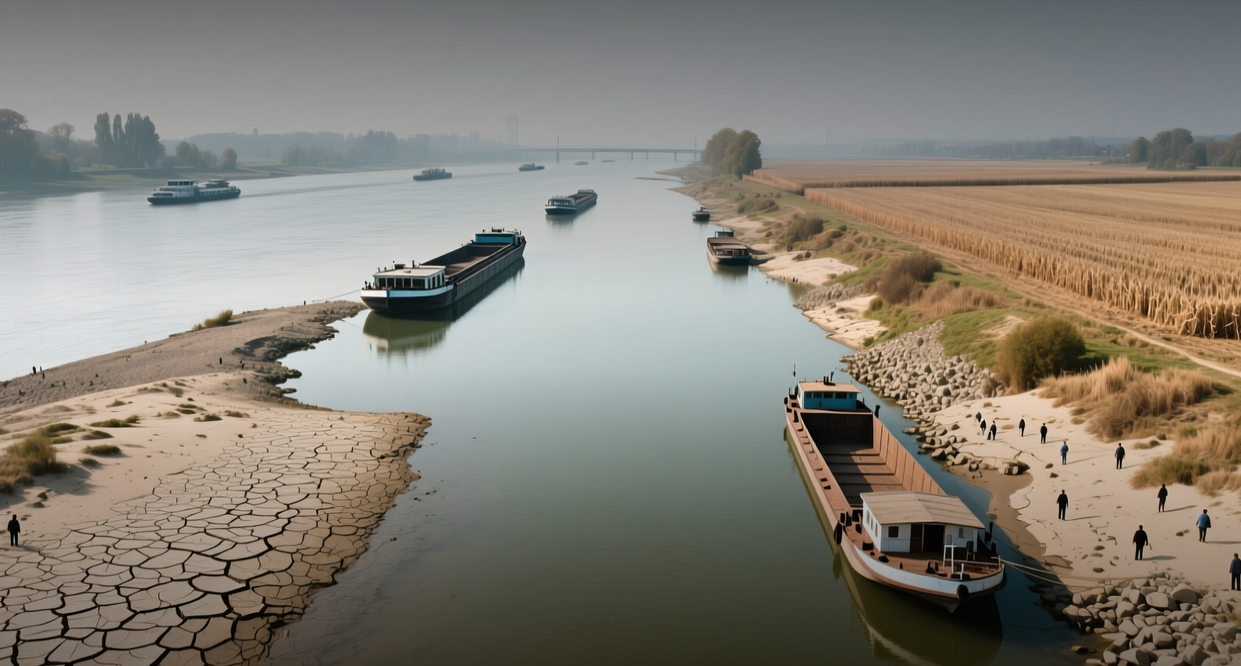
The damage is concentrated in agriculture and manufacturing logistics. The European Commission's Joint Research Centre cut summer crop yield forecasts by as much as 14 percent below the five-year average, while record-low water levels on the Rhine, Loire, Danube and Po disrupted German industrial shipping and grain exports.
Germany has borne the heaviest human cost. Data from the Robert Koch Institute show an estimated 14,000 heat-related deaths between April 6 and Aug. 9, including a record 9,600 in the single week of June 22-28. Spain's Carlos III Health Institute attributes 4,947 deaths since May to heat, surpassing the 4,520 recorded in 2022, while France's national health agency counted 7,300 all-cause excess deaths through July 22. The World Health Organization said in May that heat-related mortality in Europe has risen more than 30 percent over two decades.
Agriculture is the most direct casualty. French sugar giant Tereos expects beet yields for its growers to fall more than 20 percent from last year and about 15 percent below the five-season average, pushing EU sugar output toward a 38-year low and forcing the company to shorten the production cycle at eight plants to an average of 100 days from 130. In Bordeaux, co-owner Philibert Perrin of the 700-year-old Château Carbonnieux said temperatures near 42 degrees Celsius in June forced him to irrigate vines at a daily cost of about €1,500, with white grape output set to fall a third and red grapes by half.
The biggest drag on growth may come from logistics rather than crops. Record-low water on the Rhine disrupted German manufacturing supply chains, while the Danube's historic low in Romania blocked grain transport and clogged port terminals. In the Czech Republic, brewer Plzeňský Prazdroj expects losses from reduced hop yields, with sustainability manager Jakub Zaoral warning that three consecutive bad years "could become an existential question for hop growers."
France faces the steepest fiscal bill. Environment Minister Monique Barbut put the combined cost of heat, drought and wildfires at up to €15 billion, or 0.5 percent of GDP, straining already-tight public finances. A wildfire in the southwest burned more than 100,000 acres, forced 224,000 people to evacuate and destroyed about 10 million pine trees — a full year's harvest for a sector supporting 60,000 jobs and €10 billion in annual revenue. The government has pledged €12 million in immediate aid, with support possibly rising to €100 million.
Allianz research cited by Dvorak shows worker productivity falls 3 percent for every 1 degree Celsius rise in the 30-35 degree range. If the five hottest years of the past decade recur over the next five, Allianz estimates vulnerable economies such as France could face cumulative GDP losses of 5 to 7 percent by 2030, or about $240 billion. The economic fallout will feed through to consumers and markets in coming months, with Dvorak warning the heat could be enough to tip an already-sluggish eurozone into stagnation while food inflation adds pressure on the European Central Bank. With the Rhine and Danube still at historic lows and harvests set to shrink, the full cost of the summer will only become clear when fourth-quarter data are published.
This article is for informational purposes only and does not constitute investment advice.
