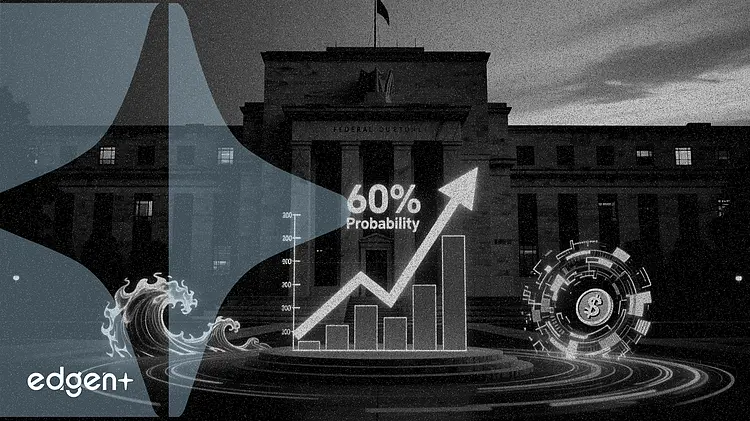
Une hausse des taux de la Réserve fédérale n'est plus une possibilité lointaine, les marchés évaluant désormais à plus de 60 % la probabilité d'un resserrement d'ici la fin de 2026, alors que les pressions inflationnistes persistantes remettent en question les perspectives de la banque centrale. Le changement des attentes, détaillé dans une note du 18 mai des économistes de Barclays, décrit trois voies distinctes qui pourraient forcer la main de la Fed, alors même que le nouveau président Kevin Warsh se prépare pour sa première réunion.
« Bien que notre scénario de base ne prévoie pas de hausse de taux avant la fin de 2027, les risques pesant sur le taux directeur sont devenus plus orientés à la hausse », a déclaré Jonathan Millar, de l'équipe de recherche économique FICC de Barclays. « Le marché commence à reconnaître que toute résolution du conflit au Moyen-Orient prendra plus de temps que souhaité, et que les impacts inflationnistes attendus comme transitoires seront probablement beaucoup plus persistants. »
Le repricing a été rapide. L'outil CME FedWatch montre que la probabilité d'une hausse d'un quart de point en décembre est montée à près de 50 %, les chances d'une hausse d'ici janvier 2027 s'élevant à 58 %. Cela fait suite aux perturbations continues dans le détroit d'Ormuz qui ont fait grimper les coûts de l'énergie et à la forte croissance de l'emploi aux États-Unis jusqu'en avril.
L'analyse de Barclays présente un virage hawkish pour un marché qui, jusqu'à récemment, se concentrait sur le calendrier des baisses de taux. Le principal risque, notent-ils, serait un désancrage des anticipations d'inflation à long terme. Si des mesures basées sur le marché comme le taux d'anticipation d'inflation à 5 ans dans 5 ans affichent des augmentations soutenues et chaotiques, cela signalerait une perte de foi dans l'objectif de 2 % de la Fed, obligeant une réponse politique pour réaffirmer sa crédibilité.
Inflation sous-jacente et demande d'IA
Une deuxième voie plus graduelle vers une hausse des taux implique que l'inflation sous-jacente reste obstinément élevée. Les économistes surveillent si l'indice des prix des dépenses de consommation personnelle (PCE) de base, l'indicateur d'inflation préféré de la Fed, continue de progresser au-dessus du rythme mensuel de 0,18 % conforme à son objectif annuel, même après que les pressions temporaires liées aux tarifs douaniers devraient s'estomper. La vigueur persistante de l'inflation « super-core » — les services hors logement — serait un signe particulièrement troublant pour les décideurs.
Le troisième scénario ne découle pas des moteurs d'inflation traditionnels, mais de l'économie moderne elle-même : un boom de l'investissement dans l'intelligence artificielle. Si les dépenses en capital et les effets de richesse issus du boom de l'IA stimulent la demande plus rapidement que l'IA ne peut générer des gains de productivité et des économies de coûts, cela pourrait créer un scénario d'inflation par la demande. Bien que la productivité non agricole ait augmenté, certains économistes craignent que les gains ne soient pas suffisants pour compenser la montée préventive des dépenses et des investissements.
Le premier test de Warsh
Ce tableau économique complexe sert de toile de fond à la première réunion de Kevin Warsh en tant que président de la Réserve fédérale en juin. Nommé par le président Donald Trump, Warsh a précédemment suggéré une volonté de passer outre les chocs de prix temporaires et a désigné la productivité tirée par l'IA comme une force désinflationniste potentielle.
« En théorie, ce cadre penche vers le côté colombe », a noté Christian Floro, stratège de marché chez Principal Asset Management. « En pratique, une inflation persistante accompagnée d'une économie forte pourrait limiter sa capacité à convaincre les autres membres du comité. »
En fin de compte, Warsh ne détient qu'une seule des 12 voix du comité de fixation des taux. Bien que la barre pour une hausse reste haute, le terrain est en train d'être préparé. Si les données sur l'inflation continuent de surprendre à la hausse et que la demande ne refroidit pas, la conversation au sein de la Fed pourrait passer du moment de baisser les taux à la question de savoir s'ils doivent encore les relever.
Cet article est fourni à titre informatif uniquement et ne constitue pas un conseil en investissement.