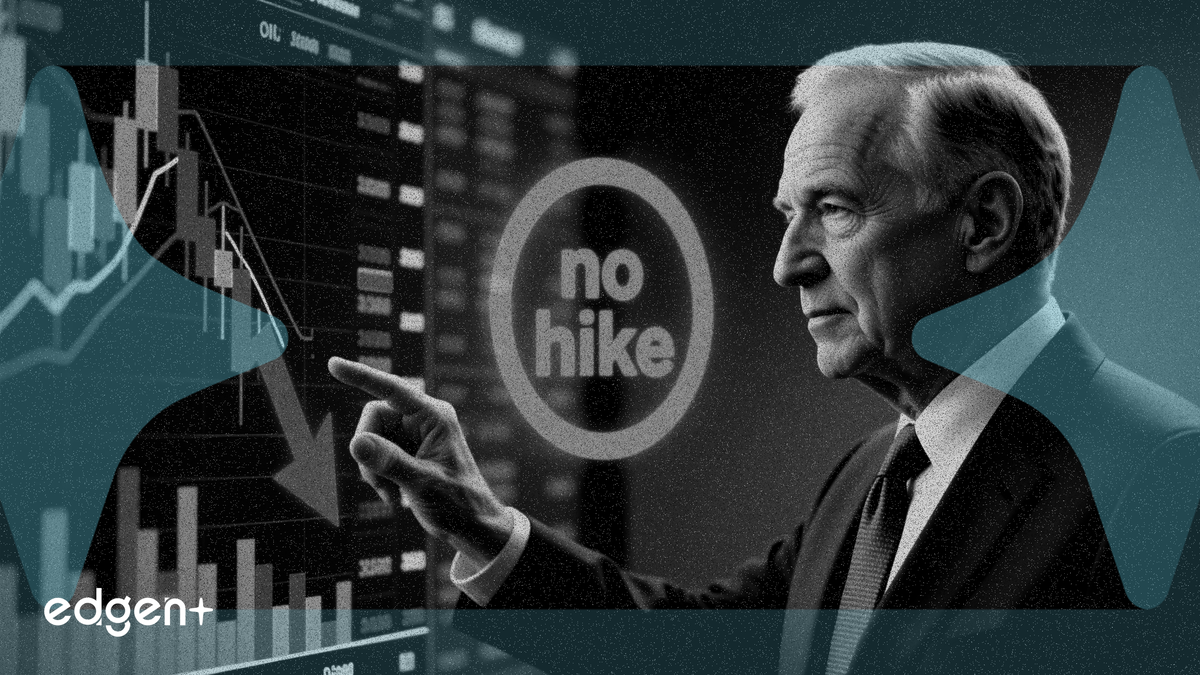
Investors betting on interest rate hikes to combat the recent oil price shock are likely to be disappointed as central banks signal a more cautious approach.
US Federal Reserve Chair Jerome Powell signaled the central bank will not immediately raise interest rates in response to a 45% surge in oil prices, arguing that tightening policy now could unnecessarily harm the economy.
“By the time the effects of a tightening in monetary policy take effect, the oil price shock is probably long gone, and you’re weighing on the economy at a time when it’s not appropriate,” Powell said Monday during an appearance at Harvard University.
The Fed has held its policy rate in a 3.5% to 3.75% range as it monitors the economic fallout from geopolitical tensions. Powell's remarks saw traders sharply reduce bets on a quarter-point rate increase this year, a reversal from expectations seen late last week.
The core issue is whether the oil shock will translate into broader, sustained inflation. The Fed is betting it won't, choosing to "look through" the supply shock for now rather than risk repeating past errors of tightening policy into a weakening economy.
The Ghost of Policy Past
Central bankers live in fear of their last mistake. After being criticized for waiting too long to raise rates during the post-pandemic boom, the Federal Reserve is now determined not to overreact to a supply-side shock. Powell’s comments underscore a belief that inflation expectations are “well anchored,” giving the bank room to wait and see how the economic effects of the recent oil price surge unfold.
Raising rates to combat inflation from a supply shock is a risky proposition. Monetary policy is a tool for managing demand, not fixing supply chains or geopolitical conflicts. Tightening policy could stifle economic growth just as the initial price shock is fading, leading to a worse outcome than a temporary period of higher inflation.
What This Means for Rate-Sensitive Assets
For investors, this policy stance has significant implications. If the market has been incorrectly pricing in a hawkish Fed response, assets sensitive to interest rates may be undervalued. This includes government bonds, growth stocks, and specialized equities like mortgage real estate investment trusts (mREITs).
Companies like AGNC Investment Corp. (AGNC), which invest in agency mortgage-backed securities, are highly sensitive to interest rate volatility. Their business model relies on borrowing at short-term rates to buy higher-yielding long-term assets. An unexpected rate hike can compress their net interest margin and cause book value declines. Conversely, a stable-to-dovish rate environment, as Powell has signaled, reduces hedging costs and uncertainty, potentially boosting returns for shareholders. The upcoming earnings report from AGNC on April 20, 2026, will be closely watched for management’s perspective on how the current rate backdrop is influencing its portfolio positioning.
This article is for informational purposes only and does not constitute investment advice.