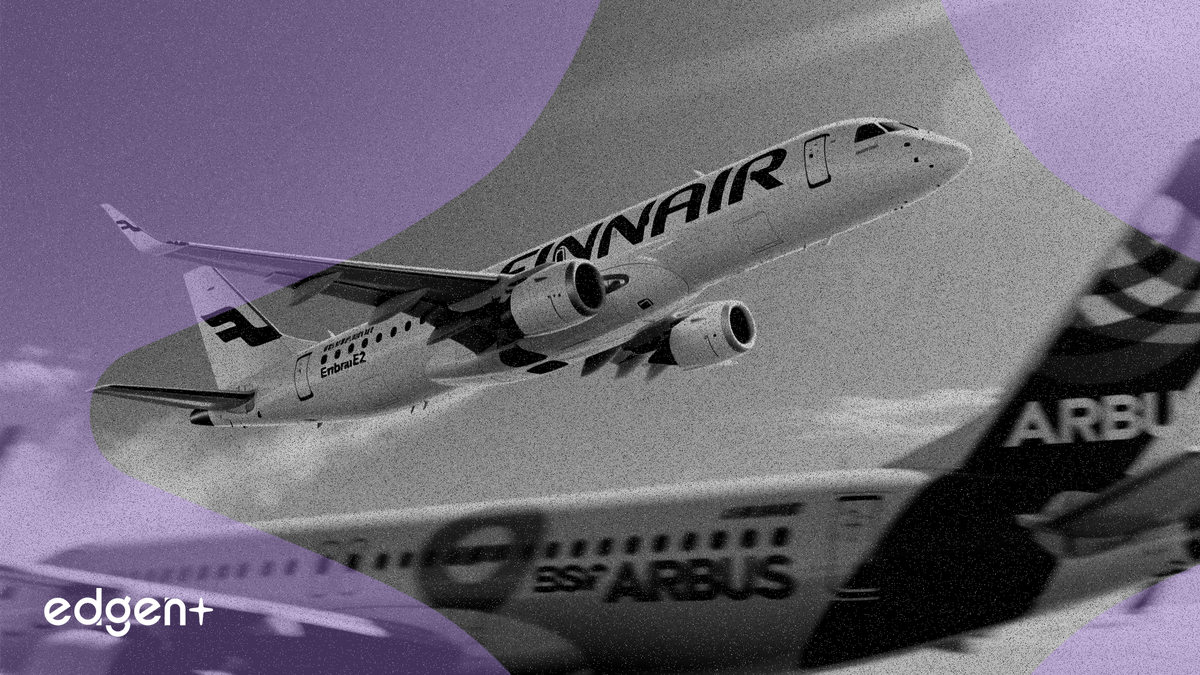
Finnair Orders 18 Embraer Jets, Pivoting From Airbus
Finnair has committed to a significant fleet overhaul, placing a firm order for 18 Embraer E195-E2 aircraft to replace its aging European narrow-body jets. The announcement on March 23 marks a strategic pivot away from its incumbent supplier, Airbus, for new aircraft in this category. The agreement includes options for 16 additional aircraft and purchase rights for another 12, signaling a deep, long-term commitment to the Brazilian manufacturer's platform.
This decision is a notable blow to Airbus, as Embraer's E2 jet family outsold the competing Airbus A220 three-to-one in the previous year. While Finnair is shifting its new orders to Embraer, its fleet strategy remains nuanced; the airline also plans to source up to 12 used Airbus A320 or A321 aircraft, indicating a dual-supplier approach focused on optimizing acquisition and operating costs across different market segments.
E2 Jet's Economics Drive Win With 30% Lower Trip Costs
The selection of the E195-E2 is rooted in compelling unit economics. Embraer's new-generation jet offers a trip cost approximately 30% lower than larger narrow-bodies like the Airbus A320, while maintaining a competitive cost per seat. This efficiency reduces the financial risk for airlines operating on routes with variable or developing demand, allowing them to serve secondary markets profitably without needing to fill a 180-plus seat aircraft.
Finnair's CEO, Turkka Kuusisto, highlighted the aircraft's operational advantages, pointing to its environmental performance and flexibility.
It will reduce our CO₂ emissions by 30 percent per passenger carried. In addition to enabling us to operate efficiently within Finland and widely across Europe, it also supports our climate objectives.
— Turkka Kuusisto, Chief Executive Officer
Embraer Strategy Targets Gap Between Turboprops and Narrowbodies
Finnair's decision validates Embraer's global strategy of targeting a specific market gap that legacy aircraft models fail to serve efficiently. The E2 family is designed for routes that are too long for turboprops but too thin to consistently support larger narrow-bodies. This "right-sizing" approach allows carriers to open new point-to-point routes, particularly to smaller cities and emerging tourist destinations that were previously unviable.
This model has been successfully deployed in other regions, such as Southeast Asia, where Singapore Airlines' subsidiary Scoot uses the E2 to connect its hub with smaller destinations like Koh Samui and Davao. By winning a key European flag carrier, Embraer demonstrates that its value proposition of lower risk and new market access resonates with airlines globally, challenging the traditional dominance of Airbus and Boeing in regional jet networks.