
A global technology stock rout deepened Tuesday as Federal Reserve rate-hike signals and concerns over stretched artificial-intelligence valuations triggered the worst selloff in semiconductor shares this year.
A global technology stock rout deepened Tuesday as Federal Reserve rate-hike signals and concerns over stretched artificial-intelligence valuations triggered the worst selloff in semiconductor shares this year.
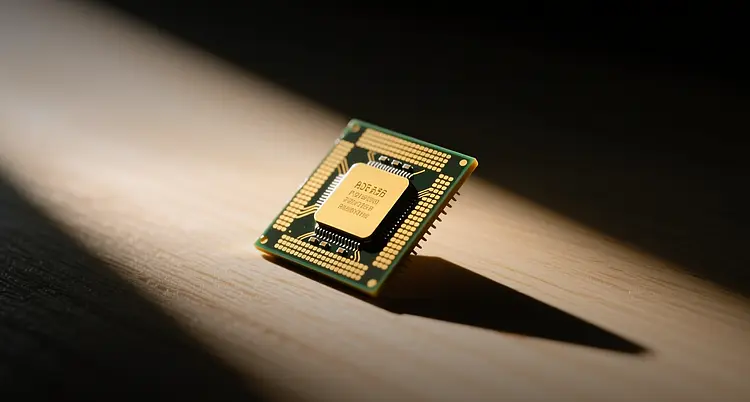
A global technology stock rout deepened Tuesday as Federal Reserve rate-hike signals and concerns over stretched artificial-intelligence valuations triggered the worst selloff in semiconductor shares this year.
The Nasdaq Composite tumbled 2.2% to 25,587 as a global tech selloff intensified on Fed rate-hike signals and AI valuation concerns.
"The AI beneficiaries are the selloff, and I don't think they're expensive, but they're crowded," Andrew Slimmon, senior portfolio manager at Morgan Stanley Investment Management, said. "It's captured the zeitgeist of the momentum traders, and when that happens, you're going to have sharp selloffs like we're having. I'd argue it's healthy."
The S&P 500 fell 1.4% to 7,365, while the Dow Jones Industrial Average slipped less than 0.1% to 51,667. Six of 11 S&P 500 sectors posted gains, with consumer staples rising 1.8% and healthcare adding 1.4%, showing the narrowness of the decline. The Philadelphia Semiconductor Index tumbled 7.8%, with Sandisk and Micron Technology — both of which hit record highs Monday — plunging 13% and 13.2%, respectively. Nvidia lost more than 4%, while Intel fell 6% and AMD slid nearly 6%.
The selloff erased more than $600 billion from SpaceX in the prior two sessions and dragged South Korea's tech-heavy Kospi down 10%, raising questions about whether the artificial-intelligence trade that powered this year's rally has become overcrowded. Micron's earnings report Wednesday will test whether the selloff is a healthy correction or the start of a deeper rotation.
The selloff swept across global markets. South Korea's Kospi index plunged 10%, dragged by SK Hynix and Samsung, which each fell more than 12%. Japan's Nikkei dropped 3.6%, and Hong Kong's Hang Seng lost 1.8%. In Europe, the Stoxx 600 Technology index slid 3.2%, with STMicroelectronics and ASMI both down more than 7%.
Rate Fears Compound AI Rotation
The catalyst for the selloff was twofold. Fed Chairman Kevin Warsh last week said officials are "unambiguously and unanimously" committed to bringing inflation back to the central bank's 2% target, with derivative traders now pricing in nearly two rate increases this year. Separately, concerns that the billions of dollars in AI infrastructure spending may not translate into proportional profits have prompted investors to reassess the sector's valuations.
"All of that means that these business models are going to turn out to be more cyclical, and that means they're going to be a lot more rate sensitive," Lisa Shalett, chief investment officer of Morgan Stanley Wealth Management, said.
The 10-year Treasury yield hovered around 4.5%, while the U.S. dollar index traded near one-year highs, adding pressure on risk assets. West Texas Intermediate crude fell to about $73.40 a barrel, its lowest in nearly three months, after the U.S. and Iran signed an interim peace deal that reopened traffic through the Strait of Hormuz.
Defensive Rotation Takes Hold
IBM rose more than 4% to lead the Dow, while Merck and Verizon each gained about 3%. Cybersecurity names also bucked the trend, with Palo Alto Networks and Fortinet each advancing about 2%. On the downside, Carnival fell 5.5% after issuing weaker-than-expected profit guidance, and Oracle dropped 4% after disclosing it cut 21,000 jobs, partly through the use of AI.
"Semiconductors are structurally more volatile and cyclical than the hyperscalers that carried markets through the last hiking cycle," Julia Hermann, global market strategist at New York Life Investment Management, said. "They are likely to be more rate sensitive, exposing the market to the consequences of tighter policy."
Investors now turn to Micron's fiscal third-quarter earnings due Wednesday after the close, which will provide the next test of whether AI-driven demand is translating into earnings growth. FedEx also reports after the bell Tuesday, offering clues on corporate spending and logistics demand.
This article is for informational purposes only and does not constitute investment advice.
