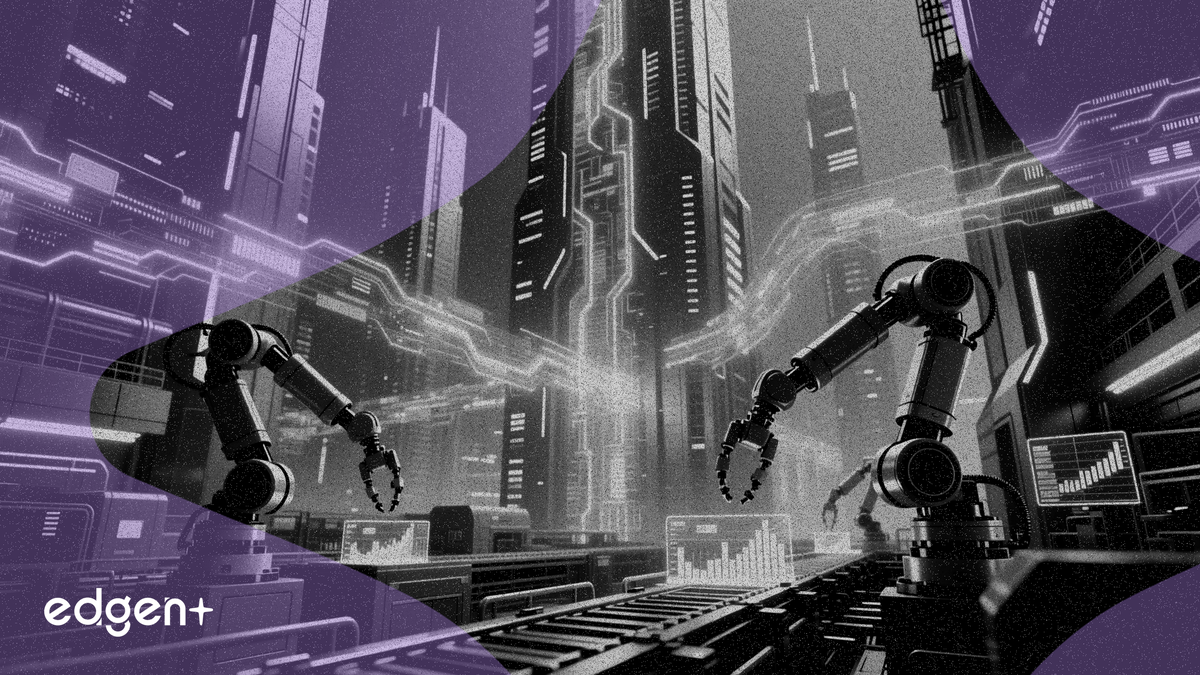
Goldman Sachs is betting on artificial intelligence to build a “digital factory floor,” aiming to automate its core banking operations without resorting to mass layoffs.
Goldman Sachs President and Chief Operating Officer John Waldron announced the bank's plan to create a "digital factory floor" using artificial intelligence, a move aimed at boosting efficiency by an estimated 15% over the next three years. The initiative will focus on automating internal workflows, which Waldron described as a "human assembly line," to accelerate a transition that has already transformed manufacturing.
"If you think about what’s happened in manufacturing, it’s become much more robotic, it’s become much more automated," Waldron said in a CNBC interview on Tuesday. "The banks really haven’t been on that journey to the same extent.”
The announcement places Goldman Sachs at the forefront of a broader push across Wall Street to integrate AI, with projected capital expenditures on AI infrastructure expected to reach $755 billion by 2026, according to a recent Goldman Sachs research report. This spending boom reflects a growing recognition that AI can unlock significant productivity gains in an industry traditionally reliant on manual processes.
This strategic shift could enhance Goldman Sachs' long-term profitability and technological leadership, potentially spurring competitors like JPMorgan Chase and Morgan Stanley to accelerate their own AI investments. For investors, the move signals a clear commitment to harnessing technology to control costs and improve margins, a key focus for the banking sector.
The $755 Billion Question
The financial industry's planned AI investment is part of a massive global trend. The projected $755 billion in AI-related capital expenditure by 2026 highlights the scale of the technological shift underway. This spending is not just on software, but on the entire ecosystem of hardware, data centers, and specialized talent required to build and maintain sophisticated AI systems.
For banks like Goldman Sachs, the investment is aimed at automating back-office roles and other repetitive tasks, freeing up employees for higher-value work. This is the "digital factory floor" that Waldron envisions, where machines handle the routine processing, and humans focus on client relationships and complex problem-solving. The goal is to increase efficiency and reduce errors, ultimately leading to a more streamlined and profitable operation.
A Human-First Approach?
While the prospect of automation raises concerns about job displacement, Goldman Sachs has vowed to avoid mass layoffs. This promise will be tested as the AI integration deepens. The experience of other countries offers a potential roadmap. In China, for example, the rapid deployment of autonomous vehicles and delivery drones has been met with a "human-first" approach to automation.
Meituan, a delivery super-app, is training its delivery drivers to operate and monitor its drone fleet. This strategy of retraining and redeploying the existing workforce could be a model for financial institutions like Goldman Sachs. By investing in employee upskilling, the bank can transition its "human assembly line" to a team of skilled operators and analysts overseeing the new "digital factory floor." The success of this transition will be closely watched by the entire financial industry, as it navigates the complex relationship between AI, efficiency, and employment.
This article is for informational purposes only and does not constitute investment advice.