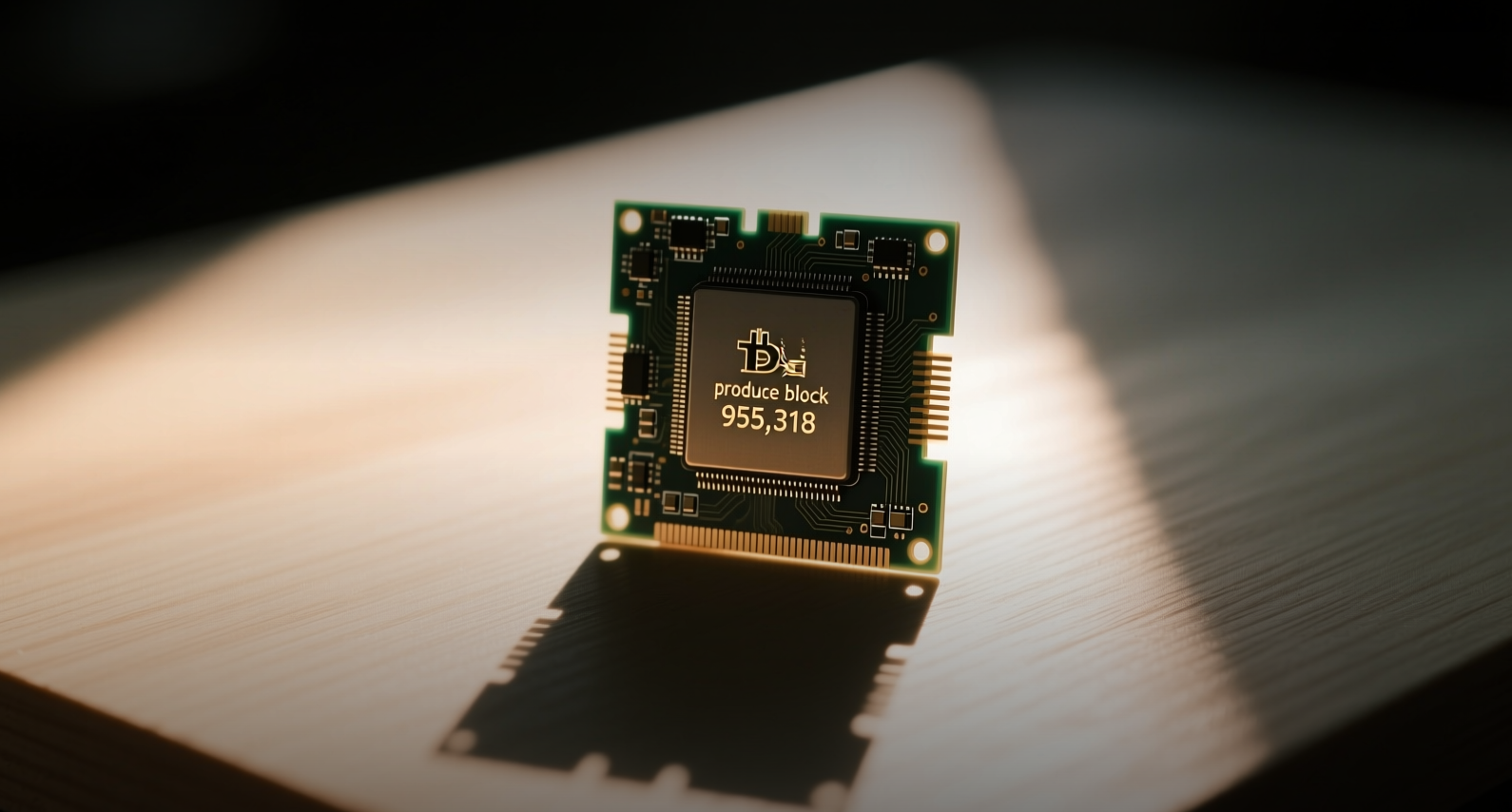
Bitcoin mining pool DMND and GoMining mined the first known block using Stratum V2's Job Declaration feature, allowing a miner — not the pool — to select which transactions enter the blockchain. Block 955,318 was produced June 25 through DMND's pool, with GoMining constructing its own block template and including transactions from its GoBTC Pay instant payments protocol.
"This block demonstrates that miners can now participate in pooled mining while retaining control over block construction," said Mark Zalan, chief executive officer at GoMining. "For years, mining pools have largely determined which transactions are included in Bitcoin blocks."
Under the dominant model, pools decide transaction selection while miners contribute hashrate in exchange for steady payouts. Stratum V2, an open-source protocol developed with broad industry support, decouples those functions: miners stay in the pool for revenue smoothing but regain the right to build their own block templates. GoMining used that mechanism to include GoBTC Pay transactions, an open-source, non-custodial instant payments protocol the company announced at Consensus Miami in May 2026.
The milestone shifts the center of gravity in Bitcoin's transaction layer. If Stratum V2 adoption grows, individual miners — not pool operators — become the decision-makers on what enters the blockchain, reducing the risk of pool-level censorship or centralized transaction ordering. GoMining serves 5 million users and ranks among the top 10 Bitcoin miners globally by hashrate, operating data centers in the US and internationally.
"A miner just mined the first Stratum V2 block to power their own product end to end," said Alejandro De La Torre, chief executive officer and co-founder of DMND. "GoMining declared the template and included their GoBTC Pay payments with no pool in the way. We built DMND for exactly this."
DMND describes itself as a pool built for the Stratum V2 era, with Job Declaration running in production. The deployment removes a key barrier to broader Stratum V2 adoption by proving the protocol can function in a live mining environment. Broader adoption would redistribute transaction selection power across thousands of individual miners rather than concentrating it in a handful of pool operators, a structural change that strengthens Bitcoin's censorship resistance over time.
This article is for informational purposes only and does not constitute investment advice.