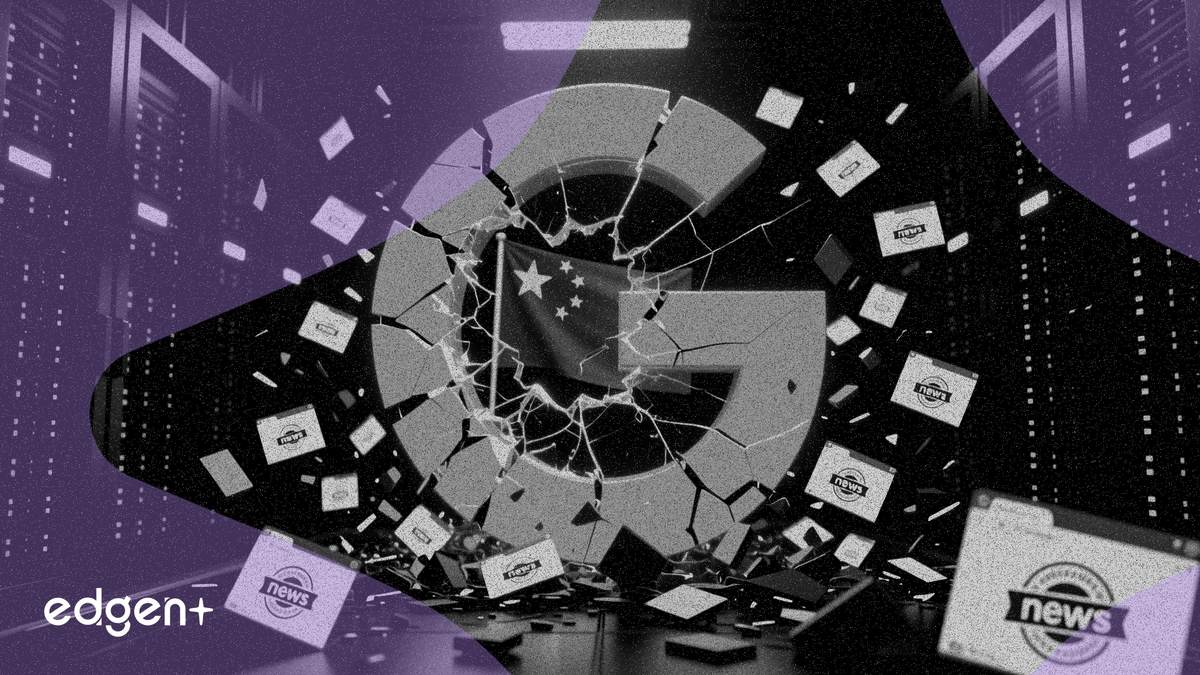
Google's lawsuit against a Chinese cybercrime group marks the first major test of whether AI companies can be held liable when their own models are weaponized against them.
Google accused a Chinese cybercrime group of using its Gemini AI system to generate hundreds of counterfeit corporate and government websites, exposing a new vulnerability in how AI platforms can be turned against their creators.
"This operation used our own AI tools to create convincing replicas of legitimate organizations, undermining trust in digital communications," a Google spokesperson said in the complaint filed June 12.
The campaign, which began in November 2023, used Gemini to generate website content, fake employee profiles and corporate documentation for at least 13 domains seized by the FBI, according to court documents. The operators relied on encrypted messaging apps including Telegram, cryptocurrency payments and AI-generated profile photos to make the shell companies appear legitimate.
The lawsuit highlights a growing challenge for AI platforms: as models become more capable, they also become more useful to bad actors. Google's proactive legal action could set a precedent for how AI companies police misuse of their own technology, while also escalating US-China tech tensions that have already reshaped the semiconductor and cloud computing markets.
The Justice Department said the seized domains posed as consulting firms including Centrik Global Consulting, Rightinfo Consulting and Finnacle-Vesper Consulting, advertising well-paid research roles aimed at US security clearance holders. The sites sought to entice current and former US officials, military personnel and government contractors into producing reports or sharing insider information on topics of interest to the Chinese government.
The alleged scheme mirrors a broader pattern of foreign intelligence operations that blend online recruiting with financial incentives. In a rare public disclosure last November, Army Deputy Chief of Staff for Intelligence Lt. Gen. Anthony R. Hale issued a memo warning that foreign adversaries are targeting soldiers, civilians and their families through fake companies and phony recruiters. The advisory was sent to more than 1 million personnel across the Army.
Waves of federal layoffs over the past year have pushed thousands of government employees and contractors into an uncertain job market, creating renewed collection opportunities for foreign intelligence services, according to the DOJ filing. The campaign used freelance job platforms to advertise positions such as "Senior Analyst" and "International Affairs Consultant," with payments routed through overseas accounts and cryptocurrency.
Google shares face limited direct financial exposure from the lawsuit, but the case underscores a reputational risk for Alphabet Inc.'s AI business at a time when it is racing to commercialize Gemini against OpenAI and Microsoft. Google trades at 22x forward earnings, a discount to Microsoft's 31x, partly reflecting investor uncertainty about AI monetization and regulatory risk. The outcome of this case could influence how regulators approach AI platform liability, potentially affecting compliance costs across the industry.
This article is for informational purposes only and does not constitute investment advice.