


Three of Nvidia’s largest cloud partners have publicly rejected Google’s AI chips, citing near-total customer demand for Nvidia’s GPUs and dealing a significant blow to Google's hardware ambitions.
Three of Nvidia’s largest cloud partners have publicly rejected Google’s AI chips, citing near-total customer demand for Nvidia’s GPUs and dealing a significant blow to Google's hardware ambitions.
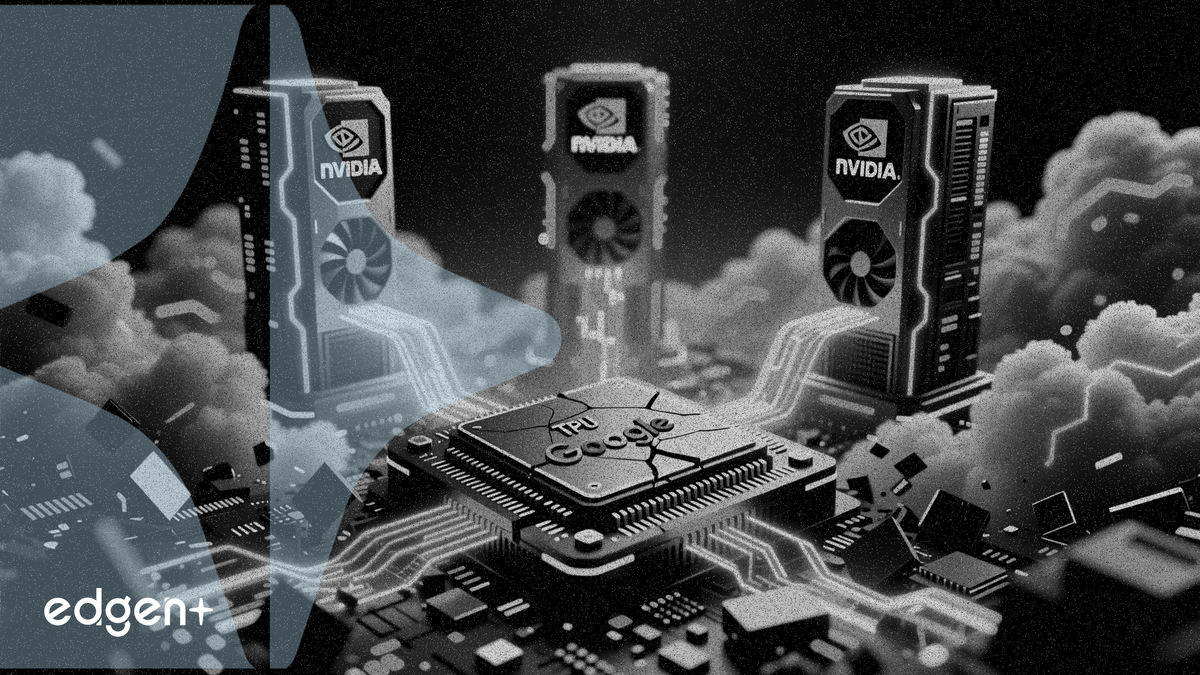
(P1) Google's plan to challenge Nvidia's dominance in the AI chip market hit a major roadblock as three key cloud service providers—Nebius, Lambda, and CoreWeave—publicly confirmed they have no short-term plans to adopt its Tensor Processing Units (TPUs). The companies cite overwhelming market preference for Nvidia hardware, with one provider reporting that 99% of its customer demand is for Nvidia GPUs.
(P2) "We bleed green," Lambda CFO Chuck Fisher said at a recent industry event when asked about adopting TPUs, referencing the brand color of market leader Nvidia.
(P3) That sentiment is backed by hard numbers. Marc Boroditsky, Chief Revenue Officer at Nebius, said that 99% of his firm's client demand is for Nvidia chips, with the few inquiries for TPUs coming mostly from ex-Google employees. CoreWeave's VP of Corporate Development, Nick Robbins, added that with "99% of the market" wanting one thing, it's difficult to justify investing in alternatives.
(P4) The collective refusal undermines Google's strategy to sell TPUs directly to customers and illustrates the deep competitive moat Nvidia has built. For investors, it reinforces the bull case for Nvidia's sustained market dominance while raising questions about the billions Google may need to spend to create a viable market for its own advanced chips.
The preference for Nvidia is not just about market demand, but also about deep-rooted relationships. Nebius, Lambda, and CoreWeave are all part of the "Nvidia ecosystem," where Nvidia is a key supplier, a strategic investor, and sometimes even a customer.
This dynamic creates a powerful feedback loop that is difficult for competitors to break. "Unfortunately, the circle of former Google employees is not large enough to support a market," Boroditsky said, highlighting the niche appeal of TPUs beyond those already familiar with Google's internal infrastructure.
For CoreWeave, the decision is a matter of risk-adjusted returns. "For every dollar we invest, for every megawatt we allocate, we are making a risk-adjusted bet on what will deliver the highest long-term return," Robbins said. Even if Nvidia's market share were to fall to 90%, he argued, the focus would remain on serving that majority.
Unable to penetrate the mainstream Nvidia-aligned cloud providers, Google is now taking a more capital-intensive route to build its TPU market. The company has reportedly turned to Fluidstack, a lesser-known data center startup, to facilitate a major TPU deployment for the AI company Anthropic.
To make the deal happen, Google provided a multi-billion dollar lease and debt guarantee, effectively subsidizing the adoption of its own hardware. This move, a significant shift from earlier failed talks with CoreWeave, shows Google is willing to directly finance its ecosystem—a step Nvidia never had to take in the early days of GPU-powered cloud computing.
Looking ahead, Boroditsky acknowledged that the current landscape isn't permanent. He noted that new cloud software is being developed to allow easier use across different chip types, which could reduce hardware dependency. "It's very difficult for a single brand to have a monopoly — there will be more diversity in the future," he said, drawing a parallel to the evolution of the CPU market. For now, however, Google faces an uphill battle in a market that continues to bleed green.
This article is for informational purposes only and does not constitute investment advice.

