

Hesai is moving beyond lidar, aiming to build the sensory and physical foundation for the next wave of robotics and autonomous machines.
Hesai is moving beyond lidar, aiming to build the sensory and physical foundation for the next wave of robotics and autonomous machines.
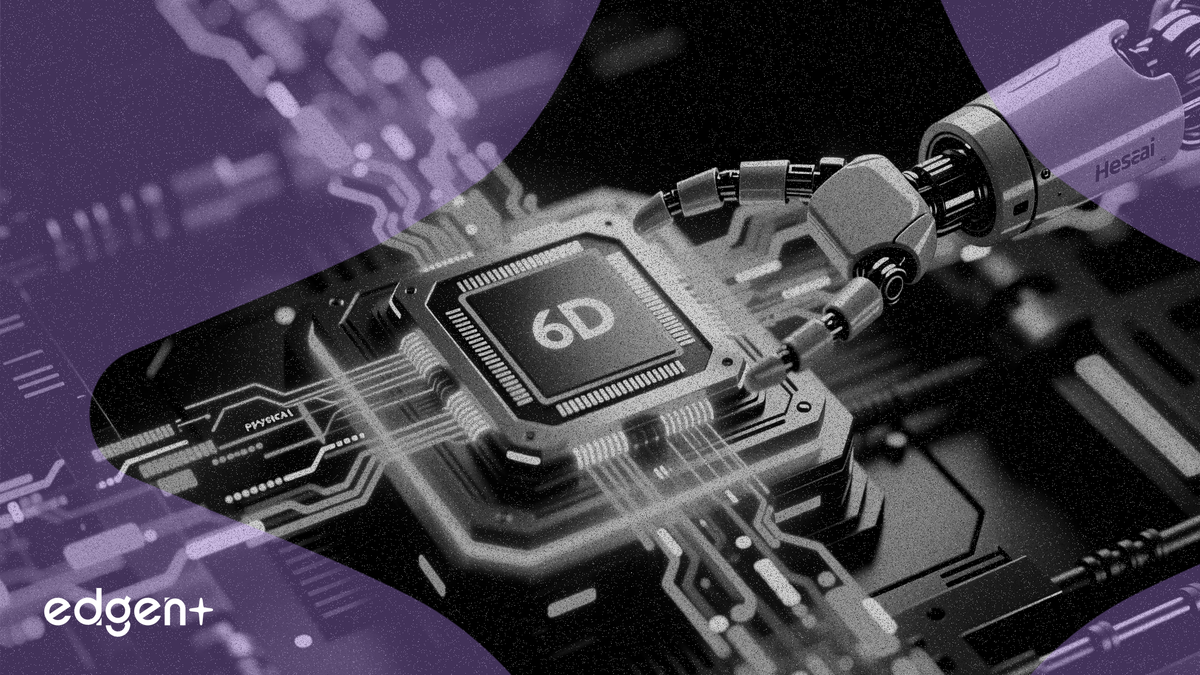
Hesai Technology announced a major strategic pivot to spatial intelligence on April 20, unveiling its Kosmo platform and a new Picasso 6D full-color SPAD-SoC to build what it calls the foundation for the Physical AI era.
"This marks our transition from a lidar manufacturer to a spatial intelligence company, providing the eyes and hands for a new generation of robotics," a Hesai representative said in a statement.
The new offerings include the Kosmo spatial intelligence AI hardware platform, the Picasso 6D full-color SPAD (Single-Photon Avalanche Diode) System-on-Chip, and a series of robotic actuation modules. The company stated these products are designed to give machines advanced perception and interaction capabilities.
For investors, this strategic shift positions Hesai to compete more broadly in the robotics and industrial automation markets, potentially challenging established players. The move could unlock new revenue streams beyond automotive lidar and lead to a positive re-evaluation of its stock, which has faced pressure alongside other lidar makers like Luminar and Innoviz.
Hesai's expansion into "Physical AI" represents a significant evolution of its business model. The company, primarily known for its lidar sensors used in autonomous vehicles and robotics, is now aiming to provide a more comprehensive hardware stack for intelligent machines. The newly announced Kosmo platform is central to this strategy, designed to be the core hardware for spatial intelligence applications.
At the heart of the new platform is the Picasso 6D, a full-color SPAD System-on-Chip. SPAD technology is known for its high sensitivity and ability to detect single photons, allowing for extremely precise 3D imaging even in difficult conditions. By adding full-color and "6D" capabilities—likely referring to 3D position, 3D velocity, and color information—Hesai is aiming to provide a much richer data stream for AI systems to interpret and act upon.
This contrasts with traditional lidar, which typically only provides 3D point cloud data. The addition of color and velocity data at the sensor level could significantly improve object detection, classification, and scene understanding for autonomous systems, from self-driving cars to warehouse robots. The company also unveiled robotic actuation modules, suggesting a move to provide not just the "senses" for robots but also the physical components to interact with the world.
The strategic shift could enhance Hesai's competitive position against rivals such as Cepton and Ouster. While the automotive lidar market remains a key battleground, the broader push into spatial intelligence and robotics opens up a much larger total addressable market in industrial automation, logistics, and smart infrastructure.
The success of this pivot will depend on the adoption of the Kosmo platform and the performance of the new Picasso 6D sensor. The "bullish" market sentiment noted in the announcement reflects optimism that this hardware can become a key enabler for the growing Physical AI industry. This may attract strategic partnerships with robotics companies and software developers, further boosting Hesai's growth prospects and potentially leading to a positive re-evaluation of its stock by investors who have been wary of the pure-play lidar space.
This article is for informational purposes only and does not constitute investment advice.