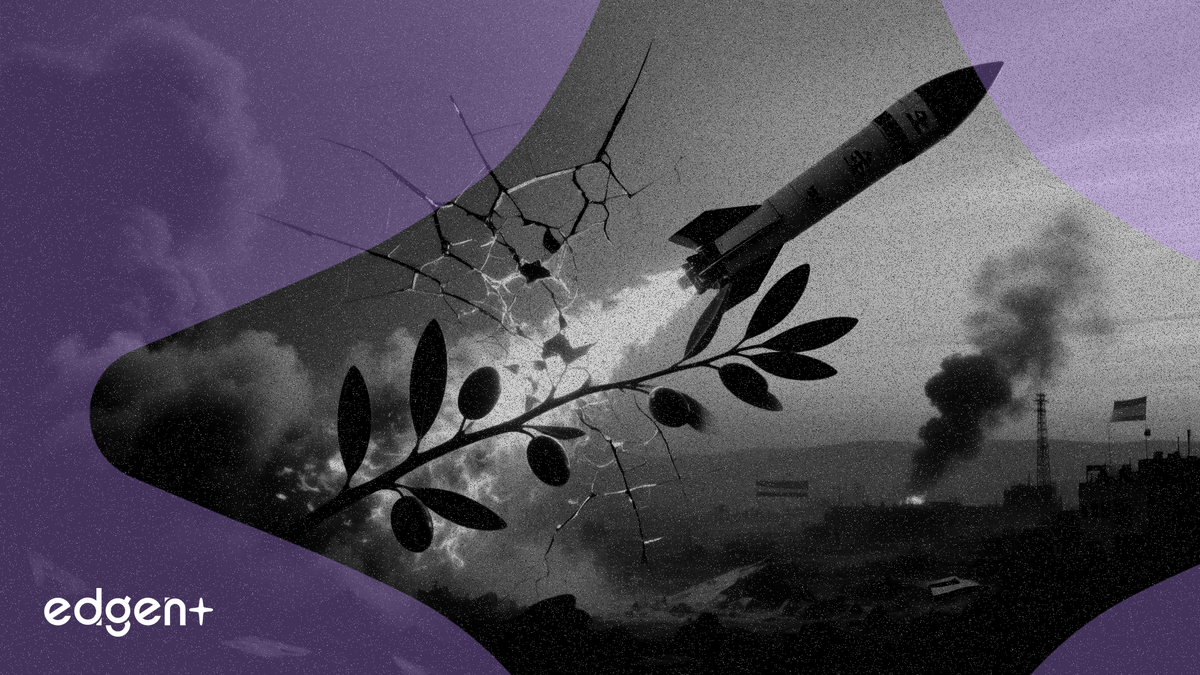
Hezbollah's barrage of rockets on northern Israel during the first direct peace talks with Lebanon in over 30 years signals a volatile road ahead for de-escalation efforts.
Hezbollah launched rocket attacks on 13 towns in northern Israel on Tuesday, a pointed show of force as Israeli and Lebanese government representatives convened in Washington for historic negotiations. The escalation injects immediate instability into the U.S.-backed diplomatic effort, threatening a wider conflict that would likely trigger a spike in oil prices and a flight to safe-haven assets like gold and the U.S. dollar.
The attacks occurred while Israel's ambassador to the U.S., Yechiel Leiter, and his Lebanese counterpart, Nada Hamadeh Moawad, held their first meeting at the State Department. An official briefed on Israel's strategy described the talks to NPR as "preparatory," intended to build a framework for future negotiations aimed at resolving the conflict by isolating Hezbollah.
The rocket and drone barrages caused direct damage to buildings in the northern Israeli towns of Nahariya and Shlomi, with one woman lightly injured, according to emergency services. The attacks underscore the fragility of any diplomatic track without the participation of Hezbollah, which holds significant political and military power in Lebanon. The last comparable political negotiations were in the 1980s, and a subsequent peace accord in 1983 was never enacted.
Hezbollah's actions suggest the group is intent on derailing a bilateral agreement it is not party to, creating a significant risk premium for regional assets. The potential for a broader conflict involving Iran, Hezbollah's primary backer, could destabilize the Middle East, leading to increased volatility in global stock markets and a flight to safety.
A Diplomatic Track Amid Continued Fire
While the diplomatic track gets underway in Washington, Israel maintains a dual strategy of negotiating with the Lebanese state while actively targeting Hezbollah. Israeli officials stated the talks would be conducted as if Hezbollah does not exist, while military operations continue as if there are no talks. This approach is intended to weaken the Iranian-backed group and strengthen the Lebanese government, where public support for a peace deal is reportedly growing.
In a demonstration of its military campaign, the Israel Defense Forces announced its recent large-scale strike, codenamed “Eternal Darkness,” killed more than 250 Hezbollah operatives, including senior commanders. An Israeli intelligence official said the operation was a "significant blow to Hezbollah’s operational capabilities." At the same time, Israel has reportedly agreed to scale back strikes in Lebanon to accommodate the negotiations, avoiding attacks in Beirut and requiring political approval for other actions to prevent mistakes.
Hezbollah Rejects Talks, Threatens Escalation
Hezbollah has explicitly rejected the Washington talks, with its leadership vowing to continue fighting. In a speech Tuesday, Hezbollah Deputy Secretary-General Naim Qassem called the negotiations with Israel "a series of unnecessary concessions" and a path taken without internal consensus. He asserted that the group would not surrender and would fight "until our last breath."
Qassem also issued a direct threat, stating that when the opportunity arises, the group would kidnap enemy soldiers. This rhetoric, combined with the rocket attacks, firmly positions Hezbollah as the primary obstacle to a negotiated settlement and signals its readiness to escalate hostilities to achieve its objectives.
This article is for informational purposes only and does not constitute investment advice.