
A second multi-billion dollar fortune built on artificial intelligence has been revealed in open court, exposing the massive wealth at the center of the legal fight for OpenAI's future.
A second multi-billion dollar fortune built on artificial intelligence has been revealed in open court, exposing the massive wealth at the center of the legal fight for OpenAI's future.
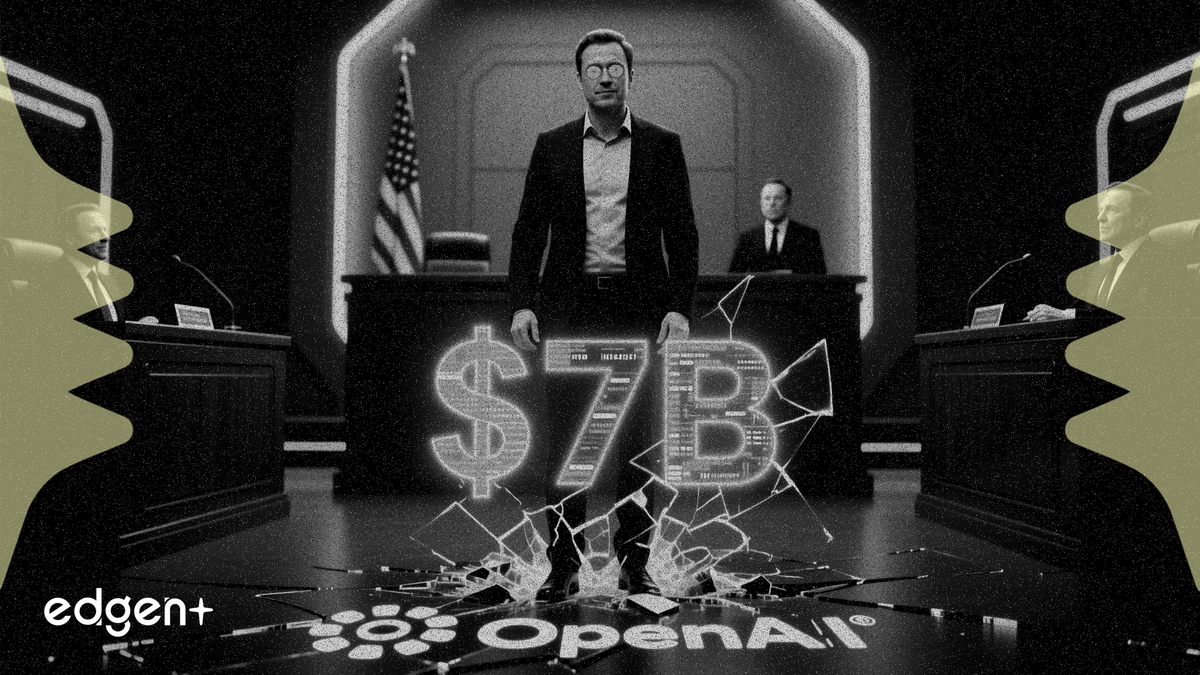
OpenAI co-founder and former chief scientist Ilya Sutskever holds a $7 billion stake in the artificial intelligence company, a fact disclosed during his testimony Monday in the high-stakes trial pitting Elon Musk against the firm he helped establish. This is the second such billionaire valuation revealed in the case, following OpenAI President Greg Brockman's testimony of a nearly $30 billion stake last week.
The disclosures were made as part of the ongoing legal proceedings in which Musk alleges the ChatGPT-maker abandoned its founding humanitarian principles. According to court testimony, Sutskever's confirmation of his holdings adds another layer to the complex financial picture of the closely-held company.
The back-to-back revelations of multi-billion dollar stakes for Sutskever and Brockman—totaling nearly $37 billion in paper wealth between just two founders—provide concrete figures to the immense value created by OpenAI's technology. The numbers stand in stark contrast to the company's origins as a non-profit research lab dedicated to ensuring artificial general intelligence benefits all of humanity.
These testimonies cut to the core of the lawsuit and the broader debate over AI governance. The trial scrutinizes OpenAI's transformation into a capped-profit entity, a structure that has generated massive private market valuations and enormous wealth for its leaders, particularly through its deep partnership with Microsoft. The outcome could have lasting implications for how AI development is funded, structured, and regulated.
Elon Musk's lawsuit, filed earlier this year, claims breach of contract, alleging that OpenAI's pivot to a for-profit model and its exclusive licensing deal with Microsoft betrayed the company's original open-source, non-profit mission. Musk, an early funder, argues he backed a vision for a transparent counterweight to Google, not a closed-source subsidiary of another tech giant. The legal battle has become a focal point for the ideological struggle over the future of AI—whether it should be open and collaborative or commercially driven and proprietary.
The emergence of multi-billion dollar stakes highlights the financial engine created by OpenAI's capped-profit structure. While designed to attract investment for its capital-intensive research, the model has also made its founders and key employees extraordinarily wealthy on paper. This financial success is central to Musk's argument that the profit motive has superseded the original mission. For investors, these valuations, while private, reinforce the immense worth being ascribed to leading AI firms and the talent that drives them. The figures set a new benchmark for founder equity in the AI sector, potentially influencing future funding rounds and talent acquisition across the industry.
This article is for informational purposes only and does not constitute investment advice.
