

Intel has staged one of the most dramatic turnarounds in semiconductor history, with its stock surging 443.9% over the past year.
Intel has staged one of the most dramatic turnarounds in semiconductor history, with its stock surging 443.9% over the past year.
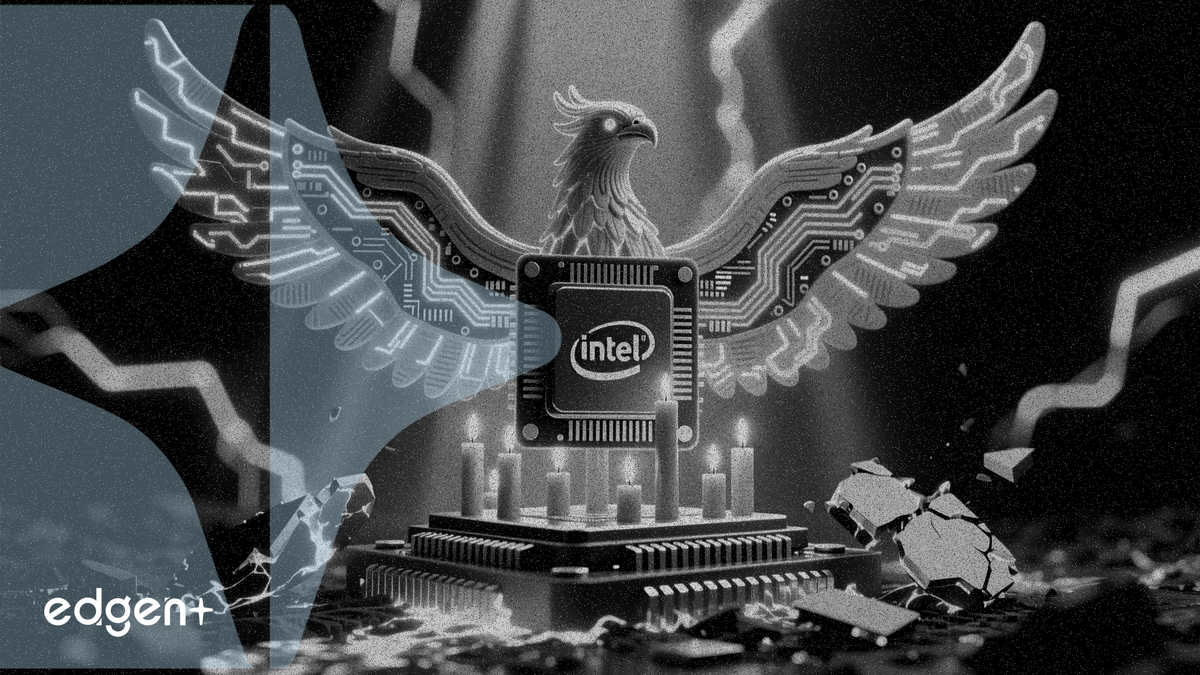
Intel Corp.'s stock has surged 443.9% over the past year, including a 149.11% gain in the prior 90 days, marking a corporate revival reshaping investor expectations for the semiconductor sector.
The magnitude of the move has drawn comparisons to the most dramatic reversals in technology history. Intel, once left for dead by some tech investors following manufacturing delays and market share losses to Advanced Micro Devices Inc. and Nvidia Corp., has reversed course with a velocity few on Wall Street anticipated. The 443.9% annual return has added substantially to Intel's market capitalization, lifting the company's weight in semiconductor benchmarks and sector-focused exchange-traded funds.
The stock's 149.11% gain over the past 90 days alone shows the acceleration in investor conviction. That three-month return far exceeds the broader Philadelphia Stock Exchange Semiconductor Index's performance over the same period, indicating that Intel-specific factors are driving the move rather than sector-wide tailwinds. The surge has also lifted interest in semiconductor ETFs that hold significant Intel positions, as the company's growing market value increases its index weighting. Funds tracking the semiconductor sector have seen their Intel allocations rise in proportion to the stock's outperformance.
What Drove the Reversal
Intel's comeback follows years of underperformance relative to chip sector peers. The company lost ground to AMD in the central processing unit market, where AMD's Zen architecture captured significant server and PC market share through superior performance-per-watt metrics. Intel also watched Nvidia dominate the artificial intelligence chip boom, as Nvidia's data center business grew to become the dominant force in AI computing, powering the large language models that drove the technology industry's biggest investment cycle in decades. Meanwhile, Intel's own manufacturing roadmap faced repeated delays, with its 7nm process node falling behind schedule and forcing the company to outsource some production to TSMC.
The turnaround appears tied to progress on Intel's foundry strategy and product roadmap. Under Chief Executive Pat Gelsinger, the company launched an ambitious plan to regain manufacturing leadership and open its factories to external customers, competing directly with Taiwan Semiconductor Manufacturing Co. and Samsung Electronics Co. The foundry push represents a fundamental shift for a company that historically manufactured only its own chips. While Intel has not yet disclosed full quarterly earnings for the most recent period, the stock's performance suggests investors are betting the strategy is gaining traction with potential customers.
What's at Stake for Investors
For investors, the central question is whether Intel can sustain this momentum. The stock's 443.9% surge has reset valuation expectations, and the next major catalyst will be the company's quarterly earnings report, where investors will look for evidence that operational improvements are translating into financial results. Key metrics to watch include data center revenue, foundry customer wins, and gross margin trends — all indicators of whether the turnaround is producing real earnings growth or merely a rerating of the stock.
If Intel maintains its trajectory, it could reshape competitive dynamics across the semiconductor industry. A revived Intel would put pressure on AMD in the CPU and GPU markets while creating a credible third force in advanced chip manufacturing alongside TSMC and Samsung. For Nvidia, a stronger Intel could mean more competition for data center customers, particularly if Intel's foundry services attract AI chip designers looking for an alternative to TSMC's capacity constraints. If the turnaround stalls, however, the stock could face significant downside from current levels, given the premium investors are now paying for the recovery story.
This article is for informational purposes only and does not constitute investment advice.
