


- Intel to provide design and packaging for Tesla-SpaceX chip venture
- Terafab project aims for high-performance, custom chip supply starting 2026
- Collaboration strengthens Intel's foundry business against rivals like TSMC
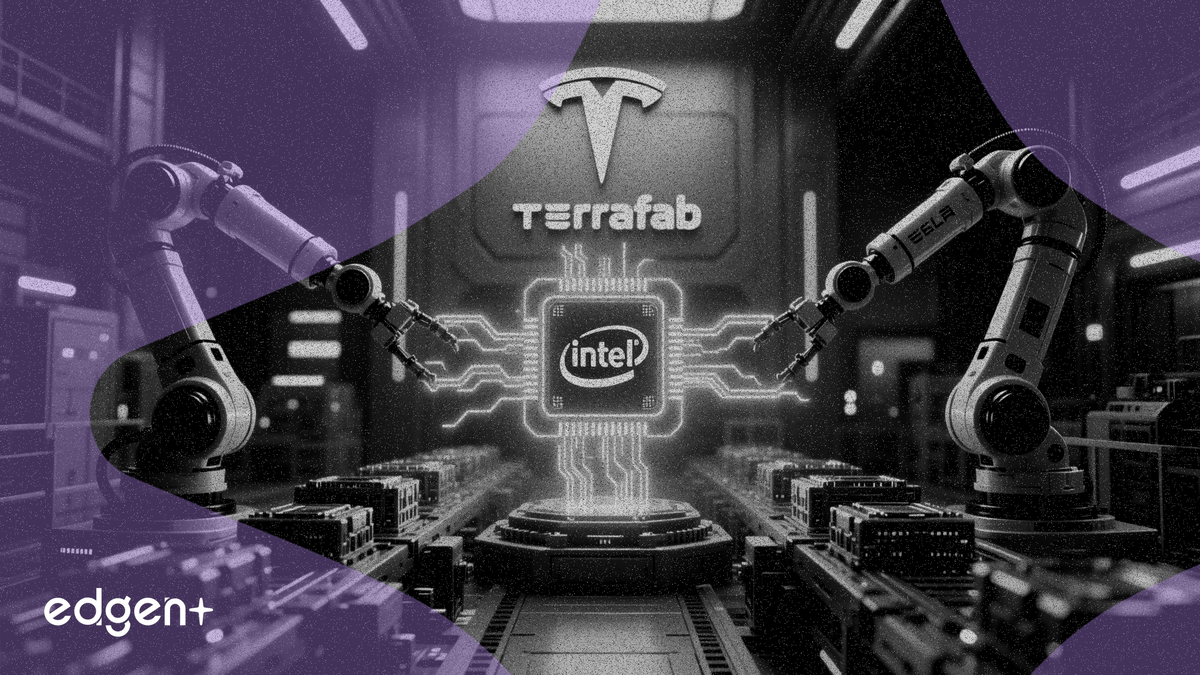
(P1) Intel will lend its advanced design and packaging capabilities to a new chipmaking venture with Tesla and SpaceX, a major push to build a dedicated, high-performance chip supply chain for the two companies starting in 2026.
(P2) "This collaboration will secure a supply of custom, high-performance chips for our automotive and aerospace needs, giving us a critical competitive edge," a spokesperson for the joint venture said.
(P3) The project, dubbed Terafab, will see Intel contribute its expertise in system-on-chip design and advanced packaging technologies like Foveros and EMIB. While the specific process node for the new chips was not disclosed, the 2026 production target suggests a highly advanced manufacturing process to meet the performance demands of Tesla's autonomous driving systems and SpaceX's satellite communications.
(P4) The partnership is a significant win for Intel's foundry services, positioning it as a key supplier to two of the world's most demanding tech companies and a credible alternative to Asian giants like TSMC and Samsung Foundry. For Tesla and SpaceX, it de-risks their supply chain and accelerates their hardware-software integration roadmaps.
The Race for Custom Silicon
The alliance between Intel, Tesla, and SpaceX marks a pivotal moment in the semiconductor industry, highlighting a growing trend of major technology firms bringing chip design in-house to optimize for specific workloads. Apple's success with its M-series processors for Macs set the precedent, and now companies across automotive and cloud computing are following suit. By partnering with Intel, Tesla and SpaceX gain access to a world-class design and manufacturing partner without the massive capital expenditure of building their own fabrication plants from the ground up.
This venture allows Tesla to design chips precisely tailored for its Full Self-Driving (FSD) computer, potentially offering orders-of-magnitude improvements in performance and efficiency over off-the-shelf solutions. For SpaceX, custom silicon is critical for the next generation of its Starlink satellite constellation, where on-board processing and power efficiency are paramount. The Terafab project aims to create a vertically integrated supply chain, from design to finished product, insulated from the geopolitical risks and capacity constraints that have plagued the semiconductor industry.
A New Foundry Force
For Intel, this is a cornerstone victory for its renewed foundry ambitions. Under CEO Pat Gelsinger, the company has invested billions to open its factories to external customers, a strategy aimed at reclaiming manufacturing leadership from TSMC. Securing high-volume, leading-edge customers like Tesla and SpaceX provides a crucial anchor tenant for its new process technologies and a powerful signal to the market.
The collaboration will likely leverage Intel's most advanced packaging technologies, such as Foveros 3D stacking and Embedded Multi-die Interconnect Bridge (EMIB), which are critical for integrating diverse chiplets into a single, powerful system-on-chip (SoC). This capability is a key differentiator for Intel against its foundry rivals. The deal's success could attract other major "hyper-scalers" and automotive players to Intel's foundry services, creating a third major force in the leading-edge foundry market. The financial terms of the deal were not disclosed, but the long-term revenue stream and strategic validation are invaluable for Intel's turnaround story.
This article is for informational purposes only and does not constitute investment advice.