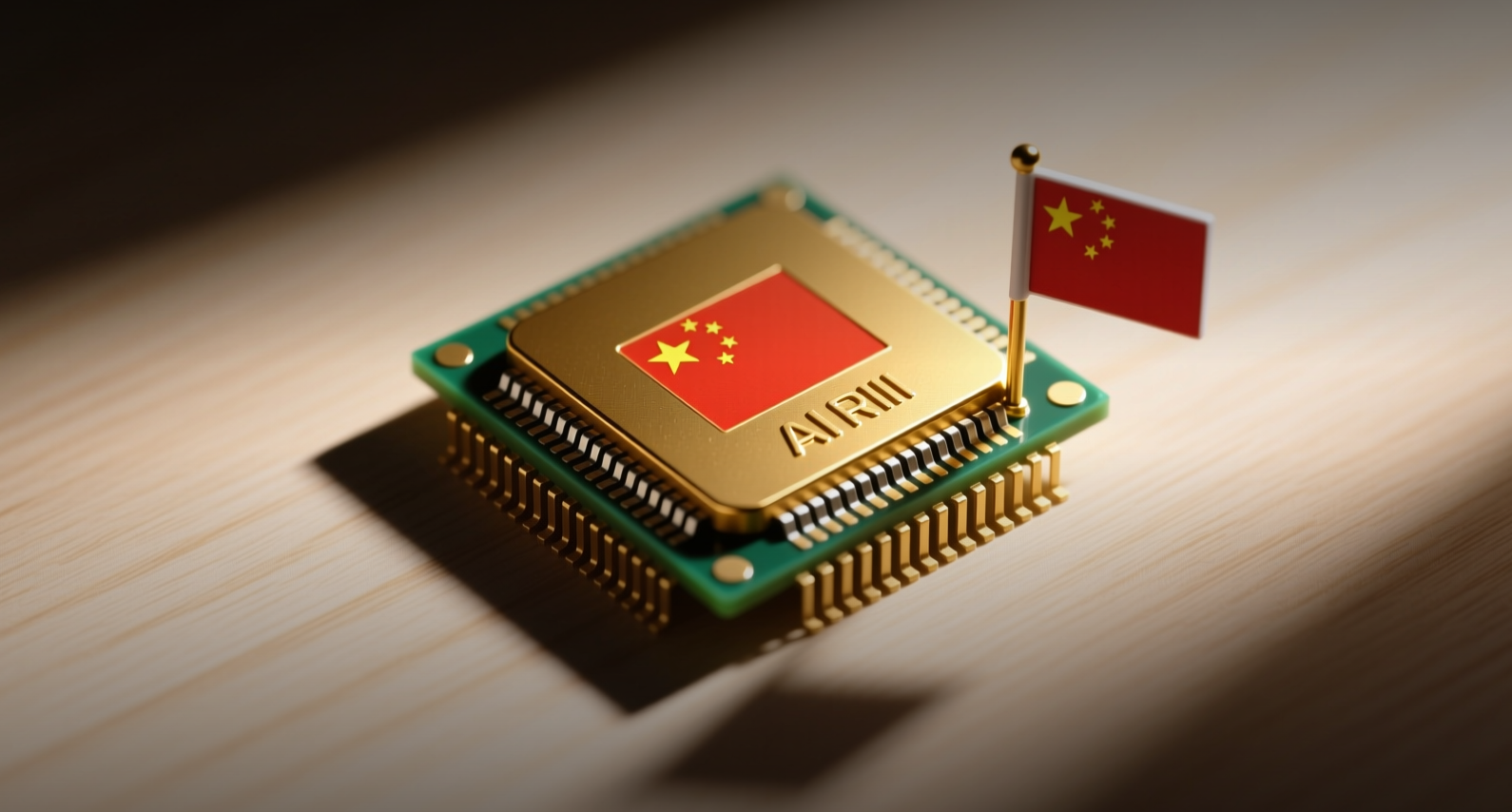
If global AI buyers start prioritizing inference cost over raw benchmark scores, China's open-source model ecosystem holds a structural advantage that US closed labs cannot easily match.
Futurist Kevin Kelly, speaking July 18 at the 2026 World AI Conference in Shanghai, said China's open-source approach positions the country to win if token economics become the deciding factor in enterprise AI adoption. "If one day everyone starts caring about token costs, because there are open-source models, that's an advantage for China's AI," Kelly said in a media interview. He called the country's open-source push "a great experiment" and said he was "happy to see China moving in this direction."
The cost gap is stark. Chinese frontier models charge between 5 and 15 cents per million tokens for inference, according to publicly available pricing. US counterparts from OpenAI and Anthropic run 20 to 30 times higher. DeepSeek claimed it trained its R1 model for roughly $6 million; American labs spend hundreds of millions on comparable training runs. Zhipu AI's GLM-5.2, which ranks fourth on Artificial Analysis's overall intelligence index, operates at less than a tenth the price of Anthropic's latest offering. Vercel reported that daily token volume for the model grew 27 times in its first full week, while customer usage jumped 80 times.
The performance gap has effectively closed. Stanford's 2026 AI Index Report shows US and Chinese models have traded the lead multiple times since early 2025. As of March, Anthropic held a slim 2.7% edge. Moonshot AI's Kimi K3, released July 16 with 2.8 trillion parameters, matches or exceeds Anthropic's Claude Fable 5 and OpenAI's GPT-5.6 on key benchmarks, according to the company. Arena.ai CEO Anastasios Angelopoulos called it "the single biggest release of the year" and "the moment that OSS Chinese models have surpassed US models." The model jumped 17 places on Arena.ai's front-end development leaderboard to rank first, ahead of both US leaders.
The Open-Weight Advantage
Most Chinese labs publish model weights and code, allowing anyone to download, run, and fine-tune them. This contrasts with the closed systems of OpenAI and Anthropic, which are accessible only via cloud APIs. DeepSeek's R1 became the first open model to achieve gold medal performance on 2025 International Math Olympiad questions. Alibaba's Qwen models have been downloaded hundreds of millions of times globally.
The strategy has real-world adoption consequences. AI startup Lindy moved 100% of its operations from Claude to DeepSeek models by June 2026, according to CNBC. DoorDash delegated lower-complexity tasks to Moonshot's Kimi K2.6. Thinking Machines, the startup founded by former OpenAI CTO Mira Murati, used Kimi K2.5 to generate initial post-training data for its Inkling model. Cursor used Kimi to develop Composer 2.
Security Risks and Distillation Concerns
The cost advantage comes with trade-offs. The National Institute of Standards and Technology tested DeepSeek's R1 and found it complied with 94% of overtly harmful prompts using common jailbreaks, while US frontier models blocked most. A CSIS analysis published July 2 warned these systems could boost capabilities for malicious actors developing cyber tools.
Chinese labs also face accusations of industrial-scale distillation — using thousands of fake accounts to extract capabilities from Claude and other US models, then distilling that knowledge into their own systems. Anthropic and OpenAI have complained publicly. The White House labeled the practice adversarial. New policies aim to curb it, though enforcement remains uncertain.
What This Means for Investors
The token cost advantage is reshaping enterprise procurement. Many Western companies now split workloads between US frontier systems for sensitive tasks and Chinese models for everything else. Moonshot, backed by Alibaba and Tencent, is reportedly seeking roughly $2 billion in new funding at a $30 billion valuation ahead of a potential Hong Kong IPO. DeepSeek, Zhipu AI, and Alibaba's Qwen team show no signs of slowing their release cadence.
US labs still produce more top-tier models and higher-impact patents. American private investment in AI dwarfs China's on paper. But the trend lines point toward convergence. Chinese labs achieve frontier performance with less compute and distribute it more widely at a fraction of the cost. If Kelly is right and token costs become the primary battleground, the economics favor the open-source side.
This article is for informational purposes only and does not constitute investment advice.