
L'ancien économiste de Trump, Joe Lavorgna, affirme que la Réserve fédérale doit relever ses taux d'un point de pourcentage entier, l'inflation restant solidement ancrée au-dessus de son objectif de 2%.
L'ancien économiste de Trump, Joe Lavorgna, affirme que la Réserve fédérale doit relever ses taux d'un point de pourcentage entier, l'inflation restant solidement ancrée au-dessus de son objectif de 2%.
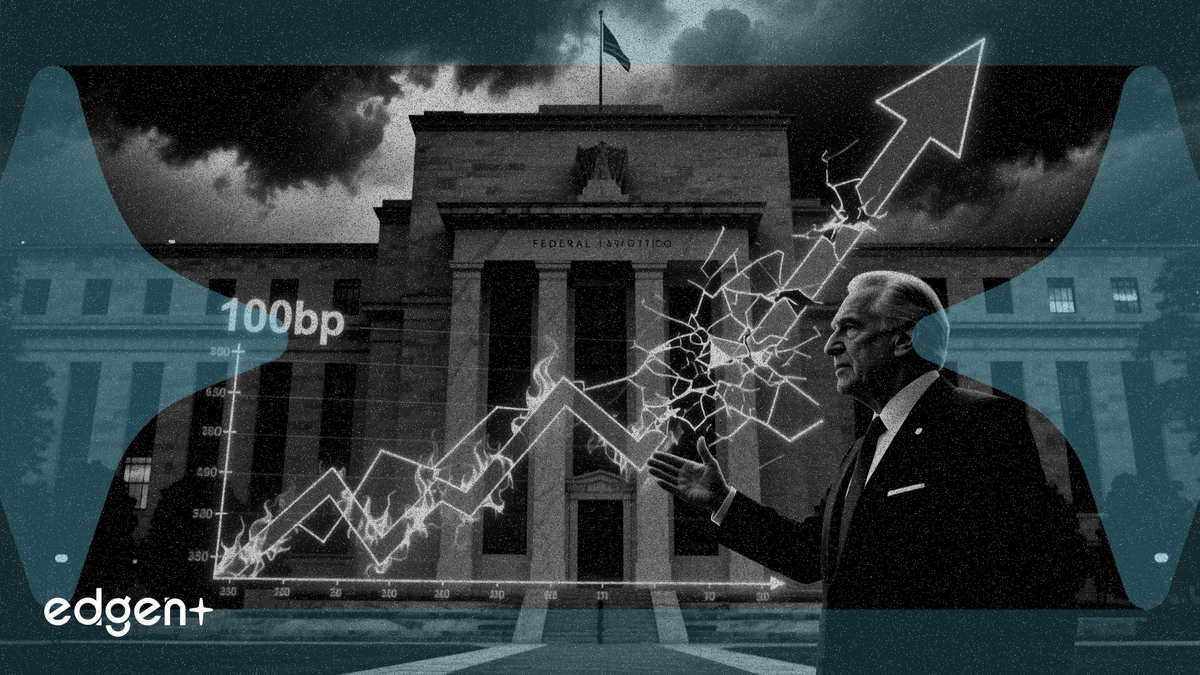
L'ancien économiste de Trump, Joe Lavorgna, affirme que la Réserve fédérale doit relever ses taux d'un point de pourcentage entier, l'inflation restant solidement ancrée au-dessus de son objectif de 2%.
La Réserve fédérale subit une pression renouvelée pour resserrer sa politique monétaire après que l'indice des prix des dépenses de consommation personnelle (PCE) d'avril a montré une inflation courant à 3,8%, renforçant les appels de l'ancien économiste de Trump, Joe Lavorgna, en faveur d'une hausse de 100 points de base des taux.
"Les données sur l'inflation renforcent la nécessité pour la Fed de relever ses taux de 100 points de base", a déclaré Lavorgna, directeur général et économiste en chef chez SMBC Americas et ancien conseiller du secrétaire au Trésor Bessent, jeudi sur CNBC dans l'émission "Fast Money".
Le rapport PCE d'avril a montré une inflation globale en hausse de 0,4% par rapport à mars et de 3,8% sur un an, conformément aux estimations, mais restant bien au-dessus de l'objectif de 2% de la banque centrale. L'indice PCE de base, qui exclut l'alimentation et l'énergie, a augmenté de 0,2% d'un mois sur l'autre et de 3,3% sur un an — les deux lectures mensuelle étant inférieures de 0,1 point de pourcentage aux projections consensuelles. Les coûts du logement et des services publics ont grimpé de 0,6% en avril, la plus forte hausse mensuelle en un an, tandis que les prix de l'énergie ont bondi alors que le conflit en Iran perturbait l'offre.
Une hausse de 100 points de base représenterait le mouvement le plus agressif du cycle de resserrement actuel et bouleverserait les attentes du marché. Les contrats à terme sur les fonds fédéraux intègrent une probabilité de 99% que le nouveau président de la Fed, Kevin Warsh, maintienne les taux inchangés lors de la réunion de juin, la première hausse d'un quart de point n'étant pas attendue avant mars 2027.
Cet appel à un resserrement agressif intervient alors que Warsh examine ses premiers rapports sur l'inflation depuis qu'il a pris la présidence de la Fed plus tôt cette année. Lors de son processus de confirmation, Warsh s'était montré ouvert à des baisses de taux, ce qui fait de la trajectoire politique sous sa direction une question clé pour les marchés. Le PCE d'avril représente la première lecture majeure de l'inflation de son mandat, et la manière dont il interprète ces données donnera le ton de la politique monétaire pour le reste de l'année 2026.
La divergence entre le point de vue hawkish de Lavorgna et la tarification du marché met en lumière l'incertitude entourant la trajectoire politique. Alors que les lectures mensuelles du PCE sont légèrement inférieures aux prévisions — offrant un certain répit aux décideurs dovish qui estiment que la Fed devrait maintenir son approche attentiste — les chiffres d'une année sur l'autre restent obstinément élevés. L'IPC, qui tend à être supérieur d'environ 40 points de base au PCE, a également affiché un taux global d'avril de 3,8%, renforçant le récit selon lequel l'inflation s'avère difficile à éteindre.
La dernière fois que la Fed a été confrontée à une inflation à ces niveaux, c'était en 2022-2023, lorsqu'elle a procédé à un resserrement de 525 points de base sur 16 mois. Ce cycle s'est terminé avec un taux des fonds fédéraux à 5,25% à 5,50%, où il est resté pendant la transition vers la direction de Warsh. Si l'appel de Lavorgna se concrétise, le taux des fonds fédéraux passerait à 6,25% à 6,50% — un niveau qui n'avait pas été observé depuis le début de l'année 2001.
Pour les marchés obligataires, une hausse de 100 points de base déclencherait une forte réévaluation. Le rendement du Trésor à 2 ans, qui est le plus sensible aux anticipations de politique de la Fed, augmenterait probablement fortement, tandis que la courbe des taux pourrait s'inverser davantage, les perspectives de croissance à long terme restant modestes. Un dollar plus fort s'ensuivrait, exerçant une pression sur les devises des marchés émergents et les actifs risqués, y compris les actions. Le S&P 600 ferait face à des vents contraires en raison de taux d'actualisation plus élevés, tandis que les secteurs sensibles aux taux, tels que l'immobilier et les services publics, sous-performeraient probablement.
La question clé pour les investisseurs est de savoir si Lavorgna représente un point de vue marginal ou le début d'un changement plus large du consensus. Alors que Warsh n'a pas encore prononcé sa première déclaration de politique formelle en tant que président, le marché fonctionne sur des hypothèses qui pourraient s'avérer obsolètes si les données sur l'inflation continuent d'être élevées. Le prochain test viendra avec la publication de l'IPC de mai à la mi-juin, suivie de la décision de la Fed sur les taux les 17 et 18 juin.
Cet article est fourni à titre d'information uniquement et ne constitue pas un conseil en investissement.
