

Key Takeaways:
- Marvell Technology surged 251% in the first half of 2026
- Revenue growth accelerated to 28% year-over-year in Q1
- Nvidia CEO Jensen Huang called Marvell the "next trillion-dollar company"
Key Takeaways:
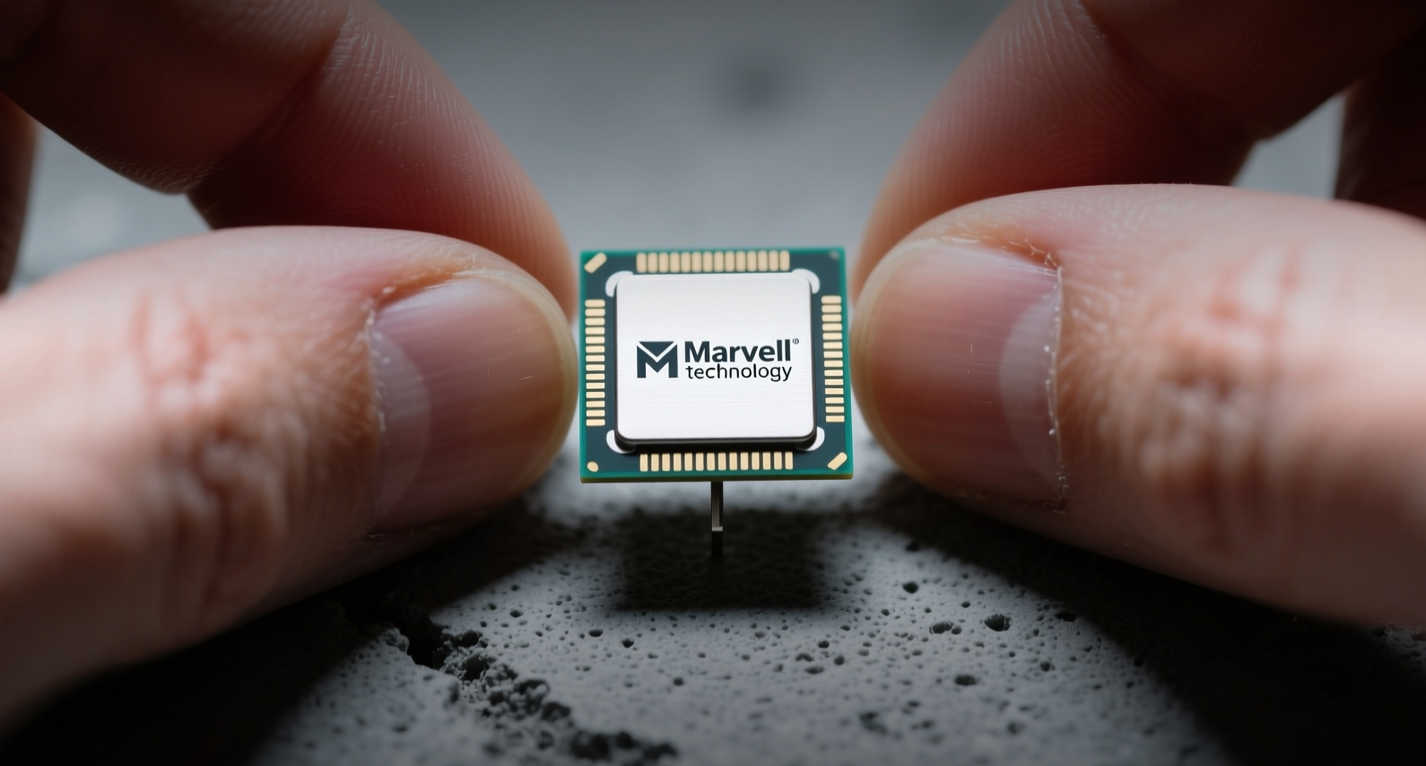
Marvell Technology's 251% first-half rally made it one of the best-performing semiconductor stocks, fueled by accelerating revenue growth and a rare public endorsement from Nvidia's chief.
The fabless chipmaker's custom ASIC designs and optical components have become essential infrastructure for AI data centers, pushing its market cap past $174 billion and drawing comparisons to Nvidia's own trajectory.
"Marvell rallied significantly after Jensen Huang extolled the company as 'the next trillion-dollar company' on stage at Computex in Taiwan," NZS Capital, which trimmed its position after the surge, said in its second-quarter investor letter.
Revenue accelerated from 22% year-over-year growth in the fiscal fourth quarter to 28% in the first quarter, reaching $2.42 billion. Adjusted earnings per share rose to $0.80 from $0.62 a year earlier. The stock jumped 33% in a single session following Huang's remarks at the Computex trade show in early June, then gained further on news of its addition to the S&P 500, replacing Pool Corporation.
At 20 times sales, Marvell trades at a valuation that exceeds its historical average, and the stock has pulled back more than 30% from its June peak as the broader semiconductor sector cooled. Wall Street expects growth to accelerate further over the next two years, but the near-term trajectory depends on whether AI infrastructure spending maintains its current pace.
The Nvidia Endorsement That Moved Markets
Huang's Computex appearance in early June marked an unusual moment — the chief executive of the world's most valuable chip company publicly anointing a supplier as a future trillion-dollar enterprise. Marvell designs custom ASIC chips and optical components that handle data movement inside AI clusters, a market that Nvidia itself depends on for its GPU supercomputing systems.
The endorsement came days after Marvell reported first-quarter results that already had analysts upgrading their price targets. Revenue of $2.42 billion represented a record for the company, with data center revenue driving the bulk of the increase. The company guided for continued sequential growth in the current quarter, signaling that demand from cloud providers building out AI capacity shows no sign of slowing.
NZS Capital, which held Marvell as an "optional" position in its portfolio, said it trimmed the stock after the Computex-driven surge. "Jensen's statement only resulted in the market applying a higher valuation to a stock whose fundamental range of outcomes remained unchanged," the firm wrote. The fund's discipline reflects a broader debate on Wall Street: how much of Marvell's AI opportunity is already priced in.
Valuation and the Path Forward
Marvell's price-to-sales ratio of 20 places it among the most expensive semiconductor stocks by that metric, above Broadcom's 15 times and trailing only Nvidia among large-cap chip companies. The stock's 30% decline from its June high suggests some investors are taking profits after the 251% first-half run.
The company's growth trajectory remains tied to the pace of AI data center construction. Marvell's optical components and custom ASICs are used in the networking fabric that connects thousands of GPUs inside training clusters — a market that research firm IDC projects will grow at more than 30% annually through 2028. Competitors including Broadcom and Intel are also pursuing custom chip deals with cloud providers, but Marvell's early design wins with multiple hyperscalers give it a diversified revenue base.
Hedge fund ownership has edged lower, with 79 funds holding positions at the end of the first quarter compared with 85 in the prior period, according to Insider Monkey data. The reduction may reflect profit-taking after the stock's parabolic move rather than a fundamental shift in the AI infrastructure thesis.
Marvell shares closed at $194.94 on July 20, giving the company a market capitalization of $174.97 billion. The stock has gained 170.79% over the past 52 weeks despite the recent pullback.
This article is for informational purposes only and does not constitute investment advice.
