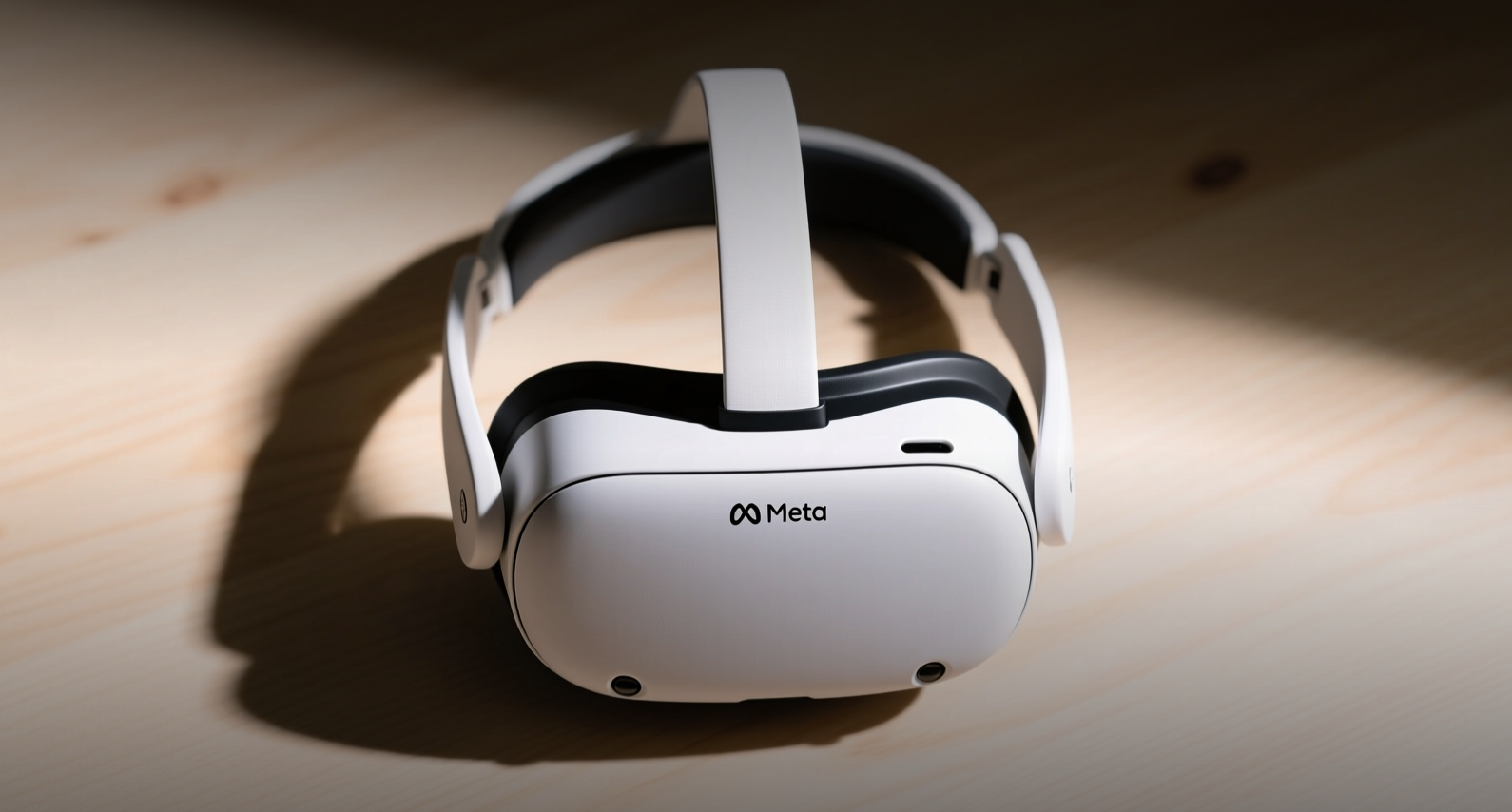
Meta's latest patent envisions a wearable that reads emotional state through sighs and laughter to generate personalized workouts, deepening its push into AI-powered health hardware.
Meta Platforms Inc. filed a patent for a wearable device that analyzes a wearer's emotional state — tracking sighs, laughter and medication intake — to generate personalized fitness routines, the latest sign of the company's expansion into AI-driven health hardware. The patent, filed July 2, 2026, describes an "apparatus" for "emotional state analysis and real-time fitness coaching" that detects whether a user is happy or sad and adjusts workout recommendations accordingly.
"The apparatus uses emotional state analysis to adapt fitness coaching in real time," the filing states. The device would use biometric insights including whether the wearer is laughing or sighing to tailor exercise regimens.
The patent comes as Meta develops "super sensing" smart glasses that continuously record audio and capture photos every few seconds, according to the Financial Times. In a July 2025 whitepaper, Meta proposed keeping the LED recording indicator off during such "AI Feature" use to avoid users becoming desensitized to the light — a design choice that could intensify privacy scrutiny. The company is also preparing its first smartwatch with onboard AI and health sensors, according to people familiar with the plans.
The wearable push pits Meta against Apple Inc., whose Watch dominates the $40 billion health-wearable market, and Alphabet Inc.'s Google, which deepened its health-tracking capabilities through its Fitbit acquisition. Meta's Ray-Ban Meta glasses start at $299, well below Apple's $3,499 Vision Pro headset, suggesting a volume-driven strategy for AI wearables.
Privacy Concerns Shadow Always-On Sensing
The patent arrives amid growing backlash over Meta's wearable data practices. The company faces scrutiny after reports of users filming women while wearing Ray-Ban Meta glasses and over its work on facial recognition features. Modders have offered paid services to remove the LED recording indicators from the glasses, prompting Meta to announce an update that disables the camera if it detects the LED has been tampered with.
Under the "super sensing" framework described in Meta's whitepaper, the LED indicator would remain off during continuous AI monitoring — reserved only for "active capture" scenarios where the user saves photos or videos. Privacy advocates argue this blurs the line between passive sensing and active recording.
"While we don't comment on internal prototypes, we're committed to getting our glasses right because they need to be loved by both people wearing them and those around them," Meta spokesperson Dave Arnold said in a statement.
Investment Angle: Can Meta Win the AI Wearable Race?
Chief Executive Officer Mark Zuckerberg said on Meta's Q1 2026 earnings call that he was "really excited to see the glasses evolve from being able to answer questions to being able to be a personal agent that's with you all day long, helping you remember things and achieve your goals." The patent suggests Meta is building the sensing infrastructure to make that vision a reality.
Meta shares have gained this year as investors priced in AI-driven revenue growth from its hardware pipeline. The company trades at roughly 23 times forward earnings, a discount to Apple's 28 times, reflecting skepticism about Meta's ability to monetize wearables at scale. If the emotional-sensing patent and "super sensing" glasses reach production, they could open a new revenue stream in health and fitness subscriptions — but regulatory hurdles and consumer privacy pushback remain material risks.
This article is for informational purposes only and does not constitute investment advice.