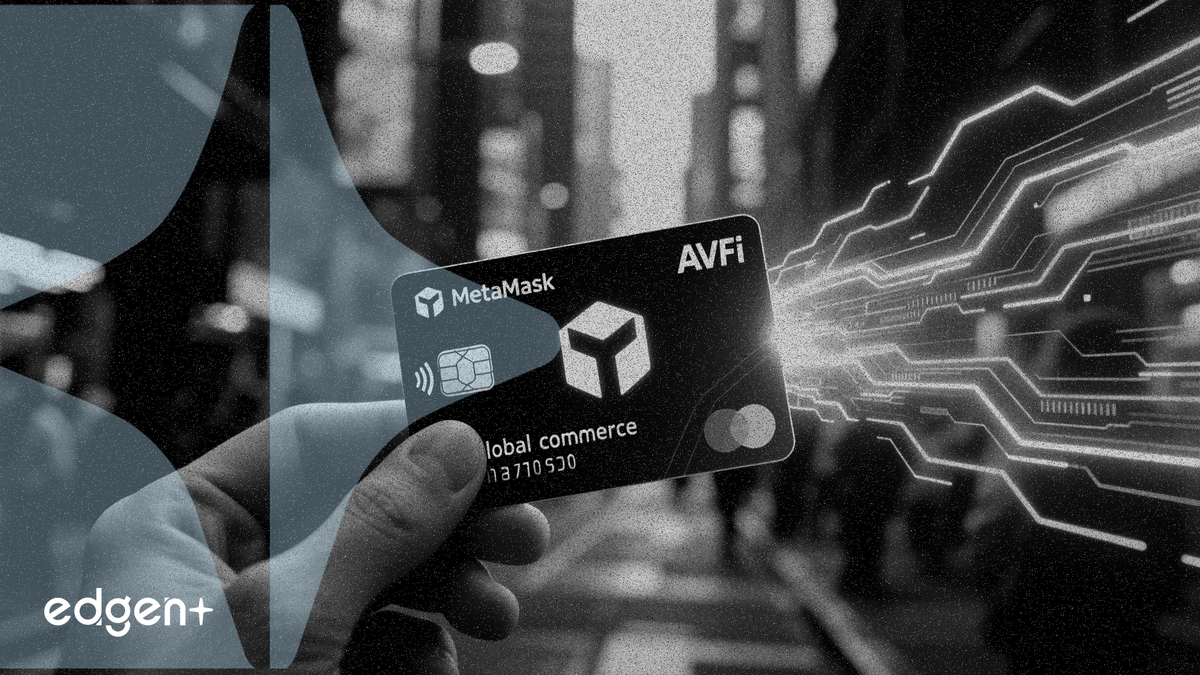
MetaMask’s new Mastercard-powered debit card will now allow users to directly spend their yield-bearing deposits from the Aave protocol, bridging decentralized finance (DeFi) yields with real-world payments at more than 100 million merchant locations.
The integration could support a milestone of over $100 million in related activity, Aave noted, connecting its multi-billion dollar lending protocol with MetaMask’s user base of over 100 million. Aave is a decentralized lending protocol that has processed more than $70 billion in net deposits over its five-year history.
The card works by converting only the necessary amount of Aave’s aUSDC stablecoin to fiat currency at the point of sale. The transaction settles instantly on Linea, an Ethereum Layer-2 network built by Consensys, which is also the parent company of MetaMask.
The core innovation is a significant boost to capital efficiency. Previously, users had to choose between keeping stablecoins liquid for spending or depositing them in a protocol like Aave to earn interest. This integration removes that trade-off, allowing funds to remain productive until the moment they are spent.
How It Works
The system leverages Aave’s aTokens, which are rebasing tokens that automatically increase in a holder's wallet as interest accrues. When a user makes a purchase with the MetaMask Card, the required amount of aUSDC is converted to fiat for the merchant, while the remaining balance in the user's wallet continues to generate yield from Aave’s lending market without interruption.
This process eliminates the need for manual withdrawals or bridging transactions from a DeFi protocol before making a purchase. The feature builds on MetaMask’s Stablecoin Earn product, launched in July 2025, which allows for direct deposits of stablecoins into Aave from the wallet interface.
Investor Implications and Risks
For investors, the direct spending capability makes DeFi yields more practical and accessible. The MetaMask Card also offers up to 3 percent cashback on its Metal tier, which stacks with the yield generated from Aave, further increasing the potential return.
However, the model introduces specific risks. As a self-custodial solution, users are fully responsible for the security of their wallets. Unlike traditional bank accounts, a compromised crypto wallet does not come with fraud protection guarantees. While Aave has a strong security track record, the risk of smart contract vulnerabilities is always a factor in decentralized finance.
This article is for informational purposes only and does not constitute investment advice.