

The memory chip shortage fueling Micron's record revenue run shows no signs of easing before 2028, analysts say.
The memory chip shortage fueling Micron's record revenue run shows no signs of easing before 2028, analysts say.
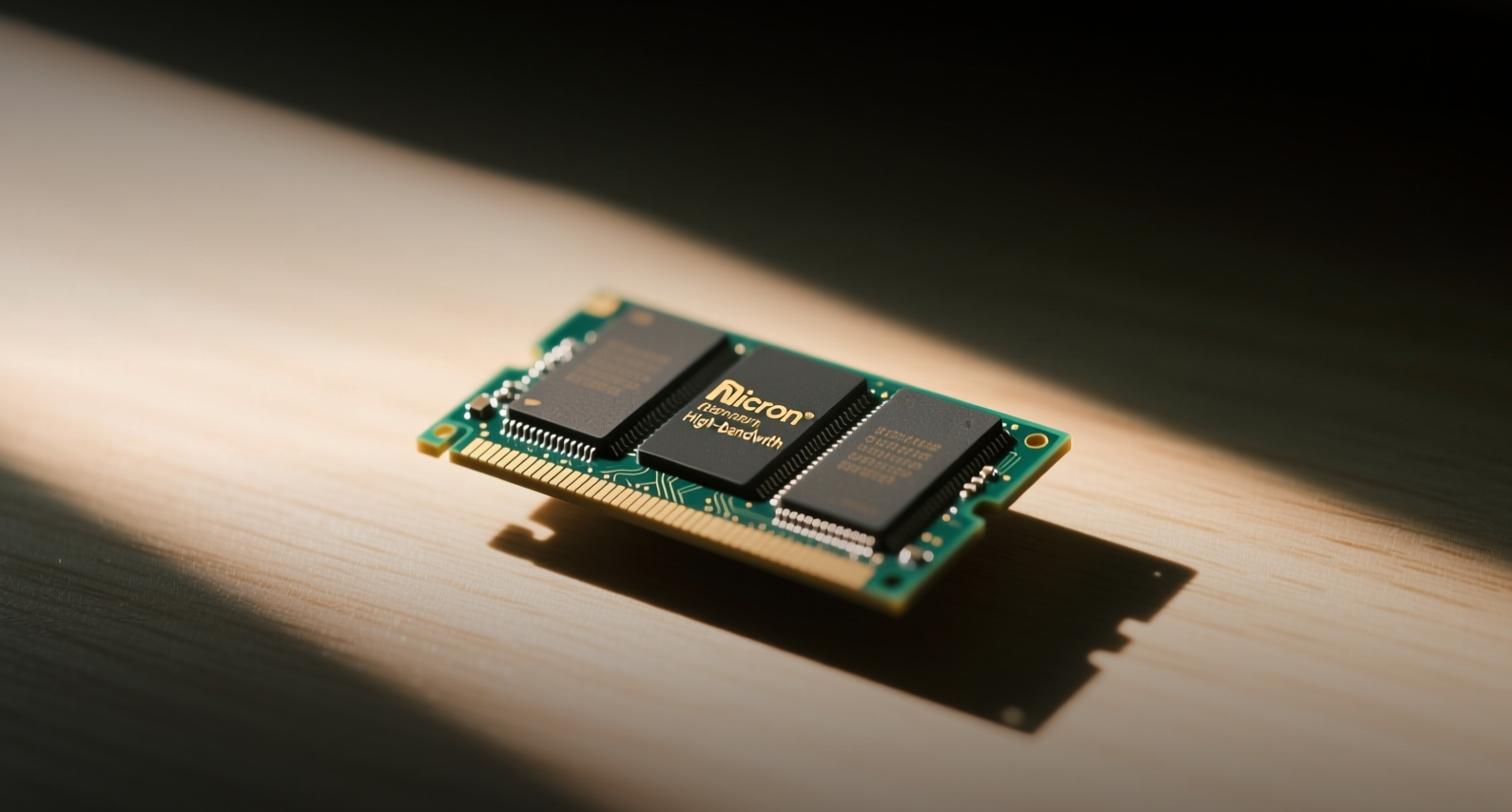
The memory chip shortage fueling Micron's record revenue run shows no signs of easing before 2028, analysts say.
Micron Technology's bet on high-bandwidth memory for artificial intelligence is paying off. The Boise-based chipmaker guided for record revenue of about $33.5 billion in its fiscal third quarter, up 40% from the $23.86 billion it reported in the prior period, which itself had nearly tripled from a year earlier.
"We expect both DRAM and NAND industry bit demand in calendar 2026 to be constrained by supply," Micron said in its fiscal second-quarter prepared remarks, adding that conditions should stay tight beyond this year.
The company's shares have more than tripled in 2026, gaining about 285% to trade around $1,134, giving it a market capitalization near $1.3 trillion. Micron guided for an adjusted gross margin of about 81% — a record — and earnings per share of around $19.15 for the quarter ended May 28. It reports results after the close on June 24.
The supply-demand imbalance traces directly to AI. Each new generation of Nvidia's graphics processing units requires more memory, and the most advanced type — high-bandwidth memory, or HBM — consumes far more factory capacity per bit than standard DRAM. As Micron shifts production toward HBM for Nvidia's Vera Rubin platform, it pulls capacity from standard memory used in laptops and servers, keeping prices elevated across the board.
JP Morgan expects the fundamental shortage to persist through 2028 for DRAM and at least through next year for NAND flash. Market researcher Omdia projects this year's DRAM wafer production by the three major memory makers — Samsung Electronics, SK Hynix and Micron — at 18.42 million units, a 6.1% increase from last year but down from 7.4% growth in 2025. The deceleration reflects a conservative approach to new investment after the industry's last downturn.
Micron has completed agreements on price and volume for its entire calendar 2026 HBM supply. The company is spending tens of billions on new factories in Idaho and New York, but those facilities won't add meaningful capacity until late 2027 at the earliest. The first Idaho fab is expected to begin initial wafer output in mid-calendar 2027, while the first New York fab won't provide supply until 2030 and beyond.
The demand side shows no signs of cooling. The US National Bureau of Economic Research predicts that annual AI infrastructure spending by five major tech companies — Google, Microsoft, Meta, Amazon and Oracle — will rise to $1.09 trillion next year from $381 billion in 2025. The Oxford Martin AI Governance Initiative projects the global AI market will reach $4.8 trillion by 2033, roughly the size of Germany's economy.
The beneficiaries extend beyond Micron. Samsung Electronics and SK Hynix, the other two dominant memory makers, are projected to post combined operating income of about 620 trillion won this year and 830 trillion won next year — the latter exceeding South Korea's entire supplementary budget. The concentration of profits in the semiconductor sector has raised concerns about economic polarization in Korea, with the government urged to distribute chip sector gains more broadly.
For investors, the question is whether Micron's valuation can sustain its current trajectory. The stock trades at more than 50 times trailing earnings, a steep multiple for a memory maker whose business has historically been cyclical. But with the company guiding for $19.15 in quarterly EPS alone — well above the $12.20 it earned in the prior quarter — the forward multiple looks far less demanding if the cycle holds. Any sign of softening demand or pricing could trigger a sharp correction, given how much optimism is already priced in.
This article is for informational purposes only and does not constitute investment advice.
