


Microsoft's in-house Maia and Cobalt chips cut AI compute costs by up to 40 percent, easing the economics of its $190 billion infrastructure plan.
Microsoft's in-house Maia and Cobalt chips cut AI compute costs by up to 40 percent, easing the economics of its $190 billion infrastructure plan.
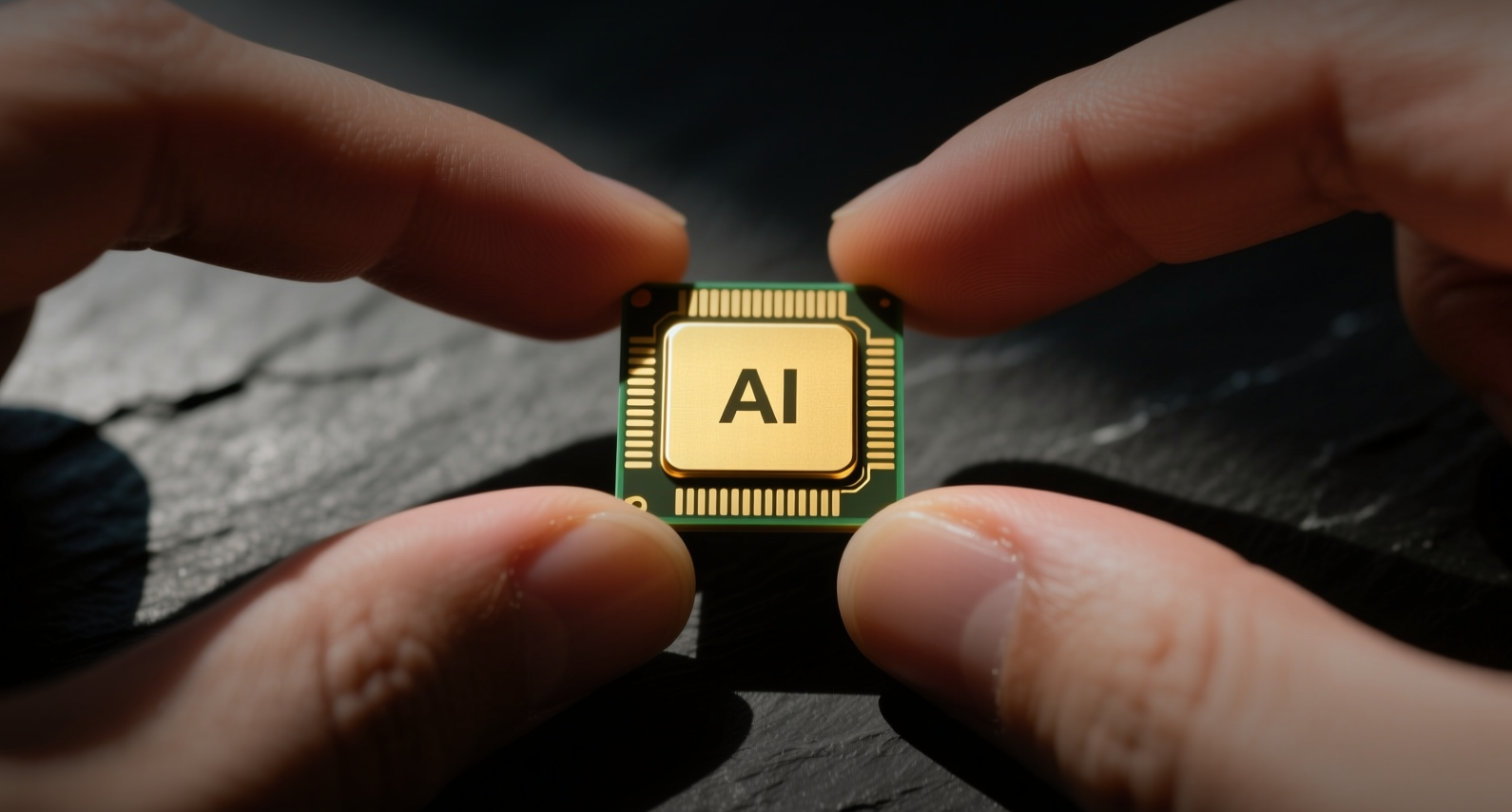
Microsoft's homegrown Maia accelerators deliver up to 40 percent efficiency-per-watt gains over the prior generation, a step toward cutting the cost of its $190 billion AI build-out and loosening its dependence on OpenAI.
Nadella framed the in-house silicon and models as cheaper to run than those of OpenAI or Anthropic, whose assistants are powerful but costly to operate, he said on the fiscal 2026 earnings call.
The efficiency claim covers the Maia accelerator and Cobalt CPU families, designed for Azure workloads and Copilot-scale inference. Microsoft is on track to spend roughly $190 billion in calendar 2026, mostly on data centers and GPU clusters. In fiscal 2026 it spent about $116 billion on capital expenditures while growing operating cash flow to roughly $55 billion, with free cash flow dipping to about $19.6 billion.
For shareholders, the 40 percent efficiency gain is a margin signal. Azure grew 40 to 45 percent in fiscal 2026, overall revenue jumped 18 percent to roughly $332 billion, and contracted AI revenue backlog rose 84 percent year over year to about $678 billion. Microsoft shares climbed 18 percent in the last week of July and are up about 15 percent since the report, trading near $481 with a market value of $3.6 trillion.
The capex math
Each rack of AI hardware running 40 percent more efficiently on homegrown chips improves the return on that spending without Microsoft slowing the build-out. The company's custom silicon competes with Nvidia's data center GPUs, which dominate the market, and with in-house efforts from Amazon's Trainium and Google's TPU lines. Microsoft did not disclose the test conditions for its efficiency comparison against the prior Maia generation.
The efficiency-per-watt metric matters because power is the binding constraint on data center expansion. Hyperscalers are racing to secure grid capacity and cooling, so chips that deliver more compute per watt let Microsoft pack more AI capacity into each facility and each megawatt of power. That lowers the marginal cost of serving the $678 billion contracted AI backlog, which has grown 84 percent year over year.
Less exposure to OpenAI's economics
A large share of Azure's AI demand currently flows through OpenAI, and Microsoft's disclosures show investments in OpenAI have weighed on net income in prior quarters. Shifting more AI volume onto Microsoft silicon and software models reduces exposure to another company's pricing, margin structure, and governance risk.
The shift also gives Microsoft more control over its own roadmap. Rather than waiting on OpenAI's model releases or Nvidia's supply allocation, Microsoft can tune Maia and Cobalt to its own Azure and Copilot workloads and pair them with its own frontier models. That vertical integration mirrors what Amazon and Google have built with Trainium and TPU, and it pressures Nvidia's pricing power in the data center segment that has driven its revenue surge.
Microsoft shares trade at roughly 30 times forward earnings. If the efficiency gains hold, the current spending spike looks less like a cash burn and more like the foundation of a high-margin AI services business, with the $678 billion contracted backlog providing visibility into years of revenue.
This article is for informational purposes only and does not constitute investment advice.
