

Elon Musk told the G20 summit AI could add $30 trillion to global GDP and 1 billion humanoid robots within a decade, warning of a 15 GW chip power shortfall by 2027.
Elon Musk told the G20 summit AI could add $30 trillion to global GDP and 1 billion humanoid robots within a decade, warning of a 15 GW chip power shortfall by 2027.
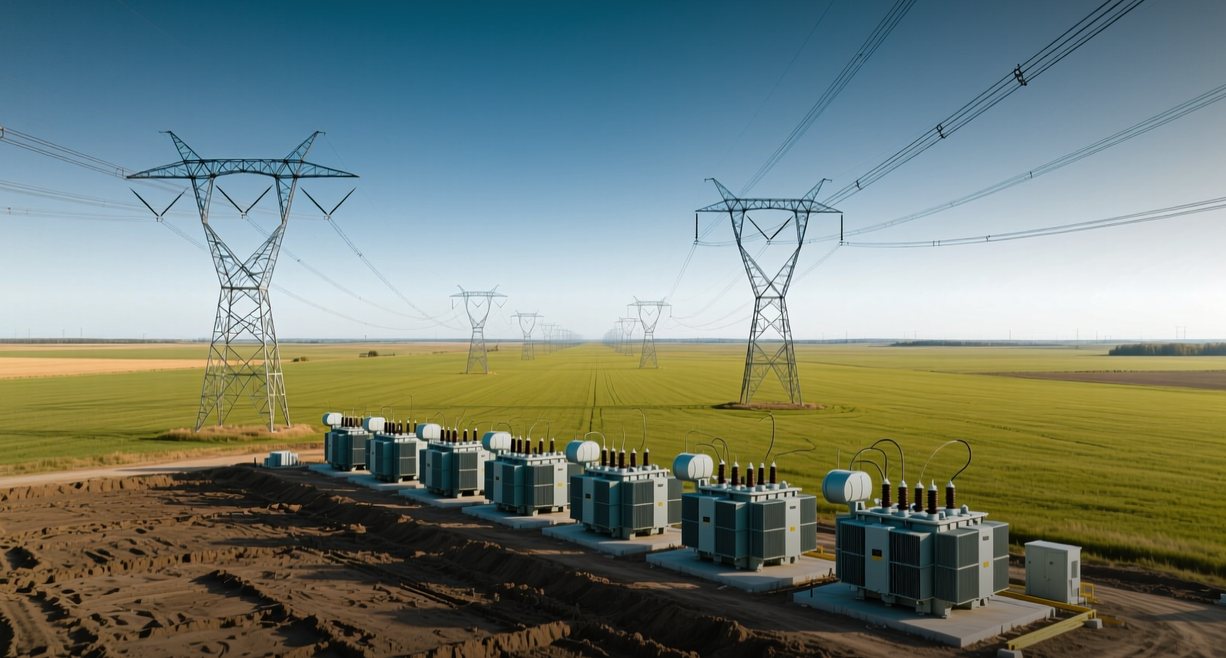
Musk's G20 forecast of 1 billion humanoid robots and a $30 trillion AI economy rests on a power grid that cannot keep up — a 15 GW chip shortfall by 2027 that has already pushed Google and Anthropic to rent compute from SpaceX.
"To give you a sense of the scale, I think AI could grow the global economy by 20% to 30% — that's my rough estimate — which means roughly $20 trillion to $30 trillion per year in additional output," Musk said by video link at the G20 central bank governors and finance ministers summit in Asheville, North Carolina.
The Tesla and SpaceX chief executive predicted AI would complete all digital-domain work by the end of next year, with coding reaching "Stockfish level" — the open-source chess engine that beats world champions — making it impossible for humans to compete in writing software. He forecast the global installed base of humanoid robots would exceed 1 billion units within a decade, each delivering at least five times human productivity, enough to expand the world economy more than tenfold.
The bullish supercycle narrative collides with a structural constraint Musk himself flagged: AI chip production is growing 40% to 50% a year while power supply outside China expands only 10% to 20%, leaving a shortfall of at least 15 gigawatts by 2027. "Clearly, the thing that grows faster will eventually overwhelm the thing that grows slower," he said.
The Compute Squeeze Is Already Here
The power bottleneck is not hypothetical. Musk disclosed that Google and Anthropic are renting compute capacity from SpaceX, which built its own power plants to feed its Colossus II data center expansion. SpaceX's AI business generated $2.6 billion in revenue in the second quarter, up 247% from a year earlier, and the company spent $15.8 billion on AI infrastructure during the quarter — about 86% of total capital expenditures. It also acquired AI coding platform Cursor for $60 billion and launched Grok 4.6.
The disclosure confirms the supply-demand imbalance that has driven a global data center buildout. Nvidia, whose GPUs power most large language model training, has seen demand outstrip supply for two years, while utilities and independent power producers have become the market's favored AI trade on expectations that data centers will consume a growing share of US electricity. Musk's 15 GW estimate — roughly the output of 15 large nuclear reactors — gives that thesis a concrete number.
Robots, Regulators, and the $30 Trillion Question
Musk's robot forecast hinges on three compounding factors: AI software quality, the AI chips inside each unit, and electromechanical dexterity, especially in the hands. He argued all three are improving exponentially and that robots will eventually build robots, creating a recursive effect that starts slowly before exploding. Tesla's Optimus is the flagship bet, though the company has yet to disclose production volumes or pricing.
On regulation, Musk urged governments to treat AI as "legal by default" rather than "illegal by default," a stance that would ease deployment of autonomous systems and humanoid labor. If even part of his vision materializes, the implications for labor-intensive manufacturing, logistics, and services would be profound — and for the energy infrastructure needed to power it.
For investors, the trade is a two-sided bet. Tesla shares and robotics plays price in the 1 billion-unit forecast, while power and grid names — from utilities to turbine makers — price in the 15 GW shortfall. SpaceX's $15.8 billion quarterly AI spend shows the capital intensity of the buildout, but Musk's own numbers argue the bottleneck is electricity, not compute. The market has yet to fully price which side of that equation wins.
This article is for informational purposes only and does not constitute investment advice.
