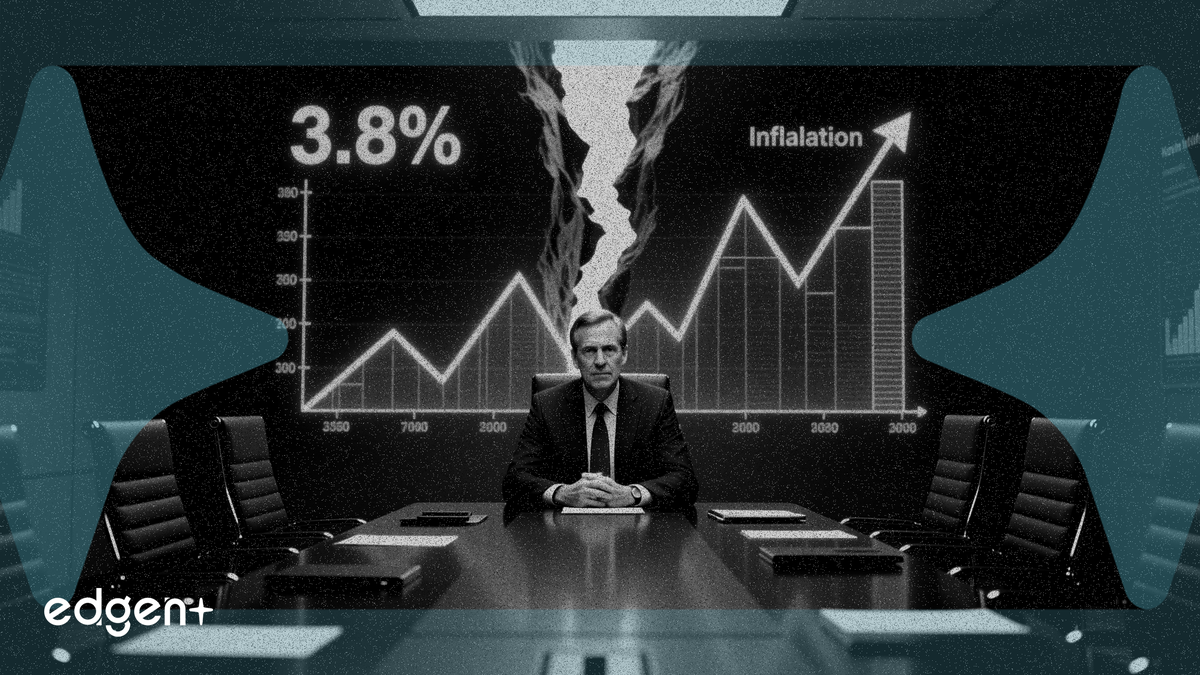
Kevin Warsh took the helm of the Federal Reserve on Friday, inheriting a central bank at war with itself over how to handle surging inflation and an economy strained by geopolitical conflict.
Kevin Warsh was sworn in as the 11th chair of the U.S. Federal Reserve, beginning a tenure defined by the immense challenge of navigating 3.8% inflation, political pressure for rate cuts from President Donald Trump, and deep divisions within the central bank's own policy-making committee. The swearing-in on May 22 comes as markets are increasingly betting on a rate hike, a direct contradiction to the president's wishes.
"To fulfill this mission, I will lead a reform-oriented Federal Reserve, learning from past successes and mistakes, both escaping static frameworks and models and upholding clear standards of integrity and performance," Warsh said in comments after taking the oath of office at the White House.
The new chair confronts an economy where shocks from the U.S.-Israeli war with Iran have pushed oil prices over $100 a barrel, feeding into an inflation rate that is more than a percentage point above the Fed's 2% target. Data released Friday showed the University of Michigan's consumer sentiment index fell to a record low. Underscoring the internal policy battle, Fed Governor Christopher Waller on Friday broke from the Fed's official outlook, stating the central bank should drop its "easing bias" and "make it clear that a rate cut is no more likely in the future than a rate increase."
Warsh's first test will come at the June 16-17 FOMC meeting, where his actions will signal whether he intends to establish inflation-fighting credibility from the outset or align with the Trump administration's growth-focused, low-rate agenda. His stated goal of shrinking the Fed's massive balance sheet hangs in the balance, a move that would inherently tighten financial conditions and challenge lofty stock market valuations.
A Mandate for Reform Meets Market Reality
During a year-long public audition for the role, Warsh laid out an ambitious agenda to deleverage the Federal Reserve's balance sheet, which swelled during the crises of the last two decades and now stands at $6.7 trillion. His stated goal is to cut that figure to $3 trillion by selling off Treasury bonds and mortgage-backed securities.
Such a move, known as quantitative tightening, would put direct upward pressure on long-term interest rates as the Fed becomes a major seller of bonds. Higher yields on risk-free U.S. Treasuries would force a repricing of all other assets, most notably equities. The S&P 500 currently trades at a forward price-to-earnings ratio of 21, well above its historical average of 16 to 17, making it particularly vulnerable to higher rates.
A Divided Fed and the Ghost of Powell
Warsh's policy goals face significant opposition from within the Federal Open Market Committee (FOMC). The committee's last meeting saw four dissenting opinions, with three calling to remove language that suggested future rate cuts. The hawkish shift from Governor Waller, a Trump appointee, intensified this divide and drove market bets on a rate hike as soon as October.
Adding another layer of complexity, former Chair Jerome Powell, whom Trump incessantly criticized, has chosen to remain on the board as a governor. Warsh's desire for policy flexibility and more vague language in FOMC statements could clash with a board that is increasingly fractured and a market desperate for predictability amid high uncertainty.
While the macroeconomic picture presents serious headwinds for risk assets, Warsh's appointment is viewed by some as a potential boon for the cryptocurrency sector. The new chair is known for a crypto-friendly stance, a stark contrast to the more skeptical view of his predecessor. With Bitcoin holding near $77,000, his leadership could pave the way for a more favorable U.S. regulatory framework, fostering greater integration of digital assets into mainstream finance and potentially unlocking significant capital inflows.
This article is for informational purposes only and does not constitute investment advice.